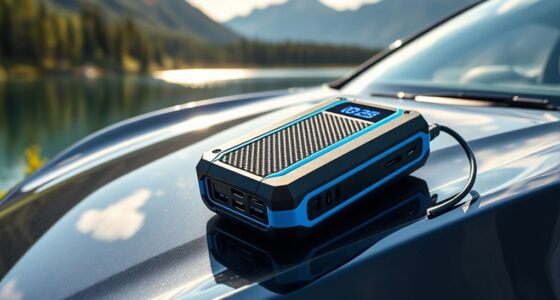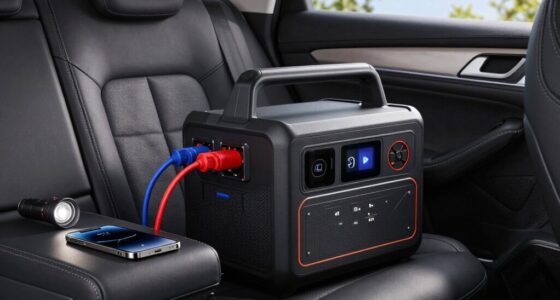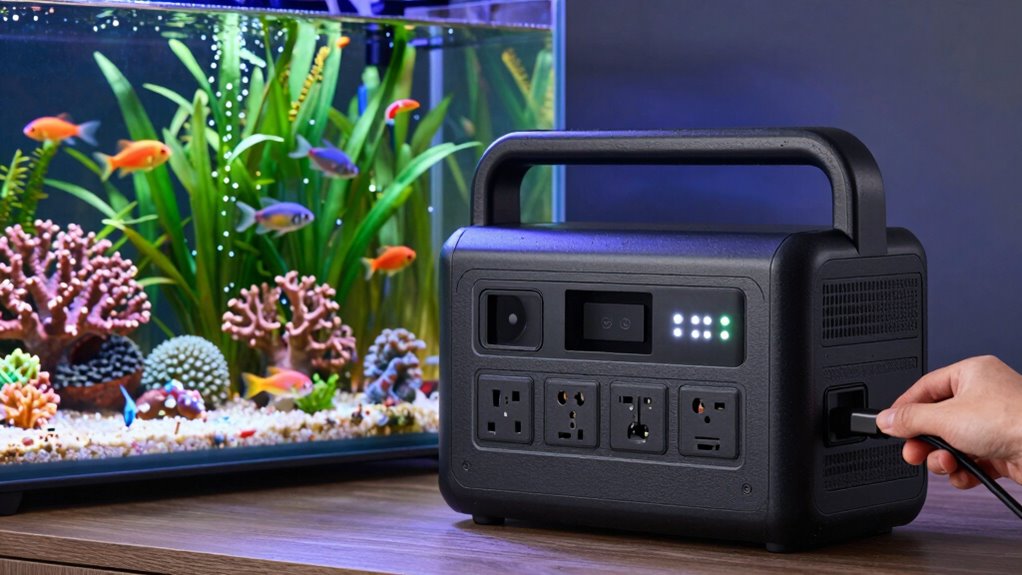

To use a portable power station for your home aquarium during outages, first guarantee it’s fully charged and rated for outdoor or wet conditions. Connect only essential equipment like filters, aerators, and heaters, and monitor the battery level closely. Unplug devices once power is restored to prevent surges. For added peace of mind, consider combining solar recharging options. Keep these tips in mind to maintain a safe environment—more detailed guidance awaits you.
Listen free for 30 days with Audible
Thousands of audiobooks and originals — cancel anytime.
As an affiliate, we earn on qualifying purchases.
Key Takeaways
- Fully charge the power station before an outage to ensure maximum runtime for essential aquarium equipment.
- Connect filters, aerators, and heaters directly to the power station, prioritizing critical devices.
- Monitor the battery level regularly and disconnect non-essential devices to conserve power.
- Place the power station on a stable, dry surface away from moisture and electrical hazards.
- After power returns, unplug devices to prevent surges and maintain equipment safety.
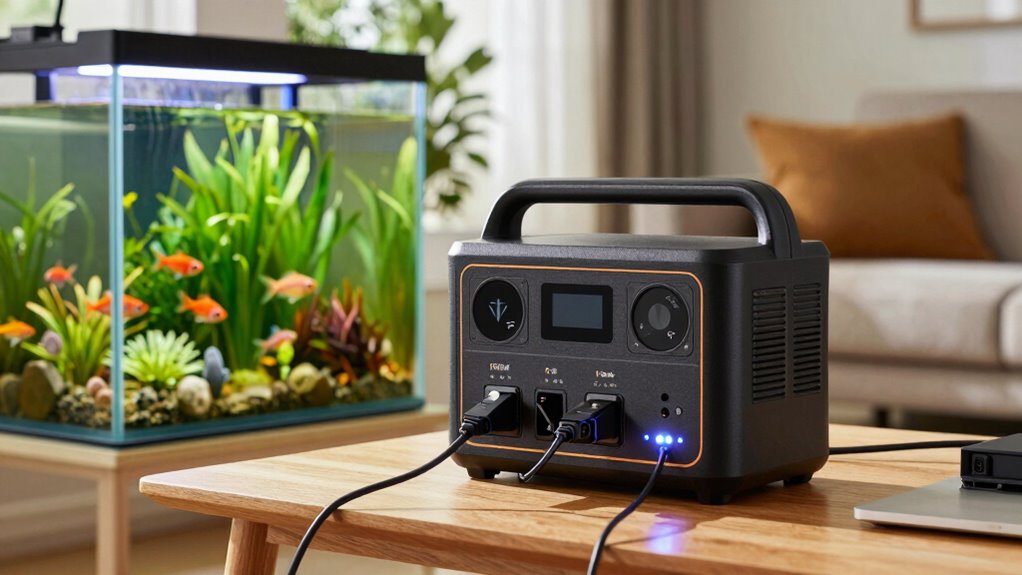
Have you ever worried about your home aquarium losing power during a blackout? If so, a portable power station can be a reliable solution to keep your aquatic life safe and healthy during outages. But before you start using one, it’s essential to understand how to do so effectively and safely. The first thing you need to consider is the battery capacity of your power station. Battery capacity, measured in watt-hours (Wh), determines how long your power station can run your aquarium equipment. Smaller units with lower capacity may only power your filter and aerator for a few hours, while larger ones with higher capacity can keep your setup running longer. Knowing your equipment’s power draw helps you select a station with sufficient capacity, ensuring your fish and plants aren’t left in the dark or without oxygen during an extended blackout.
Once you’ve chosen the right power station, safety precautions become paramount. Always check that the power station is rated for outdoor or wet conditions if you plan to use it near your aquarium, especially since water and electricity don’t mix well. Keep the device on a stable, dry surface, and avoid placing it where it could be exposed to moisture. It’s also a good idea to use surge protectors or extension cords that are rated for outdoor use to prevent electrical hazards. Before connecting your aquarium equipment, verify that the power station is fully charged to avoid interruptions. When plugging in devices, don’t overload the station; follow the manufacturer’s recommendations for maximum wattage. Overloading can damage the power station and pose safety risks, so it’s better to prioritize essential equipment like filters, air pumps, and heaters.
Another safety step involves regularly monitoring the power station’s battery level during use. Most units have indicator lights or displays to show remaining capacity, so you can plan accordingly. If your station starts running low, disconnect non-essential devices and focus on keeping critical systems operational. It’s also wise to have a backup plan in case the battery runs out unexpectedly, such as a second portable power station or access to a generator. Additionally, understanding the power draw of your aquarium equipment helps in selecting the right capacity and ensuring efficient use of your power station. Properly managing electrical safety during outages is vital to prevent accidents and protect your aquatic environment. Interestingly, recent AI discoveries suggest that integrating intelligent monitoring systems can further enhance safety and efficiency in managing power during outages. It’s important to remember that solar panels can be a supplementary power source for recharging your station during sunny days, increasing your setup’s sustainability. Remember to unplug everything once the power is restored to prevent electrical surges that could harm your aquarium or the power station itself.
In short, understanding your power station’s battery capacity and adhering to safety precautions will help you use it effectively during outages. Doing so ensures your underwater ecosystem stays healthy, safe, and stable until power is restored.
portable power station for aquarium
As an affiliate, we earn on qualifying purchases.
As an affiliate, we earn on qualifying purchases.
Frequently Asked Questions
How Long Can a Portable Power Station Run an Aquarium?
A portable power station can typically run your aquarium for several hours, depending on its capacity and your aquarium’s power needs. You’ll want to take into account aquarium maintenance, like filtration and aeration, which are essential during outages. Check the power station capacity in watt-hours and match it with your equipment’s wattage. For example, a 500Wh power station could run small to medium tanks for 8-12 hours, ensuring your aquatic life stays safe.
Can I Charge the Power Station With Solar Panels?
Did you know that over 30% of portable power stations are compatible with solar panels? Yes, you can charge your power station with solar panels, making it eco-friendly and cost-effective. Check the device’s specifications for solar panel compatibility. Charging time estimates vary based on panel wattage and sunlight, usually taking 4-8 hours. This setup guarantees your aquarium remains powered during outages while harnessing renewable energy.
What Safety Precautions Should I Take?
You should keep your portable power station in good condition by regularly checking and maintaining its battery. Always follow manufacturer recommendations for battery maintenance, like avoiding overcharging or deep discharges. During emergencies, guarantee the power station is stored safely away from water and heat sources. Proper emergency preparedness involves having a fully charged unit ready, and practicing safe handling to prevent electrical hazards, protecting both your aquarium and household safety.
How Many Devices Can I Connect Simultaneously?
Think of your portable power station as a busy highway. The number of devices you can connect depends on its battery capacity and the power each device draws. Most stations have multiple outlets—usually 2 to 4—so you can run your aquarium equipment and a few essentials simultaneously. Check your charging options too; some stations let you recharge while powering devices, keeping your aquatic world afloat during outages.
Is a Portable Power Station Suitable for Saltwater Aquariums?
A portable power station can be suitable for saltwater aquariums if it offers enough power capacity and equipment compatibility. Since saltwater tanks require stable conditions, you need a station that can reliably run essential equipment like pumps and filters to maintain saltwater stability. Check the wattage of your devices before connecting them, and make certain the power station can handle the total load, preventing any disruptions during outages.
outdoor waterproof power bank for fish tank
As an affiliate, we earn on qualifying purchases.
As an affiliate, we earn on qualifying purchases.
Conclusion
By blending basic backup with boldness, you guarantee your aquarium’s health and happiness. A portable power station provides power, peace, and protection during unpredictable outages. Prepare proactively, practice promptly, and protect passionately. With the right readiness, you reduce risk, restore reassurance, and keep your aquatic world alive and thriving. Power up, plan ahead, and protect your paradise—because peace of mind begins with preparedness.
high capacity portable battery for aquarium equipment
As an affiliate, we earn on qualifying purchases.
As an affiliate, we earn on qualifying purchases.
solar recharging portable power station
As an affiliate, we earn on qualifying purchases.
As an affiliate, we earn on qualifying purchases.
Flea & tick season Picks
flea and tick prevention
As an affiliate, we earn on qualifying purchases.