When choosing DC output options, you’ll typically encounter 12V and 24V supplies, which suit various electronic devices. Regulated power supplies actively maintain a steady voltage, protecting sensitive components and ensuring reliable operation. Unregulated supplies provide fixed voltages that fluctuate with load, making them less suitable for precision tasks. Power efficiency and system dependability improve with regulation, but cost may vary. If you want to discover which option best fits your needs, continue exploring the differences and features.
Key Takeaways
- 12V and 24V are common DC output options, chosen based on device power requirements and compatibility.
- Regulated power supplies maintain constant voltage regardless of load or input variations, ensuring stability.
- Unregulated supplies provide fixed voltage but fluctuate with load changes, suitable for less sensitive applications.
- Regulated supplies enhance device safety, performance, and efficiency, while unregulated ones are simpler and more cost-effective.
- Selecting the appropriate voltage and regulation type depends on device sensitivity, stability needs, and energy efficiency considerations.
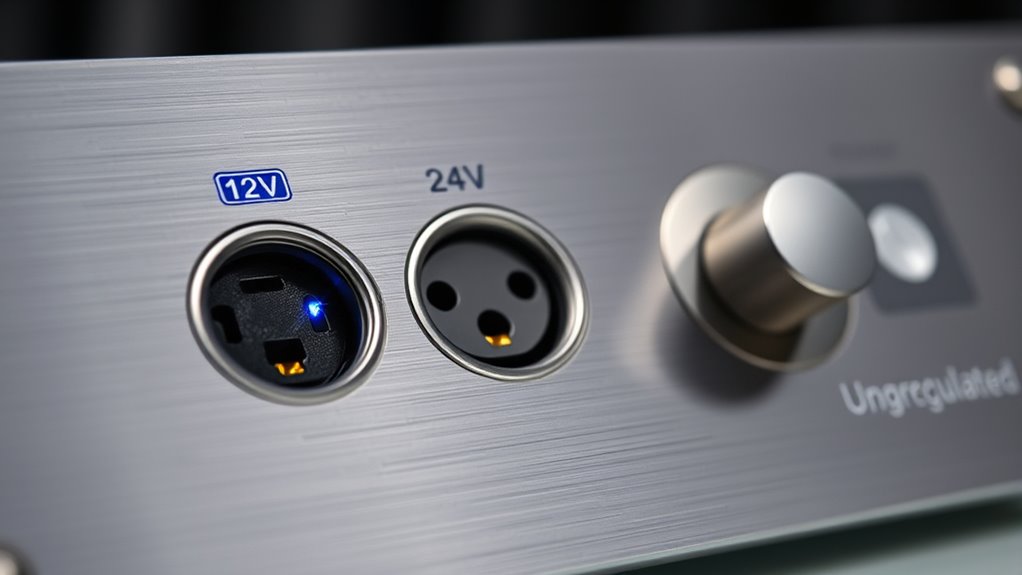
Are you aware of the various DC output options available for your electronic devices? Understanding these options is essential for ensuring your equipment operates smoothly and efficiently. The most common voltages you’ll encounter are 12V and 24V, but choosing between them depends on your specific needs. When selecting a DC power supply, you need to consider voltage stability and power efficiency. Voltage stability refers to the ability of the power supply to maintain a consistent voltage level under varying loads, which is critical for protecting sensitive electronics from fluctuations that could cause damage or malfunction. Additionally, some power supplies incorporate voltage regulation features to enhance performance and safeguard connected devices. Power efficiency, on the other hand, determines how well the power supply converts electrical energy from the source into usable power without excessive losses, impacting both energy consumption and heat generation.
Understanding DC voltage options and stability ensures your devices operate reliably and efficiently.
If your devices require a steady, reliable power source, regulated DC outputs are typically the better choice. Regulated power supplies actively control voltage levels, ensuring that the output remains constant regardless of fluctuations in input voltage or load. This stability is especially important for delicate electronics such as medical equipment, audio systems, or precision measurement devices, where even minor voltage variations can cause errors or damage. Additionally, regulated outputs tend to be more power-efficient because they minimize energy waste associated with voltage fluctuations and unnecessary heat dissipation. They help you maximize your power efficiency, reducing electricity costs and extending the lifespan of your components.
Unregulated DC outputs, in contrast, are simpler and often less expensive. They provide a fixed voltage that varies with the load and input voltage changes. While unregulated options might work for applications where voltage stability isn’t critical, they can lead to inconsistent performance and potential damage to your devices. If you choose unregulated power supplies, ensure your devices can handle slight voltage variations or include additional regulation circuitry downstream. Keep in mind that unregulated supplies usually have lower power efficiency because they don’t actively stabilize voltage, often resulting in higher energy losses and more heat. This can lead to increased cooling requirements and reduced overall system reliability.
Frequently Asked Questions
How Do I Choose Between Regulated and Unregulated DC Outputs?
You should choose a regulated DC output if you need consistent voltage and stable power, especially for sensitive electronics. Regulated power maintains voltage stability despite load changes, ensuring your devices work reliably. If your application can tolerate some fluctuation and doesn’t require precise voltage, unregulated outputs might suffice and are often more cost-effective. Consider your device’s voltage regulation needs and the importance of power stability when making your choice.
Can I Convert 12V to 24V DC Easily?
Like a wizard’s spell in an old story, you can convert 12V to 24V DC easily. It involves voltage conversion using a boost converter or a step-up transformer, which increases the voltage efficiently. Power regulation ensures the output stays steady despite input fluctuations. Just guarantee your components are rated for the higher voltage to avoid damage. With the right setup, you’ll master voltage conversion in no time!
What Safety Precautions Are Needed for High-Current DC Outputs?
When handling high-current DC outputs, you need to prioritize circuit protection and proper grounding practices. Use fuse or circuit breakers to prevent overloads, and make certain all connections are secure and insulated to avoid shorts. Ground the system properly to reduce electrical noise and prevent potential shocks. Always wear protective gear, work in a dry environment, and double-check wiring before powering up to keep yourself safe.
How Does Temperature Affect DC Output Voltage Stability?
Temperature considerably impacts your DC output voltage stability through thermal effects. As temperatures rise, components may expand or experience increased resistance, causing voltage fluctuation. Conversely, cooler temperatures help maintain consistent voltage levels. You might think this isn’t a big deal, but thermal effects can lead to system instability or damage. Keeping your device within recommended temperature ranges ensures steady voltage output, protecting your equipment and optimizing performance.
Are There Size Constraints for Different DC Output Options?
You might face size restrictions depending on your device’s design and component compatibility. Larger power supplies can deliver higher current, but they require more space, while compact options fit better into tight spaces but might have limited capacity. Make sure your chosen DC output option aligns with your device’s size constraints and component compatibility, so you don’t compromise performance or safety. Always check specifications before making a selection.
Conclusion
Choosing between 12V, 24V, regulated, or unregulated DC outputs is like picking the right tool for a job. Think of each option as a different brushstroke on your canvas—each adds a unique touch to your project’s masterpiece. By understanding your power needs, you’ll craft a smooth, reliable flow that keeps everything running seamlessly. With the right choice, you’ll build a stable foundation, guiding your device’s energy like a steady hand guiding a ship through calm waters.