TL;DR

Get backup power and energy gear delivered free with Prime
- Fast, free delivery on millions of items
- Prime Video, Amazon Music and more included
- Member-only deals all year
Task lighting means focused illumination that helps people carry out a specific activity comfortably, rather than a particular fixture style. Lighting designers quoted by Livingetc say it can be incorporated in many rooms and should be planned around household routines, alongside ambient and accent lighting.
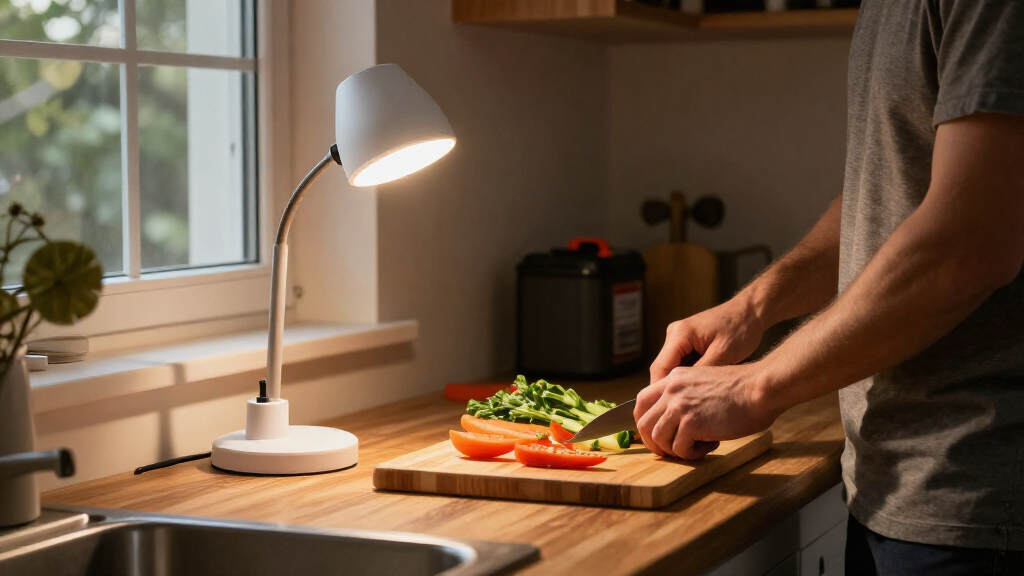
A Livingetc report featuring lighting designers defines task lighting as focused illumination for a specific activity, such as reading, cooking, working at a desk or applying makeup. The guidance matters for homeowners planning a lighting scheme because the term describes what a light does, not a particular fixture style: a pendant, floor lamp or linear LED can serve the purpose if it lights the working area effectively.
Vanessa Macedo, an associate lighting designer at John Cullen Lighting, says task lighting should direct light where it is needed so an activity feels practical and comfortable, without eye strain. The report contrasts this functional role with accent lighting, which draws attention to features such as artwork or architectural details. Neither role is a substitute for the other in a layered scheme.
Kiersten Hoiland, founder of Hoiland Studios, describes task lighting as a functional requirement rather than a fixed look. A decorative pendant above a kitchen island can qualify if it provides enough illumination on the surface; a discreet linear LED can do the same. The fixture’s appearance alone does not determine whether it is task lighting.
The report recommends starting with how people use each room. Reading in bed could call for a bedside reading light; working at a dining table may call for a fixture above it; and a floor lamp beside an armchair can provide focused light in a living room. Kitchens generally need deliberate illumination at work surfaces, while hallways need comfortable light for moving through them, Hoiland says.
Lighting That Supports Daily Routines
The practical point is that a room’s lighting can affect how comfortably people carry out ordinary activities. A kitchen may look finished with a decorative central fixture yet still lack useful light on the counters. Likewise, an overhead light may not be the most comfortable option for reading in bed. Task lighting addresses these specific needs by directing illumination to the place where an activity happens.
The designers’ advice also pushes back on treating functional fixtures as merely utilitarian. A well-chosen pendant or floor lamp can contribute to a room’s appearance while providing useful light, provided it is positioned and selected for the task. Planning around routines, rather than choosing fixtures by appearance alone, can help a home serve both practical and aesthetic goals.
Task lighting is one layer, not a complete lighting plan. Macedo describes ambient lighting as setting the overall mood and accent lighting as adding depth by highlighting details. Combining those functions can make a space usable for different activities and atmospheres, rather than relying on one source to meet every need.
adjustable bedside reading lamp with warm LED
As an affiliate, we earn on qualifying purchases.
As an affiliate, we earn on qualifying purchases.
From Fixture Style to Light Function
The Livingetc article addresses a common source of confusion: task lighting is often associated with bright overhead lamps or LED strips, but the designers quoted say it is not limited to either. The defining feature is focused illumination that supports a particular activity. This makes the term applicable across different fixture types and rooms.
The report frames lighting as a combination of functional and visual decisions. It distinguishes task lighting from ambient and accent lighting while treating all three as parts of a layered scheme. It also emphasizes that a home’s needs vary: habits such as reading, cooking, working at a table or applying makeup help determine where focused light is useful.
“Task lighting is lighting designed to support a specific activity, providing focused illumination exactly where it is needed.”
— Vanessa Macedo, associate lighting designer at John Cullen Lighting, as quoted by Livingetc
under cabinet LED task lighting for kitchen counters
As an affiliate, we earn on qualifying purchases.
As an affiliate, we earn on qualifying purchases.
Choosing the Right Light Levels
The supplied report does not specify recommended brightness levels, color temperatures, fixture spacing or mounting heights for particular tasks. It also does not offer a room-by-room technical plan. Its advice is general: identify the activity and direct sufficient light to the relevant surface or area.
What counts as sufficient illumination will depend on the task, the room and the fixture. The material does not provide measurements or claim that one lighting setup will suit every household. Readers planning a specific installation may need product guidance or advice suited to their space.
adjustable desk lamp with dimmable LED
As an affiliate, we earn on qualifying purchases.
As an affiliate, we earn on qualifying purchases.
Plan Around How Rooms Are Used
The report’s practical next step is to identify recurring activities in each room before selecting fixtures. Consider where people read, prepare food, work, get ready or move through the home, then decide which areas need focused light. A layered plan can pair those task lights with ambient illumination and accent lighting.
For any specific project, the source offers design principles rather than a prescribed layout or product list. Homeowners can use the activity-first approach to review whether existing fixtures light the places where work is done, then choose or reposition fixtures to meet those needs.
floor reading lamp for living room armchair
As an affiliate, we earn on qualifying purchases.
As an affiliate, we earn on qualifying purchases.
Key Questions
What is task lighting?
Task lighting is focused illumination intended to help with a particular activity, such as reading, cooking, working or applying makeup.
Does task lighting have to come from a desk lamp or LED strip?
No. The designers quoted by Livingetc say a pendant, floor lamp or other fixture can serve as task lighting if it directs sufficient light to the area where the activity takes place.
Where should task lighting be used at home?
It can be useful wherever someone needs focused light, including kitchen work surfaces, bedside reading areas, desks, dining tables, vanities and an armchair used for reading.
How is task lighting different from ambient and accent lighting?
Task lighting supports an activity. Ambient lighting sets the general light and mood of a room, while accent lighting highlights features such as artwork or architectural details.
How should I plan task lighting?
Start with the activities that happen in each room and identify where focused illumination is needed. The report recommends combining task lighting with ambient and accent layers rather than expecting one fixture to do everything.
Source: rss
Halloween Picks
halloween
As an affiliate, we earn on qualifying purchases.