As a beginner, you might overestimate or underestimate your energy needs, leading to oversized or insufficient systems. Neglecting shading analysis and not reviewing recent utility bills can cause poor system sizing and reduced efficiency. Focusing only on solar panels without considering other components like batteries and inverters often results in mismatched or costly setups. Skipping thorough site analysis or ignoring long-term performance can also cause issues. Keep these common traps in mind to avoid costly mistakes and discover how to get it right.
Key Takeaways
- Failing to accurately assess energy needs through recent utility bills and proper consumption calculations.
- Overlooking shading analysis, leading to reduced panel efficiency and incorrect system sizing.
- Misjudging battery capacity, resulting in excess costs or inadequate storage.
- Focusing only on solar panels without considering other system components and their compatibility.
- Neglecting thorough site analysis and proper system design, causing long-term performance issues.
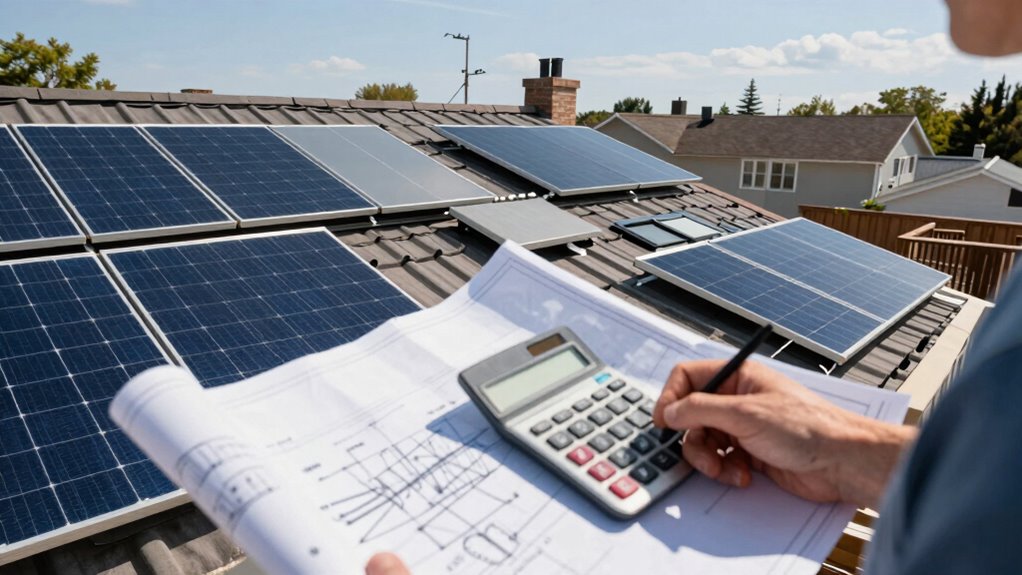
Sizing a solar system may seem straightforward, but making common mistakes can lead to costly inefficiencies and unmet energy needs. One of the biggest errors beginners make is not properly evaluating their energy consumption. Without a clear understanding of your daily energy use, you risk installing a system that’s either too small or unnecessarily large. Overestimating your needs can inflate costs, while underestimating leads to insufficient power, forcing you to rely on backup sources or reduce consumption. To avoid this, review your recent utility bills and calculate your average daily energy consumption. This step helps you determine the appropriate system size that balances cost and output. Additionally, understanding your energy needs can help you set realistic expectations for your solar investment. Recognizing the importance of accurate energy assessment can prevent costly oversizing or undersizing from the outset.
Accurately assessing your energy use is key to sizing an efficient, cost-effective solar system.
Another frequent mistake involves neglecting the importance of shading analysis. Even a small amount of shading on your solar panels—caused by trees, buildings, or other obstructions—can drastically reduce their efficiency. Many beginners overlook this factor, assuming their site is fully sunlit. Conduct a shading analysis at different times of the day and throughout the seasons to identify potential shading issues. Addressing shading early on can save you from installing an oversized system to compensate for lost energy, which would be more expensive in the long run. Proper shading analysis ensures your panels receive maximum sunlight, optimizing performance and energy production. Conducting a thorough shading analysis is essential for maximizing your system’s performance.
Battery capacity is another critical aspect often misunderstood by newcomers. If you plan to store excess energy for nighttime use or cloudy days, you need to size your batteries correctly. Overestimating battery capacity leads to unnecessary expense, increasing your system’s upfront costs. Underestimating, however,, can result in inadequate energy storage, forcing you to draw power from the grid or reduce consumption during less sunny periods. To get this right, consider your typical daily energy usage during peak and off-peak times, along with your backup power needs. Properly sizing your batteries ensures you have enough stored energy to meet your needs without overspending on unnecessary capacity. Additionally, understanding the contrast ratio of your system can help you gauge how well it will perform in various lighting conditions.
Finally, many beginners focus solely on the number of solar panels without considering other system components. The inverter’s size, wiring, and mounting system all need to be compatible with your panels and energy goals. Failing to match these components can cause inefficiencies and potential system failures. Consulting with a knowledgeable installer or conducting thorough research helps you avoid these pitfalls. By paying attention to these details—accurate energy consumption, shading analysis, and proper battery capacity—you set yourself up for a successful, efficient solar system that meets your needs without unnecessary expense or frustration.

The Solar Panel Sizing Guide: How to Design the Right System for Your Home, RV, Cabin, or Off-Grid Setup (AyerGuides Practical Reference Series)
As an affiliate, we earn on qualifying purchases.
As an affiliate, we earn on qualifying purchases.
Frequently Asked Questions
How Do Weather Patterns Affect Solar System Sizing Accuracy?
Weather patterns, especially climate variability and seasonal changes, substantially impact solar system sizing accuracy. When you don’t account for fluctuations in sunlight due to cloudy days, storms, or seasonality, your system might underperform or be oversized. You need to analyze historical weather data and consider seasonal variations to size your solar setup correctly. Doing so guarantees your system meets energy needs throughout the year, regardless of weather changes.
What Are the Hidden Costs of Oversizing a Solar System?
Oversizing your solar system can lead to hidden costs like increased energy storage needs and complex grid integration. You’ll spend more on batteries or other storage solutions to handle excess energy, and connecting a larger system may require upgrades to your electrical infrastructure. These additional expenses can outweigh the benefits, making your project less cost-effective. Proper sizing guarantees you optimize your investment without unnecessary expenses.
How Often Should I Reassess My Solar System’s Performance?
Think of your solar system as a living organism that needs regular check-ups. You should reassess its performance at least annually, especially when seasons change or if you notice reduced energy output. Pay attention to battery storage and inverter selection, ensuring they’re still aligned with your energy needs. Regular monitoring helps catch inefficiencies early, optimize performance, and extend your system’s lifespan—keeping your investment thriving for years to come.
Can Improper Shading Analysis Lead to Sizing Errors?
Yes, improper shading analysis can lead to sizing errors because shading impact greatly affects your system’s efficiency. If shading isn’t accurately assessed, you might underestimate or overestimate your system’s capacity, resulting in system miscalculations. This can cause your solar setup to underperform or be unnecessarily oversized, wasting money. To avoid this, perform thorough shading assessments during design to guarantee your system’s size aligns with real shading conditions.
What Role Does Future Energy Consumption Play in Sizing?
Think of your future energy needs as a crystal ball, guiding your solar system’s size. Energy forecasting and consumption projection are your tools to navigate this future terrain, ensuring your system isn’t a mismatched shoe. By accurately estimating future demands, you prevent under or over-sizing, which can lead to inefficiency or unnecessary expense. Properly considering these factors makes your solar investment a well-tailored suit, fitting your energy needs perfectly.

ZIBOO FT-2000W Solar Panel Tester MPPT Meter – 2000W Max Power, 150V/35A PV Module Tester for Voc/Isc, Open Circuit Voltage & Short Circuit Current, with Backlight & Data Hold
⚡ Professional-Grade PV Testing Measures maximum power (Pmax) up to 2000W, open-circuit voltage (Voc: 12-150V), and short-circuit current…
As an affiliate, we earn on qualifying purchases.
As an affiliate, we earn on qualifying purchases.
Conclusion
Avoiding common solar sizing mistakes isn’t just about saving money; it’s about ensuring your system truly meets your needs. When you get it right, everything aligns—the sunlight, your energy use, and your goals—almost like a coincidence that was meant to be. By paying attention to these pitfalls, you’ll find that your solar journey flows smoothly. Sometimes, the biggest mistakes lead to the most valuable lessons, guiding you toward a brighter, more efficient future.
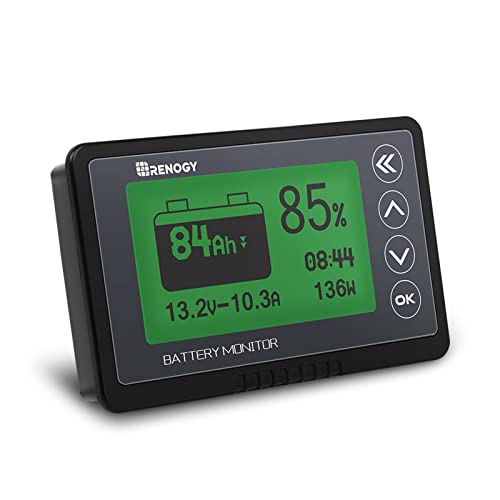
Renogy 500A Battery Monitor with Shunt, High and Low Voltage Programmable Alarm, Range 10V-120V up to 500A, 20ft Shielded Cable, Compatible 12V Lithium Sealed, Gel, Flooded Batteries,Black
1% Accuracy Measurement: Shunt-type battery monitor design provides much more accurate real-time voltage and current draw measurement.
As an affiliate, we earn on qualifying purchases.
As an affiliate, we earn on qualifying purchases.
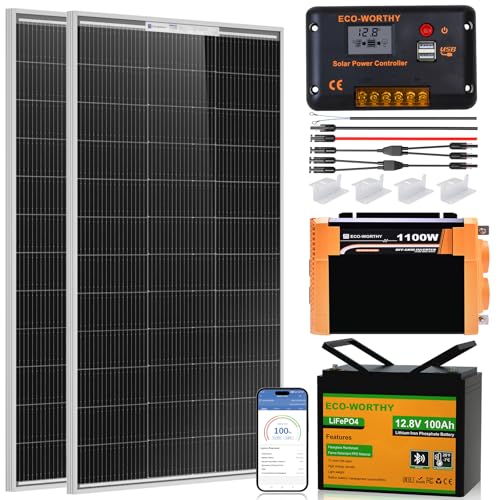
ECO-WORTHY 200 Watt 12V Complete Solar Panel Starter Kit for RV Off Grid with Battery and Inverter: 2pcs 100W Solar Panel + 30A Charge Controller + 100Ah Lithium Battery + 1100W Premium Solar Inverter
One-Stop Solar Solution: This complete 200W solar complete system generates 800Wh of power daily and stores 1.28Kwh of…
As an affiliate, we earn on qualifying purchases.
As an affiliate, we earn on qualifying purchases.