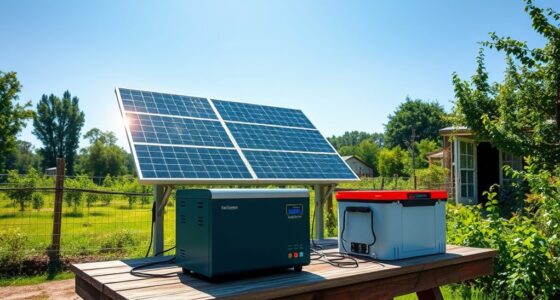

As a renter, consider portable solar generators or expandable, easy-to-move systems that don’t require permanent installation. Focus on options with minimal upkeep and no installation fees, which give you flexibility during power outages. Think about your energy needs and budget — larger systems can offer long-term savings but cost more upfront. Choosing the right system means balancing convenience, cost, and reliability. Keep exploring for more tips on picking the perfect solar backup for your situation.

Get backup power and energy gear delivered free with Prime
- Fast, free delivery on millions of items
- Prime Video, Amazon Music and more included
- Member-only deals all year
Key Takeaways
- Prioritize portable or temporary solar systems that require minimal installation and are easy to move or store.
- Consider upfront costs versus long-term savings based on your energy needs and system capacity.
- Choose low-maintenance options with user-friendly features like app monitoring for hassle-free upkeep.
- Ensure the system’s size and capacity match your power requirements for reliable backup during outages.
- Evaluate safety, compatibility with emergency equipment, and flexibility to expand or adapt your solar backup solution.
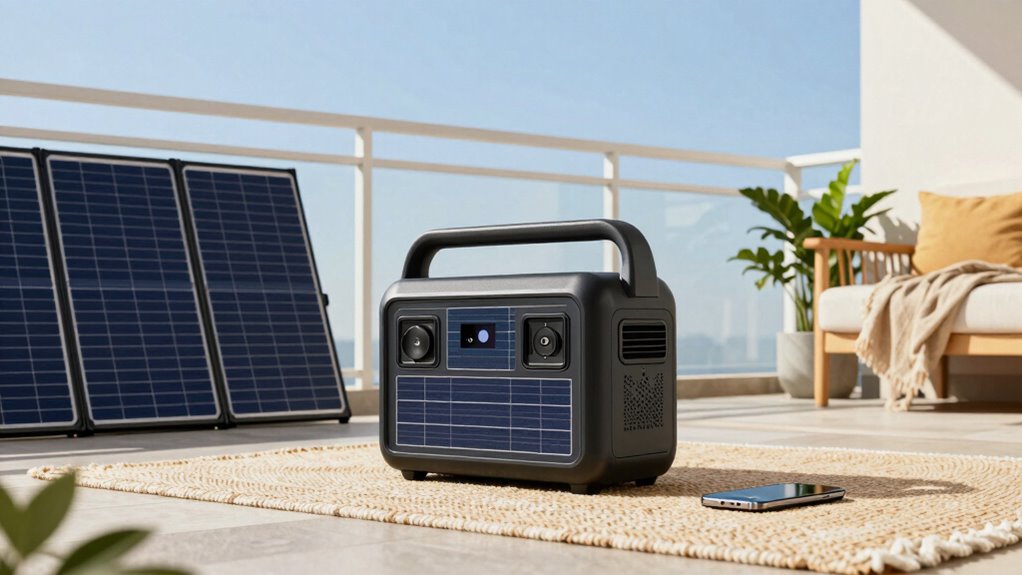
If you’re renting and worried about power outages, considering solar backup options can seem complicated. You might wonder if it’s worth the effort or cost, especially since you don’t own the property. The good news is, you have several choices that don’t require permanent installation or major commitments. Solar backup solutions can provide peace of mind during outages, but it’s essential to weigh the benefits against the backup power costs and maintenance requirements. While traditional solar panel maintenance is minimal, it’s still important to ensure your system stays in good shape to maximize its efficiency and lifespan. Many portable or temporary solar options require little upkeep, making them ideal for renters who want an easy, low-maintenance backup.
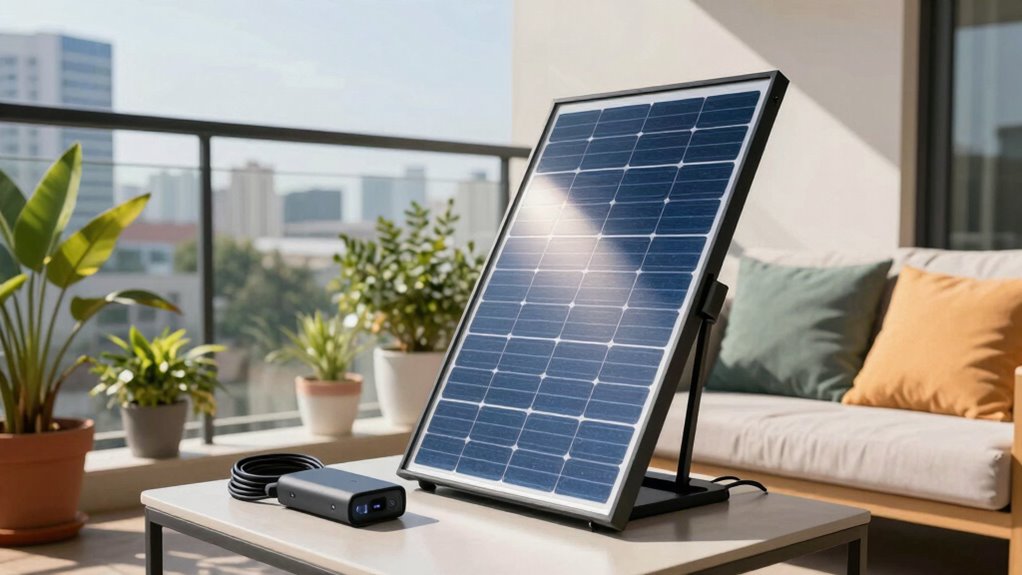
When evaluating solar backup options, you should consider the upfront and ongoing costs. Backup power costs vary depending on the size of the system and your energy needs. Portable solar generators, for instance, tend to have a higher initial price but don’t involve installation fees or long-term commitments. These units can power essential appliances during outages, making them a flexible choice. On the other hand, larger, more integrated solutions might offer better long-term savings but often come with higher upfront costs and maintenance requirements. Since you don’t own the property, permanent installations aren’t usually feasible, so focus on portable or temporary systems that can be easily moved or stored. Additionally, some portable systems are designed to be expandable, allowing you to increase capacity as needed without significant reconfiguration.
You also want to think about the practicality of maintaining your solar backup setup. Portable solar generators generally require little more than occasional cleaning and battery management, which is straightforward. You won’t have to worry about complex solar panel maintenance like cleaning panels regularly or checking electrical connections, as those systems are designed to be user-friendly. This simplicity makes them perfect for renters who want reliable backup power without the hassle. Additionally, some systems come with app-based monitoring, so you can track performance and battery levels remotely, giving you peace of mind during outages. Knowing how to efficiently charge and store your solar backup system can extend its lifespan and reliability. Moreover, understanding microphones and their maintenance can be useful if you use sound equipment during emergencies, ensuring clear communication when it matters most. It’s also helpful to be familiar with solar safety guidelines to prevent potential hazards during setup and use. Furthermore, choosing systems with easy portability can enhance your ability to adapt your setup as needed.
Ultimately, your decision should balance convenience, cost, and reliability. Portable solar backup options offer a flexible, low-maintenance way to prepare for power outages without the financial and logistical commitments of permanent solar installations. Be sure to compare backup power costs carefully and choose a system that fits your energy needs and budget. With the right setup, you can enjoy uninterrupted power during emergencies, all while keeping maintenance simple and manageable as a renter.
Products Worth Considering

Ring Battery Doorbell Plus (2nd Gen) with Quick Release Battery Pack, Nickel Silver

Ring Battery Doorbell Plus, Satin Nickel

eufy Security E30 4K Indoor Pan and Tilt Camera, 2-Pack
As an affiliate, we earn on qualifying purchases.
Frequently Asked Questions
Can Renters Install Their Own Solar Backup Systems?
You likely can’t install your own solar backup systems without permission, as rental agreements typically restrict modifications. To proceed, you need to get installation permissions from your landlord or property manager. They might allow temporary solutions like portable solar generators or battery backups, but permanent installations usually require approval, and possibly, the landlord’s involvement. Always review your rental agreement first to avoid violating any terms.
What Are the Costs Associated With Portable Solar Backups?
The costs for portable solar backups vary based on solar panel efficiency and battery capacity. You can expect to spend between $200 and $2,000, depending on size and power. Higher efficiency panels generate more energy, reducing long-term costs, while larger battery capacities store more power for backup. Keep in mind, premium models cost more upfront but offer better performance and longer lifespan, making them a smarter investment for reliable backup.
How Does Solar Backup Affect Renters’ Utility Bills?
Think of solar backup as a safety net that catches your energy needs when the grid falters. It can reduce your utility bills by providing stored energy during peak rates, enhancing power reliability, and minimizing outages. Energy storage plays a crucial role here, allowing you to draw from your backup system when needed. As a renter, this setup offers flexibility, potentially lowering costs while ensuring consistent power when you need it most.
Are There Insurance Considerations for Portable Solar Systems?
Yes, there are insurance considerations for portable solar systems. You should check your insurance policy to see if it covers damage or theft through insurance claims, or if you need additional coverage options. Portable solar systems can be valuable, so ensuring they’re protected against accidents or vandalism is smart. Contact your insurer to clarify coverage details and consider adding riders if necessary to fully safeguard your investment.
How Long Do Portable Solar Backups Typically Last?
Portable solar backups usually last between 3 to 5 years, depending on usage and quality. Imagine a battery capacity of around 200 watt-hours powering your devices during outages—that’s enough for hours of essential use. Maintenance requirements are minimal; keeping the system clean and charging it regularly can extend its lifespan. With proper care, you guarantee your backup stays reliable when you need it most.
Conclusion
So, seize the opportunity, stay savvy, and simplify your solar backup search. By balancing budgets, browsing options, and brainstorming backup ideas, you’ll brilliantly bolster your safety net. Remember, a proactive approach puts power in your hands and peace in your mind. With a little research and resourcefulness, you can confidently carve out a clever, cost-effective, and convenient solar backup plan—making your rental life safer, smarter, and more sustainable.