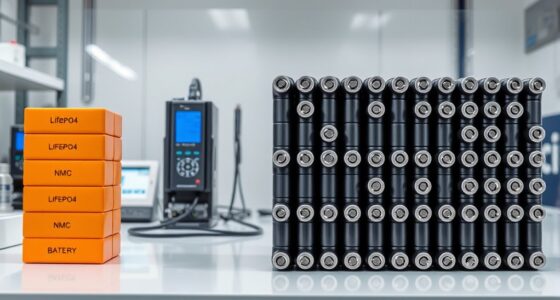
Battery cycle life is the number of full charge and discharge cycles your solar backup battery can handle before its capacity drops considerably. Each use contributes to wear and tear through chemical breakdown, causing capacity loss over time. Factors like deep discharges and usage habits affect how quickly your battery deteriorates. To get the most out of your system, you’ll want to monitor these cycles and maintain proper care. Keep going to learn more about maximizing your battery’s lifespan and performance.
Key Takeaways
- Battery cycle life refers to the number of complete charge-discharge cycles a battery can undergo before capacity significantly declines.
- Longer cycle life ensures reliable solar backup performance and extends the overall lifespan of your energy storage system.
- Deep discharges and frequent use accelerate battery degradation, reducing cycle life and backup duration.
- Proper maintenance and shallow cycling help maximize battery longevity and preserve capacity over time.
- Monitoring battery health and understanding cycle limits are essential for timely upgrades and cost-effective system management.
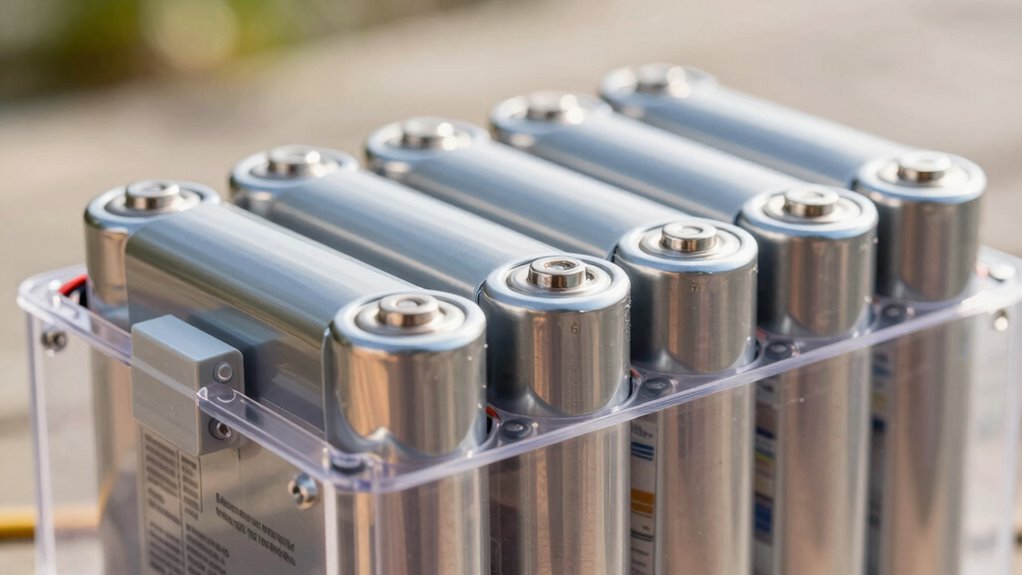
Ever wondered how long your battery will last before it needs replacing? When you rely on a solar backup system, understanding battery cycle life becomes vital. Your battery’s cycle life directly impacts how effectively your energy storage system functions over time. Essentially, each time you use stored energy—whether during a power outage or at night—you’re completing a cycle. The more cycles your battery can endure, the longer it will serve as a dependable backup. But every cycle also contributes to battery degradation, gradually diminishing its capacity to hold a charge. This process is natural and unavoidable, but knowing the factors that influence battery deterioration can help you maximize your system’s lifespan.
Understanding battery cycle life is key to maximizing your solar backup system’s longevity and performance.
Battery deterioration occurs because, with each charge and discharge, some chemical components in the battery break down. Over time, this leads to reduced capacity and efficiency. For solar backup users, this means your battery won’t store as much energy as it once did, and your backup power might last for shorter periods. The rate of deterioration depends on several factors, including the type of battery, how deeply you discharge it, and the frequency of its use. Deep discharges, where you drain the battery close to its minimum capacity, tend to accelerate deterioration, reducing overall cycle life. Conversely, shallow cycling—keeping the charge within a specific, higher range—can extend the lifespan.
To optimize your energy storage and prolong your battery’s cycle life, it’s essential to monitor usage patterns and avoid excessive deep discharges. Proper maintenance and adhering to manufacturer guidelines also help mitigate battery deterioration. Many modern batteries feature advanced chemistries designed to withstand more cycles and resist deterioration better. For example, battery chemistry plays a crucial role in how well a battery withstands repeated cycles. Additionally, understanding the types of batteries available can help you select a system best suited to your needs and usage habits. Recognizing the importance of battery management systems can further enhance your ability to protect your investment. Furthermore, selecting a high-quality battery can significantly improve the overall longevity of your energy storage system. Still, no battery lasts forever. Eventually, the capacity will drop to a point where replacing the battery becomes necessary to maintain your solar backup system’s effectiveness.
Understanding your battery’s cycle life helps you plan for eventual replacement and manage expectations. While it might seem like a small detail, knowing how many cycles your battery can handle allows you to time upgrades and avoid unexpected failures. Over time, as your battery experiences deterioration, you’ll notice shorter backup durations and reduced energy storage capacity. Being proactive by monitoring its health and usage can save you money and ensure your solar backup remains dependable for years to come. In the end, understanding battery cycle life is key to optimizing your system’s performance and getting the most out of your investment.

TalentCell 12V 6Ah LiFePO4 Battery Pack, Ultra Long Life Cycles Rechargeable DC 12.8V 6000mAh 76.8Wh Lithium Iron Phosphate Backup Battery for LED Strip, CCTV Camera, Router, Solar System, DIY Project
Long Cycle Life, 3000+ Cycles. 12 LiFePO4 battery pack is constructed from High Quality Lithium Iron phosphate battery…
As an affiliate, we earn on qualifying purchases.
As an affiliate, we earn on qualifying purchases.
Frequently Asked Questions
How Does Temperature Affect Battery Cycle Life?
Temperature can dramatically impact your battery’s cycle life, often more than you’d expect—like shrinking it to a fraction of its potential. When exposed to high or low temperatures outside ideal temperature thresholds, thermal degradation accelerates, damaging internal components. This shortens your battery’s lifespan. Staying within recommended temperature ranges helps maintain your battery’s health and prolongs its cycle life, ensuring reliable backup power when you need it most.
Can Cycle Life Be Extended With Proper Maintenance?
Yes, proper maintenance practices can extend your battery’s lifespan. Regularly checking and maintaining electrolyte levels, keeping terminals clean, and avoiding deep discharges all help preserve battery health. By staying proactive with maintenance, you reduce wear and tear, which in turn prolongs cycle life. Implementing these practices guarantees your solar backup system remains efficient and reliable over a longer period, maximizing your investment and minimizing replacement costs.
What’s the Difference Between Cycle Life and Calendar Life?
Cycle life refers to the number of charge cycles your battery can handle before experiencing significant battery degradation, reducing its capacity. Calendar life, on the other hand, is how long your battery lasts over time, regardless of charge cycles, influenced by factors like age and environmental conditions. While frequent charge cycles can shorten cycle life, proper maintenance can help extend both the cycle and calendar life of your battery.
How Do Different Battery Chemistries Impact Cycle Longevity?
Think of your battery as a garden; different chemistries are like varying soil types. Lithium-ion batteries, for example, have high electrolyte stability, which helps them last longer, while lead-acid batteries may face faster anode degradation, reducing cycle longevity. Solid-state batteries excel with very stable electrolytes, extending their life even further. Your choice of chemistry directly influences how many cycles you’ll enjoy before your battery needs replacing.
Does Depth of Discharge Influence Battery Cycle Life?
Yes, depth of discharge substantially impacts battery cycle life. When you regularly use a higher discharge level, it accelerates wear and reduces overall lifespan. The deeper you discharge, the more it affects cycle longevity due to increased stress on battery components. To extend your battery’s cycle life, it’s best to limit discharge effects, keeping levels shallow whenever possible. This approach helps maintain ideal performance and longevity over time.

12V 100Ah LiFePO4 Solar Battery – Deep Cycle Lithium Battery for Solar Systems, Off-Grid, RV, Marine, and Backup Power with 15000+ Cycles, Lightweight, Maintenance-Free
Reliable 12V Solar Battery for Solar Systems: This 12V 100Ah LiFePO4 solar battery is designed specifically for solar…
As an affiliate, we earn on qualifying purchases.
As an affiliate, we earn on qualifying purchases.
Conclusion
Think of your solar battery’s cycle life as the quiet ticking of a clock, counting down each charge and discharge. Just like a well-worn book that gains character with time, your battery’s lifespan depends on how gently you handle it. By understanding and respecting its limits, you guarantee your energy reserve remains a steadfast companion through many seasons. With mindful care, your solar backup will stand as a silent guardian, ready to serve whenever you need it most.

BPS-5000W Pro Solar Power System with 1600W Solar Panels, 51.2V 100Ah 5120Wh 5KW LiFePO4 Battery Energy Storage Powerwall, and 5KW 120V Hybrid Inverter Solar Energy System
[5000W Solar Power System]: 1600W solar panels for home use produce up to 9.6-12.8kWh daily with 6-8 hours…
As an affiliate, we earn on qualifying purchases.
As an affiliate, we earn on qualifying purchases.

Anker SOLIX C1000 Gen 2 Portable Power Station, 2,000W (Peak 3,000W) Solar Generator, Full Charge in 49 Min, 1,024Wh LiFePO4 Battery for Home Backup, Power Outages, and Camping (Optional Solar Panel)
49 Min UltraFast Recharging: With upgraded HyperFlash tech, fully recharge at 1,600W—for outage prepping, camping trips, or tailgating…
As an affiliate, we earn on qualifying purchases.
As an affiliate, we earn on qualifying purchases.