

TL;DR

Get backup power and energy gear delivered free with Prime
- Fast, free delivery on millions of items
- Prime Video, Amazon Music and more included
- Member-only deals all year
Scientists are investigating how classical Low-Density Parity-Check (LDPC) code design theories can be adapted for quantum error correction. This emerging research aims to enhance the stability and scalability of quantum computers by applying proven classical coding principles.
Researchers are actively exploring how classical LDPC (Low-Density Parity-Check) code design theory can be adapted for use in quantum error correction, a key challenge in advancing quantum computing technology. This effort aims to leverage well-understood classical coding principles to improve the reliability and scalability of quantum systems, which are highly susceptible to errors. The investigation is still in early stages, but initial findings suggest potential pathways for integrating classical error correction strategies into quantum architectures, marking a significant step in quantum hardware development.
The core of this emerging research involves translating the mathematical frameworks and design principles of classical LDPC codes—widely used in digital communications and data storage—into the quantum domain. Classical LDPC codes are valued for their sparse parity-check matrices, which enable efficient error detection and correction with low computational overhead. Applying similar principles to quantum error correction could address one of the main hurdles in quantum computing: maintaining qubit coherence in noisy environments.
Current quantum error correction methods, such as surface codes, require large qubit overheads and complex decoding algorithms. Researchers believe that classical LDPC code theory offers a promising alternative because of its proven efficiency and robustness in classical systems. Early theoretical work indicates that certain LDPC code structures can be adapted to quantum error correction schemes, potentially reducing resource demands and improving fault tolerance.
Several academic groups and industry labs are now conducting simulations and small-scale experiments to test these concepts. While these efforts have not yet produced a fully functional quantum LDPC code, initial models demonstrate that classical design principles can inform the development of quantum-compatible codes, with some promising error thresholds observed in simulations.
Potential Impact on Quantum Error Correction Strategies
This research could significantly influence the future of quantum error correction (QEC), which is critical for the development of practical, large-scale quantum computers. If classical LDPC code design principles can be successfully adapted, it may lead to more resource-efficient QEC schemes, reducing the number of physical qubits needed to implement logical qubits. This could accelerate the transition from experimental quantum devices to commercially viable quantum systems, impacting fields from cryptography to complex simulations.
Moreover, integrating classical coding strategies into quantum architectures might streamline error decoding processes, making real-time correction more feasible and less computationally intensive. Such advancements could improve the overall fault tolerance of quantum processors, a key metric for their practical deployment.
However, experts caution that the translation from classical to quantum error correction is non-trivial, given the fundamentally different nature of quantum information and error types. The success of this approach depends on overcoming these theoretical and practical challenges, which are still under active investigation.
Products Worth Considering
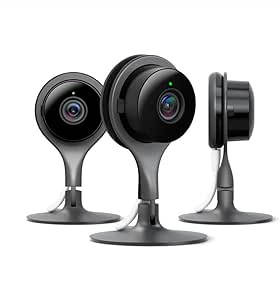
Google Nest Cam Indoor Security Camera, 3-Pack

Shark AI Ultra Robot Vacuum with Self-Empty Base

Levoit Eleva 300X HEPA Air Purifier for Home and Bedroom
As an affiliate, we earn on qualifying purchases.
Background on Classical LDPC Codes and Quantum Error Correction
Classical LDPC codes have been a mainstay in digital communications since their development in the 1960s, due to their ability to efficiently detect and correct errors with sparse parity-check matrices. Their widespread use in modern data transmission and storage systems underscores their robustness and efficiency.
Quantum error correction, on the other hand, is a relatively newer field, driven by the need to protect fragile quantum states from errors caused by decoherence and operational noise. Current leading methods, like surface codes, require large qubit overheads and complex decoding algorithms, which hinder scalability.
Interest in applying classical coding theory to quantum systems has grown as researchers seek more resource-efficient error correction models. Recent theoretical work has suggested that certain classical code structures could be adapted for quantum error correction, but practical implementation remains in early stages. The current spike in coverage and research interest appears to be driven by this promising intersection, though details are still emerging and unconfirmed.
Key Challenges in Translating Classical LDPC to Quantum Codes
It is not yet clear how effectively classical LDPC code structures can be adapted to quantum error correction, given the unique constraints of quantum mechanics. Theoretical models have shown promise, but practical, scalable implementations are still in development. Researchers are actively investigating issues such as maintaining quantum coherence, error type differences, and decoding complexity. The extent to which classical principles will translate into real-world quantum systems remains uncertain, and further experimental validation is needed.
Next Steps in Research and Development of Quantum LDPC Codes
Researchers plan to conduct more detailed simulations and small-scale experiments to test the viability of quantum LDPC codes derived from classical design principles. Collaborative efforts between academia and industry are expected to accelerate these developments, with some groups aiming to prototype quantum error correction schemes based on this approach within the next year. The ongoing work will also focus on refining decoding algorithms and assessing resource requirements, key to practical deployment.
Key Questions
What are LDPC codes and why are they important?
LDPC codes are a type of error-correcting code used in classical digital communication systems to detect and correct errors efficiently, enabling reliable data transmission even over noisy channels.
How could classical error correction theories benefit quantum computing?
Applying classical error correction principles like LDPC codes could reduce the resource overhead needed for quantum error correction, potentially making quantum computers more scalable and fault-tolerant.
What are the main challenges in adapting classical codes to quantum systems?
The primary challenges include differences in error types, quantum coherence preservation, and the complexity of decoding quantum errors using classical-inspired codes.
When might we see practical quantum LDPC codes in use?
It is uncertain; researchers are still in early stages of testing, with prototypes and simulations expected over the next 1-2 years. Widespread application may take longer, depending on experimental success.
Why is this research trend gaining attention now?
The growing need for more efficient quantum error correction methods and recent theoretical advances have sparked increased interest in translating classical coding strategies into the quantum domain.
Source: rss