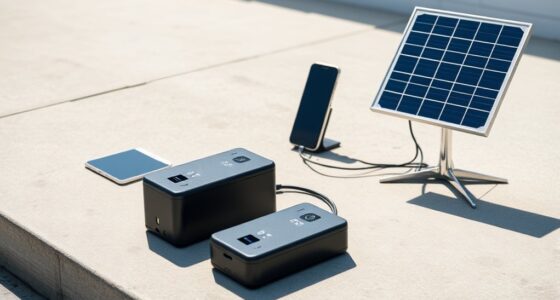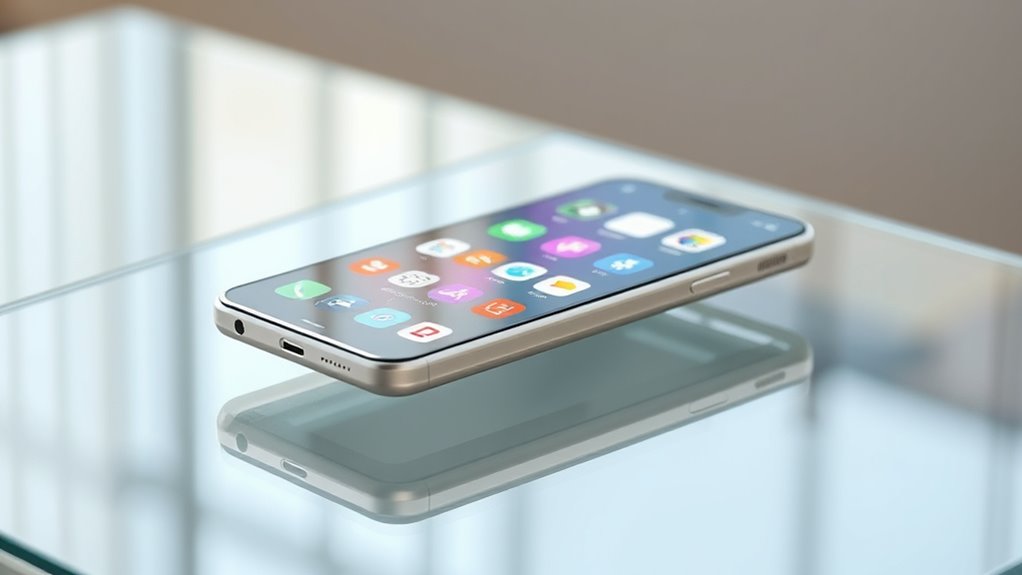

Transparent solar cells are revolutionizing consumer electronics by turning your device’s screens and glass surfaces into power sources that harvest ambient light. They can keep your gadgets charged without bulky batteries or external chargers, all while maintaining sleek designs and clear displays. These durable, flexible materials are continually improving, making devices more efficient and eco-friendly. If you keep exploring, you’ll discover how these innovative cells are shaping the future of smarter, greener technology.
Key Takeaways
- Transparent solar cells enable energy harvesting without compromising device appearance or display quality.
- They integrate seamlessly into screens and glass surfaces, supporting sleek, lightweight, and innovative device designs.
- Advances in durable, flexible materials ensure long-lasting performance under environmental stresses.
- This technology reduces reliance on traditional batteries, promoting more sustainable and energy-efficient consumer electronics.
- Ongoing research aims to improve efficiency and longevity, making transparent solar cells increasingly viable for everyday use.
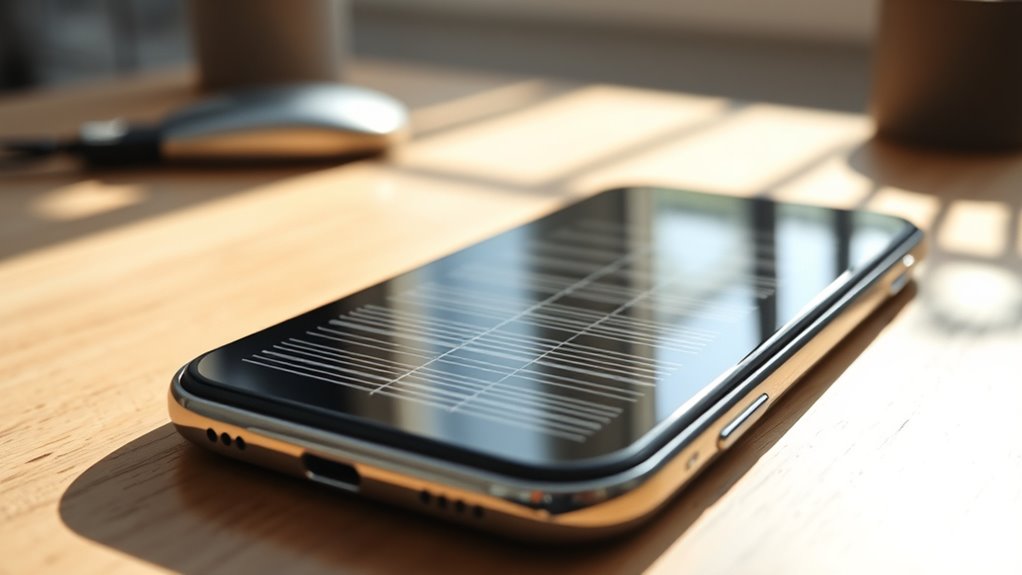
Transparent solar cells are revolutionizing the way we harness renewable energy by turning windows and glass surfaces into power generators. In the domain of consumer electronics, this innovation allows your devices to become self-sufficient, reducing reliance on traditional charging methods. Imagine your smartphone or tablet subtly generating power from ambient light without extra bulky batteries or cables. This seamless integration of energy harvesting technology means you can stay unplugged longer and reduce your carbon footprint.
One of the most impressive features of transparent solar cells is their ability to blend into existing designs without sacrificing aesthetics. Their transparency ensures that screens remain clear and vibrant while still capturing sunlight to produce electricity. As you use your device, these cells actively harvest energy from surrounding light sources—whether indoors or outdoors—making charging more efficient and less obtrusive. This continuous energy harvesting can supplement or even replace conventional power sources, especially in devices designed for extended use or in remote settings.
Transparent solar cells blend seamlessly into device designs, harvesting energy without compromising clarity or aesthetics.
However, for these solar cells to be practical in consumer electronics, material durability becomes paramount. You need materials that can withstand daily wear and tear—scratches, temperature fluctuations, and exposure to moisture—all without losing their transparency or efficiency. Advances in material science have led to the development of robust, flexible, and corrosion-resistant materials that maintain high performance over time. This durability ensures that your devices won’t just benefit from renewable energy but will also remain reliable and long-lasting. As you handle and carry your gadgets around, these durable materials guarantee the solar cells’ longevity, making them a truly sustainable addition.
Additionally, ongoing research in material science is focused on enhancing the robustness and lifespan of transparent solar materials, further supporting their integration into everyday consumer electronics. The integration of transparent solar cells into consumer electronics isn’t just about energy efficiency; it’s about transforming the way you interact with technology. You won’t need to think about plugging in your device constantly or running out of battery during important moments. Instead, your gadgets will continually harvest ambient light, powering themselves intelligently. This innovation also opens doors for new designs—thinner, lighter, and more elegant devices that embed solar technology without overwhelming their appearance. As the technology matures, expect to see more devices that are not only smarter but also more environmentally friendly, seamlessly combining form and function.
Frequently Asked Questions
How Durable Are Transparent Solar Cells in Everyday Use?
You’ll find that transparent solar cells are quite durable for everyday use. Through durability testing, manufacturers ensure they withstand daily wear, exposure to sunlight, and minor impacts. Their material resilience helps them maintain efficiency over time without cracking or fading. While they’re generally reliable, avoiding harsh conditions and cleaning them gently can extend their lifespan, making them a practical, eco-friendly choice for powering your devices consistently.
Can Transparent Solar Cells Fully Power Portable Devices?
Sure, transparent solar cells can easily pretend to be your device’s best friend, but don’t expect them to fully power your gadgets just yet. They excel at energy harvesting and can supplement power, helping with sustainability, but they usually can’t handle the entire load. Think of them as a clever sidekick rather than the hero of your device’s power story—yet. Keep your charger handy; they’re more support than standalone saviors.
Are Transparent Solar Cells Environmentally Friendly to Produce?
Yes, transparent solar cells are environmentally friendly to produce, but you should consider their manufacturing impact and recycling challenges. The manufacturing process uses fewer resources and emits less pollution compared to traditional solar panels. However, recycling these cells can be tricky due to their delicate materials and layered design. Overall, they offer a greener alternative, but ongoing innovations are needed to address recycling and sustainability concerns effectively.
How Do Transparent Solar Cells Compare in Efficiency to Traditional Panels?
You’ll find that transparent solar cells are like tiny energy wizards, though they’re less efficient than traditional panels. Their energy conversion rates are lower because of material transparency, which allows light to pass through but limits energy absorption. While they’re perfect for integration into screens and devices, they currently can’t match the raw power of conventional solar panels. Still, ongoing innovations promise to close this gap soon.
What Are the Cost Implications of Adopting Transparent Solar Technology?
You’ll find that adopting transparent solar technology initially increases manufacturing costs due to specialized materials and processes. However, as market adoption grows, economies of scale will likely lower these costs over time. While upfront investments may be higher, your long-term savings could be significant through energy efficiency and reduced external power needs. Ultimately, the cost implications depend on how quickly the market embraces this innovative, eco-friendly solution.
Conclusion
As you consider the future of consumer electronics, transparent solar cells offer a promising solution. Did you know they can generate up to 10% more energy than traditional panels while remaining nearly invisible? This innovation means your devices could soon charge themselves seamlessly, blending sustainability with sleek design. By embracing transparent solar technology, you’re helping to reduce carbon footprints and pave the way for a smarter, greener world. The future of energy-efficient gadgets is clearer than ever.