TL;DR
Researchers have developed the most efficient solar panels to date, achieving 34.4% efficiency. Simultaneously, a new technology has emerged that can turn ocean water into drinking water without generating waste. These innovations could significantly impact renewable energy and water scarcity solutions.
Researchers have announced the development of the world’s most efficient solar panel, achieving a record 34.4% efficiency, alongside a new method to convert ocean water into drinking water without waste. These innovations could accelerate clean energy adoption and address global water scarcity, making them highly significant for future sustainability efforts.
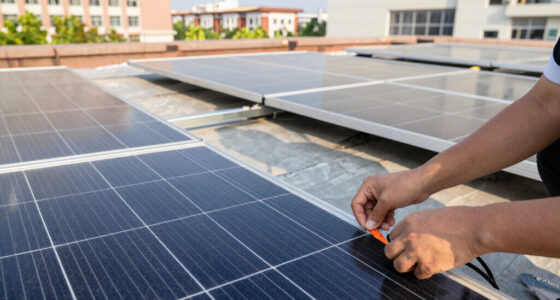
The new solar PV module, developed by scientists at Fraunhofer ISE, has set a record efficiency of 34.4%, surpassing previous benchmarks and promising more cost-effective renewable energy generation. This achievement involves advanced III-V germanium photovoltaic technology, which is notable for its high efficiency and potential scalability.
In parallel, an innovative water treatment method has been introduced that can turn ocean water into potable drinking water without producing waste brine. According to sources, this process utilizes a novel filtration and desalination technique that minimizes environmental impact, though details about its deployment scale remain limited.
Implications for Renewable Energy and Water Security
The development of the most efficient solar panels could significantly reduce the cost and increase the adoption of solar energy worldwide, supporting global decarbonization efforts. Meanwhile, the ocean water-to-drink technology offers a potential solution to water scarcity in arid regions and coastal communities, reducing environmental harm associated with traditional desalination methods.
Both innovations could have broad economic and environmental impacts, accelerating the transition to sustainable resource use and helping mitigate climate change-related challenges.

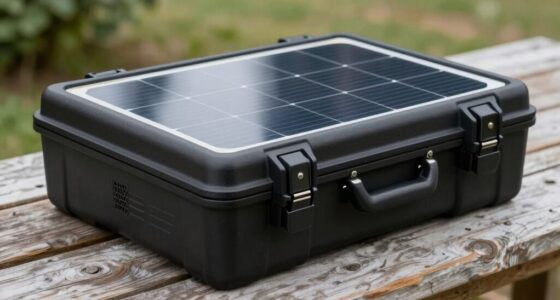
JJN Bifacial 425 Watt Solar Panel, N-Type UL 61730 16BB Solar Panels, 25% High Efficiency Monocrystalline Solar Module for 12V/24V/48V PV System for Homes Rooftop Farm RV and Off-Grid Applications
[Bifacial Technology]This package contains the solar panel only. These 425W Bifacial solar panels feature a transparent backsheet design,…
As an affiliate, we earn on qualifying purchases.
As an affiliate, we earn on qualifying purchases.
Recent Advances in Solar and Water Technologies
Solar panel efficiency has steadily improved over the past decade, with Fraunhofer ISE’s recent record at 34.4% marking a significant milestone. The technology involves III-V semiconductor materials, which are more efficient but traditionally more expensive than silicon-based panels.
Desalination and water purification methods have also advanced, with new techniques aiming to reduce waste and energy consumption. The latest ocean water-to-drink process builds on these efforts, though large-scale implementation remains in development stages.
“The new solar module efficiency breakthrough could transform renewable energy deployment globally.”
— an anonymous researcher

SoldonSUN Midnite Solar Photovoltaic Combiner – 3-Position, ModelN. MNPV3
(For 150 VDC charge controllers and 600 VDC grid tie inverters)
As an affiliate, we earn on qualifying purchases.
As an affiliate, we earn on qualifying purchases.
Deployment and Scalability of New Technologies
Details about the commercial availability and scalability of the solar panels and water treatment method remain limited. It is unclear when these innovations will be widely adopted or integrated into existing infrastructure, and whether they will meet real-world operational challenges.
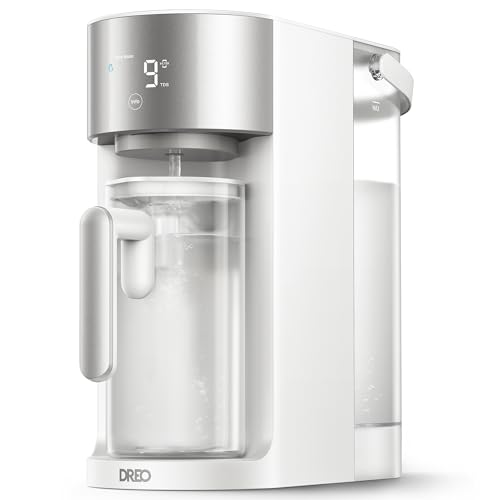
DREO Reverse Osmosis Water Filter Countertop, RO Filtration System, 3:1 Pure to Drain, TDS & Filter Life & Autofill Pitcher, Installation-Free, Self-Cleaning Water Purifier, RO Water Filter
𝗦𝗚𝗦 𝗧𝗲𝘀𝘁𝗲𝗱 𝗳𝗼𝗿 𝗣𝗲𝗮𝗰𝗲 𝗼𝗳 𝗠𝗶𝗻𝗱: Tested by SGS, the DREO 7-in-1 RO filter removes 1000+ impurities (up…
As an affiliate, we earn on qualifying purchases.
As an affiliate, we earn on qualifying purchases.
Next Steps for Commercial Adoption and Research
Further testing, pilot projects, and investment are expected to follow to assess the practical deployment of these technologies. Researchers and companies will likely focus on scaling production, reducing costs, and integrating these solutions into energy and water systems globally.
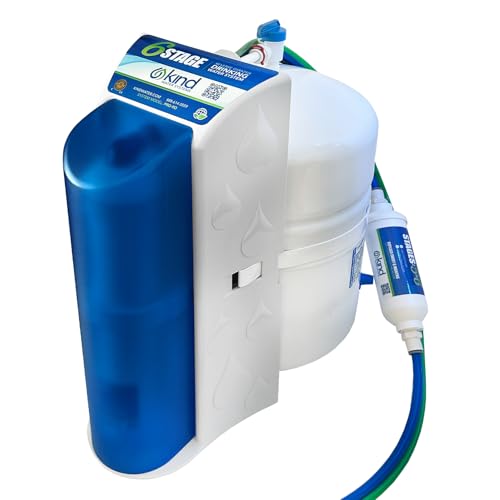
Kind Water Systems 6-Stage Reverse Osmosis Drinking Water System – Under Sink Filter for Ultra-Pure, Great-Tasting Water – Removes 99% of Contaminants – Easy DIY Install
6-Stage Filtration – Multi-layer system includes sediment, GAC, RO membrane, charcoal, and remineralization filters
As an affiliate, we earn on qualifying purchases.
As an affiliate, we earn on qualifying purchases.
Key Questions
How much more efficient are the new solar panels compared to current models?
The new solar panels achieve a record efficiency of 34.4%, which is significantly higher than the typical 20-22% efficiency of standard silicon-based panels, representing a major technological leap.
Can the ocean water-to-drink technology be used in large-scale applications?
While promising, the technology is still in early development stages, and its scalability and cost-effectiveness for large-scale deployment are yet to be proven.
What are the environmental benefits of the new water treatment method?
The process minimizes waste by avoiding brine discharge common in traditional desalination, potentially reducing environmental harm in coastal ecosystems.
When might these technologies become commercially available?
It is not yet clear; further research, pilot testing, and investment are needed before they can be widely adopted, which could take several years.
What impact could these innovations have on global water and energy issues?
If successfully scaled, they could significantly reduce costs and environmental impacts, helping to address water scarcity and accelerate renewable energy adoption worldwide.
Source: CleanTechnica