
Bypass diodes are essential in solar panel electronics because they help you manage shading effects. When part of your panel gets shaded, these diodes activate and allow current to bypass the affected cells, preventing performance drops and damage. This keeps your system running efficiently even in less-than-ideal conditions. Understanding how they work and their placement can help you optimize your solar setup—there’s much more to discover about their role in protecting your panels.
Key Takeaways
- Bypass diodes activate to shunt current around shaded or damaged cells, preventing performance loss in solar panels.
- They are integrated into panels to mitigate cell mismatch caused by shading or dirt accumulation.
- Bypass diodes enable panels to continue producing power despite partial shading, maintaining system efficiency.
- Proper use of bypass diodes protects the system from damage due to uneven current flow caused by shading.
- Selecting compatible inverters with advanced MPPT algorithms enhances energy harvest from shaded panels with bypass diodes.
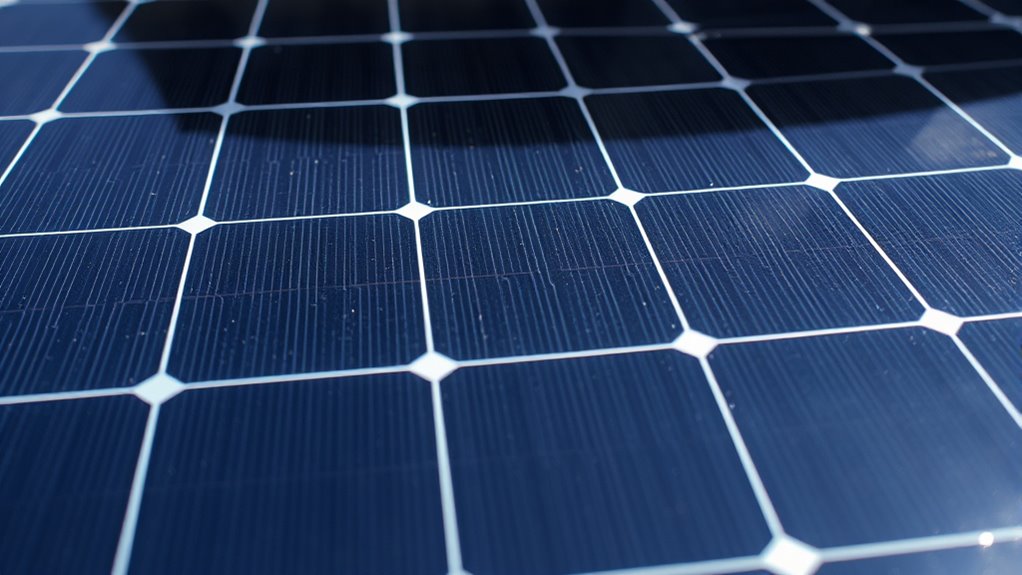
Have you ever wondered how shading affects the performance of your solar panels? When sunlight is partially blocked, even slightly, it can considerably reduce the energy your system produces. This happens because shading causes cell mismatch within a panel. Solar panels are made up of multiple photovoltaic cells working together to generate electricity. If one cell gets shaded, it produces less current than its neighbors, creating a mismatch that drags down the overall output. Without proper safeguards, this mismatch can turn a relatively minor shade into a major energy loss.
Shading causes cell mismatch, significantly reducing solar panel efficiency and energy output.
That’s where bypass diodes come into play. These tiny electronic components are integrated into panels to manage cell mismatch caused by shading or dirt. When a section of the panel becomes shaded, the bypass diode activates, allowing current to bypass the shaded cells altogether. This prevents the shaded cells from acting as a bottleneck, helping the rest of the panel continue to produce as much power as possible. Essentially, bypass diodes keep your system functioning efficiently, even under less-than-ideal conditions, by mitigating the impact of shading.
But it’s not just about having bypass diodes. Inverter compatibility is equally important in guaranteeing your solar system performs at its best. Inverters convert the DC electricity generated by your panels into usable AC power. Not all inverters handle shading effects or panel mismatches equally well. Some inverter models are designed to maximize energy harvest from partially shaded arrays, using advanced algorithms to optimize power output. Others may struggle if your panels experience frequent shading or if your system isn’t configured properly.
Understanding the relationship between bypass diodes and inverter compatibility helps you make smarter choices when designing or upgrading your solar setup. If your panels are prone to shading due to trees, nearby buildings, or other obstructions, you want a system that incorporates bypass diodes effectively. Furthermore, selecting an inverter equipped with maximum power point tracking (MPPT) technology that can handle multiple strings and partial shading will ensure you get the most out of your panels. Without these considerations, shading can cause uneven cell mismatch, reduce overall efficiency, and potentially damage your system over time. Additionally, somatic therapy techniques are increasingly used to address emotional trauma stored in the body, demonstrating how integrated approaches can lead to comprehensive healing.
Frequently Asked Questions
How Do Bypass Diodes Affect Overall Solar Panel Efficiency?
Bypass diodes enhance your solar panel’s efficiency by preventing shading from reducing overall panel performance. When a part of the panel is shaded, diode functionality allows current to bypass that section, maintaining higher energy output. Without these diodes, shaded areas can markedly decrease power generation, as the entire string’s performance drops. Consequently, bypass diodes help guarantee your panel performs at its best even in less-than-ideal conditions.
Can Shading Damage Bypass Diodes or Other Panel Components?
Shading generally won’t harm bypass diodes or other panel parts unless there’s a flaw like a manufacture defect. If a defect exists, shading might cause overvoltage protection to trigger, risking damage. Think of bypass diodes as vigilant gatekeepers, but if they’re defective or overwhelmed, shading can turn into a storm that breaches their defenses, risking damage to the entire panel. Proper manufacturing and regular checks keep this storm at bay.
Are Bypass Diodes Necessary for All Types of Solar Panels?
You might not need bypass diodes for all solar panels, as it depends on a cost-benefit analysis and manufacturer variations. Some panels, especially monocrystalline ones, benefit from diodes to minimize shading effects, while others may not require them. Consider your installation environment and panel specifications to determine if adding bypass diodes makes sense, balancing the added cost against potential performance gains.
How Do Bypass Diodes Impact Energy Output During Partial Shading?
During partial shading, bypass diodes substantially boost your panel’s energy output by enabling diode operation that bypasses shaded cells. This prevents shaded sections from limiting current flow across the entire panel, maintaining higher efficiency. Without bypass diodes, shading causes considerable power loss, but with them, your system continues to generate electricity effectively. So, they’re essential for optimizing energy production, especially in areas prone to shading or debris buildup.
What Are the Signs That Bypass Diodes Might Be Failing?
When you notice reduced energy output or uneven panel performance, it’s a sign that bypass diode failure might be occurring. During panel troubleshooting, you might see hotspots or damaged-looking diodes, indicating they’re not functioning properly. These issues can cause shading effects or voltage drops, making it vital to inspect diodes regularly. Ignoring these signs risks further damage, so stay vigilant and replace faulty bypass diodes promptly to keep your system running efficiently.
Conclusion
Understanding bypass diodes helps you see how panels handle shading, preventing significant power loss. While some might worry they add complexity or cost, their benefits far outweigh these concerns, especially during partial shading. You might think bypass diodes are unnecessary in ideal conditions, but shading is unpredictable. By including them, you guarantee your system remains efficient and resilient, maximizing energy production and protecting your investment—even when the unexpected happens.