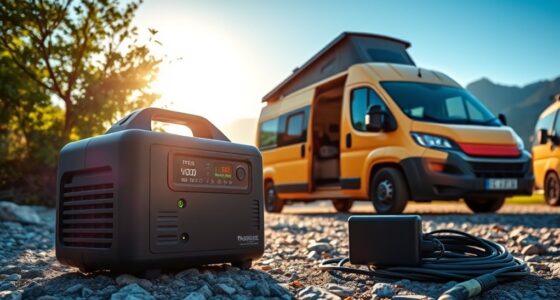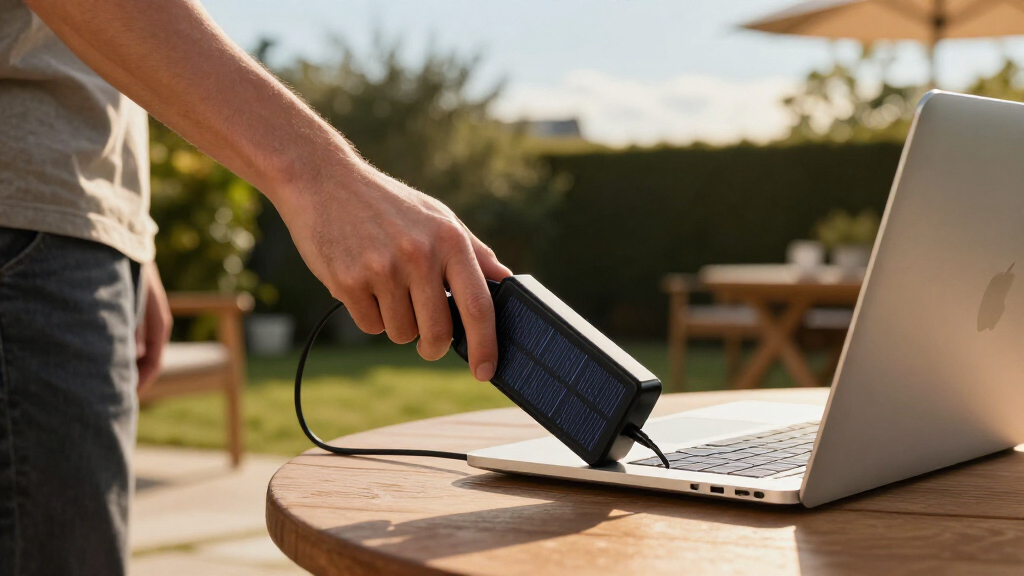
A solar-powered laptop charger only earns its keep if it can deliver 45W or more through USB-C PD or an AC outlet — a bar that quietly knocks out half the products marketed under this label. After comparing 11 options on usable capacity, output, and realistic solar recharge speed, the Jackery Explorer 300 stands out as the best overall pick: its 292Wh LiFePO4 battery refills most laptops four to five times, and its 300W pure sine wave outlet handles even power-hungry machines. The FlexSolar 60W foldable panel takes a different route, feeding a USB-C laptop straight from the sun with no battery in between, while the Takki 88.8Wh kit gives first-time buyers a complete starter setup for under $100. The core tradeoff in this category is capacity versus weight — every extra 100Wh of runtime adds roughly a kilogram — and no bundled panel here refills a battery fast enough to skip wall charging before a trip. Budget power banks like the Soarise and YELOMIN look tempting but are phone-grade hardware wearing laptop marketing. Read on for the full ranking, the math behind it, and the picks matched to how you actually work.
Complete the kit


Key Takeaways
- Watt-hours separate real laptop chargers from phone gear. The Jackery Explorer 300’s 292Wh refills a typical 60Wh laptop battery about four times; the 88-90Wh units from Takki and Daran manage roughly one, and the 10,000mAh YELOMIN bank never gets close.
- Solar panels here are refill tools, not primary power. The bundled 21-40W panels need anywhere from 8 to 15 hours of good sun to recharge their own stations — only the 60W FlexSolar panel can feed a USB-C laptop at usable speed in direct sun.
- The 100Wh line matters twice. It is both the airline carry-on ceiling and roughly the point where AC outlets appear: every pick above it except the Soarise bank includes a wall-style outlet, and nearly everything below it is USB-C only.
- LiFePO4 chemistry quietly split the field. The Jackery Explorer 300 and Daran 89.6Wh units are rated for thousands of charge cycles — several times the lifespan of the standard lithium-ion packs in the budget stations, which matters if you recharge weekly.
- mAh ratings hid the real comparison. The Soarise’s 48,000mAh sounds dominant but converts to about 178Wh at cell voltage — less runtime than the plain 220Wh station — while the two near-identical 146Wh bundles differ mainly in included accessories, not power.
| Jackery Explorer 300 Portable Power Station (292Wh, LiFePO4) |  | Best Overall | Capacity: 292Wh | Battery Chemistry: LiFePO4, 4,000+ charge cycles | Weight: 7.5 lbs | VIEW LATEST PRICE | See Our Full Breakdown |
| Takki Solar Generator 88.8Wh with 21W Solar Panel |  | Best Starter Kit | Battery Capacity: 88.8Wh | Peak Output: 120W (80W rated devices) | Weight: 2.29 lbs | VIEW LATEST PRICE | See Our Full Breakdown |
| YELOMIN 10000mAh Solar Power Bank with Foldable Panels |  | Best Pocket Backup for Phones | Capacity: 10,000mAh (≈37Wh) | Solar Panels: 4 foldable, built in | Wireless Charging: 15W | VIEW LATEST PRICE | See Our Full Breakdown |
| Solar Powered Generator 100W with 40W Solar Panels (146Wh) |  | Best Value Solar Kit | Capacity: 146Wh | Solar Panel: 40W, included | Weight: 3.3 lbs | VIEW LATEST PRICE | See Our Full Breakdown |
| Portable Power Station 300W, 220Wh Solar Generator |  | Best for Multi-Device Charging | Power Output: 300W (600W peak) | Battery Capacity: 220Wh | Weight: 5 lbs | VIEW LATEST PRICE | See Our Full Breakdown |
| Soarise Solar Power Bank 48000mAh Wireless Portable Charger |  | Best for Multi-Device Charging | Capacity: 48000mAh | Solar Panels: 4 fold-out panels | Ports: 2 USB-A, 1 USB-C (input/output) | VIEW LATEST PRICE | See Our Full Breakdown |
| Portable Solar Power Bank with AC Outlet 65W 110V, 24000mAh |  | Best Value for Laptop Charging | Battery Capacity: 24000mAh | AC Output: 65W max, 110V | Solar Panel: 30W foldable, included | VIEW LATEST PRICE | See Our Full Breakdown |
| Daran Portable Power Station 89.6Wh LiFePO4 Battery with 100W Output |  | Best Compact Pick | Battery Capacity: 89.6Wh | Battery Type: LiFePO4 | Max Output: 100W | VIEW LATEST PRICE | See Our Full Breakdown |
| Portable Power Station with 40W Solar Panel, 100W Solar Powered Generator, 146Wh |  | Best Overall | Battery Capacity: 146Wh | Solar Panel: 40W foldable, included | AC Outlets: 2 x 100W max | VIEW LATEST PRICE | See Our Full Breakdown |
| FlexSolar 60W Foldable Portable Solar Panel Charger with USB-C, USB-A & DC |  | Best Panel-Only Upgrade | Rated Power: 60W | Ports: USB-C PD3.0, USB-A QC3.0, DC | Cell Type: A+ monocrystalline silicon | VIEW LATEST PRICE | See Our Full Breakdown |
| Portable Power Station 146Wh Solar Generator with AC Outlet |  | Best Lightweight Power Station | Capacity: 146Wh / 39,600mAh | Weight: 3.3 lbs | AC output: 2× 110V, 100W rated (200W peak) | VIEW LATEST PRICE | See Our Full Breakdown |
| solar-powered laptop charger | Weight |
|---|---|
| Jackery Explorer 300 Portable | 7.5 lbs |
| Takki Solar Generator 88.8Wh w | 2.29 lbs |
| YELOMIN 10000mAh Solar Power B | — |
| Solar Powered Generator 100W w | 3.3 lbs |
| Portable Power Station 300W | 5 lbs |
| Soarise Solar Power Bank 48000 | — |
| Portable Solar Power Bank with | — |
| Daran Portable Power Station 8 | 2.54 lbs |
| Portable Power Station with 40 | — |
| FlexSolar 60W Foldable Portabl | 2.6 lbs |
| Portable Power Station 146Wh S | 3.3 lbs |
More Details on Our Top Picks
Jackery Explorer 300 Portable Power Station (292Wh, LiFePO4)
The Jackery Explorer 300 is the one model in this lineup that treats laptop charging as its main job rather than an afterthought. Its 100W USB-C PD port powers a MacBook Pro or Dell XPS directly, so you skip the inefficiency of running an AC brick, and the 292Wh LiFePO4 battery holds roughly three times the energy of the Takki 88.8Wh kit while lasting over 4,000 charge cycles — years of regular use where cheaper packs fade. I’d call it the safest bet for remote work outdoors. The tradeoffs are real, though: at 7.5 lbs it’s the heaviest option here, the solar panel costs extra, and the 600W surge ceiling rules out anything beyond laptops and small electronics.
Pros:- 100W USB-C PD charges laptops directly without the AC brick
- 292Wh is the largest capacity in this roundup
- LiFePO4 chemistry rated for over 4,000 charge cycles
- Light for its class at 7.5 lbs with two AC outlets
Cons:- Solar panel sold separately, adding to the total cost
- 600W peak surge limits it to laptops and small electronics
- Heaviest option in the lineup
Best for: Remote workers and van-lifers who need to recharge a laptop daily off-grid and want a battery that survives years of cycling
Not ideal for: Ultralight backpackers counting ounces — at 7.5 lbs before you add a panel, it dominates a pack
- Capacity:292Wh
- Battery Chemistry:LiFePO4, 4,000+ charge cycles
- Weight:7.5 lbs
- AC Outlets:2 (600W peak surge)
- USB-C PD:1 × 100W
- USB-A Ports:2
- Car Port:120W
- Solar Charging:80% in 2.8 hours with a 100W panel
Our verdict“The best solar-ready laptop charger here for serious off-grid work, provided you budget for a panel.”
Takki Solar Generator 88.8Wh with 21W Solar Panel
What makes the Takki Solar Generator appealing is that the 21W foldable panel comes in the box — unlike the Jackery Explorer 300, which makes you buy solar separately. For a first off-grid kit at 2.29 lbs, that’s a friendly starting point for keeping phones, tablets, and cameras alive at camp. Laptop buyers need to read the fine print, though. The USB-C port tops out at 18W PD and the unit caps devices at 80W, so most laptop chargers won’t run and even a lightweight ultrabook charges at a crawl. Next to the 100W PD on the Jackery, this is better understood as a phone-and-accessory kit that can nudge a small laptop in an emergency, not a true laptop charger.
Pros:- 21W foldable solar panel included in the box
- Very light at 2.29 lbs, panel adds under a pound
- Seven output ports including USB-C PD and 12V DC
- LED flashlight with SOS mode for emergencies
Cons:- 80W device cap excludes most laptop power bricks
- 18W USB-C PD is painfully slow for laptops
- Solar recharge takes 5-7 hours even in good sun
Best for: First-time campers who want a complete, inexpensive solar kit for phones, tablets, lights, and camera batteries
Not ideal for: Anyone whose laptop charger draws more than 80W — most 15-inch and gaming laptops will trip its limit
- Battery Capacity:88.8Wh
- Peak Output:120W (80W rated devices)
- Weight:2.29 lbs
- Dimensions:5.7 × 4.13 × 3 in
- Solar Panel:21W foldable, included (0.92 lbs)
- USB-C:18W PD
- Outputs:2× AC, 4× USB-A, 1× USB-C, 1× 12V DC
- Solar Recharge:5-7 hours to 80%
- Extras:LED flashlight with SOS mode
Our verdict“A friendly, complete starter kit for small devices — just don’t count on it for real laptop charging.”
YELOMIN 10000mAh Solar Power Bank with Foldable Panels
Honesty first: the YELOMIN 10000mAh is not a laptop charger in the way the Jackery Explorer 300 or even the Takki kit is. At 10,000mAh (about 37Wh), it holds a fraction of the Takki’s 88.8Wh, there’s no AC outlet, and the 15W wireless pad serves phones and earbuds. So why include it? Because it’s the only option here with four built-in foldable panels, integrated USB-C and Lightning cables, and a size that disappears into a daypack. I’d steer laptop users toward the 220Wh 300W power station in this roundup instead. But for hikers whose real problem is a dying phone and who might top up a tablet, this covers that job without cables or extra gear.
Pros:- Four built-in foldable solar panels, nothing extra to pack
- 15W wireless charging for phones and earbuds
- Integrated USB-C and Lightning cables
- SOS flashlight and LED display in a rugged shell
Cons:- About 37Wh — a fraction of even the smallest power station here
- No AC outlet or high-wattage USB-C for laptops
- Bulky for its capacity because of the folded panels
Best for: Day hikers and festival-goers who need phone and earbud top-ups without carrying a single cable
Not ideal for: Laptop users — with no AC outlet and roughly 37Wh, it can’t meaningfully recharge a computer
- Capacity:10,000mAh (≈37Wh)
- Solar Panels:4 foldable, built in
- Wireless Charging:15W
- Built-in Cables:USB-C and Lightning
- Construction:Military-grade durable housing
- Extras:3-mode SOS flashlight, LED display
Solar Powered Generator 100W with 40W Solar Panels (146Wh)
Think of this 146Wh solar generator as the middle path between the Takki’s pocket kit and the Jackery’s power station. Its 40W panel is included — nearly double the Takki’s 21W — so a sunny afternoon actually puts meaningful charge back into the battery, and at 3.3 lbs it stays genuinely packable. The two 110V AC outlets will run a standard laptop charger where the Takki’s 80W ceiling often can’t. What you give up versus the Jackery Explorer 300 is capacity (roughly half the watt-hours) and long-term durability information; the listing doesn’t even state charging times. For weekend camping with one laptop and a couple of phones, that’s a reasonable exchange. For multi-day remote work, I’d spend up to the Jackery instead.
Pros:- 40W panel included, nearly double the Takki’s wattage
- Two 110V AC outlets run standard laptop chargers
- Just 3.3 lbs for a full power station kit
- Built-in battery management system
Cons:- 100W AC output cap rules out larger devices
- No published charging-time information
- 146Wh capacity limits extended trips
Best for: Weekend campers powering one laptop plus phones who want the solar panel included in the box
Not ideal for: Multi-day off-grid workers — 146Wh runs dry after a laptop charge or two
- Capacity:146Wh
- Solar Panel:40W, included
- Weight:3.3 lbs
- AC Output:100W max, 2 outlets
- Outputs:2× AC, 2× USB, 1× USB-C, 1× DC 12V
- Battery Management:Built-in BMS
Our verdict“The sensible middle ground: real AC laptop charging with a panel included, at half the Jackery’s capacity.”
Portable Power Station 300W, 220Wh Solar Generator
With a 300W AC output and seven ports, this 220Wh power station is the pick for charging a laptop, two phones, a camera, and a drone at the same time — something the 80W Takki can’t attempt and the 100W 146Wh generator handles only with lighter loads. It also undercuts the Jackery Explorer 300 on weight (5 lbs versus 7.5) while giving up roughly 70Wh of capacity. The catch is the missing USB-C PD port: its USB ports are 5V only, so laptop charging must go through the AC brick, wasting some energy as heat. And while it accepts solar input, no panel is included, and the 1,000-cycle battery won’t age as gracefully as the Jackery’s LiFePO4 cell.
Pros:- 300W output (600W peak) handles any laptop power brick
- Charges up to seven devices simultaneously
- 220Wh at just 5 lbs — lighter than the Jackery
- Three recharge methods: wall, car, and solar input
Cons:- No USB-C PD — USB ports are 5V only
- Solar panel not included
- 1,000-cycle rating trails LiFePO4 rivals
Best for: Car campers and small groups juggling several devices at once through standard AC bricks
Not ideal for: Buyers who want USB-C PD fast charging or a long-lived LiFePO4 battery
- Power Output:300W (600W peak)
- Battery Capacity:220Wh
- Weight:5 lbs
- Dimensions:8.5 × 6.7 × 4.1 in
- Outputs:2× AC, 4× USB (5V), 1× DC car port
- Recharging:AC wall, car, optional solar panel
- Battery Life:1,000+ cycles
Our verdict“The group-charging pick when everything runs off AC bricks and USB-C speed doesn’t matter.”
Soarise Solar Power Bank 48000mAh Wireless Portable Charger
The Soarise 48000mAh is the biggest battery in this roundup, and I’d frame it as a multi-device workhorse rather than a true laptop charger. Its USB-C port tops out at 3A, which is plenty for phones, tablets, and earbuds — the built-in cables and wireless pad mean a family can charge four or five devices without hunting for cords. For a laptop, though, it will only trickle power through USB-C, and it has no AC outlet like the one on the Portable Solar Power Bank with 65W AC Outlet, which runs a proper laptop brick. The four-panel array refills the bank faster in sun than single-panel rivals such as the YELOMIN, but expect hours, not minutes. The tradeoff is weight and bulk: this is a base-camp battery, not a backpack item.
Pros:- Largest battery in the roundup at 48000mAh
- Four solar panels refill faster than single-panel banks
- Built-in cables plus wireless pad cut cord clutter
- Charges several devices at once via USB-A, USB-C, and wireless
Cons:- USB-C limited to 3A — no laptop-speed charging and no AC outlet
- Heavy and bulky for a daypack
- Solar refill still takes many hours of direct sun
Best for: Camping families or groups keeping several phones, tablets, and accessories charged at once without packing extra cables
Not ideal for: Laptop-first buyers — the USB-C port caps at 3A and there’s no AC outlet, so laptops recharge slowly if at all
- Capacity:48000mAh
- Solar Panels:4 fold-out panels
- Ports:2 USB-A, 1 USB-C (input/output)
- Wireless Charging:Yes
- Fast Charging:PD / QC 3.0, 3A USB-C
- Extras:4 built-in cables
Our verdict“Buy it for keeping a group’s phones and tablets alive off-grid, not as your primary laptop charger.”
Portable Solar Power Bank with AC Outlet 65W 110V, 24000mAh
This is the cheapest way here to get a real 65W AC outlet, and that outlet is what makes it a legitimate laptop charger — you plug in your own wall adapter instead of relying on a slow USB-C port, which is the Soarise 48000mAh’s main limitation. The bundled 30W foldable panel refills the 24000mAh pack in a long day of good sun, so weekend camping stays covered. Against the 146Wh Portable Power Station with 40W Solar Panel, it stores less energy and its 65W ceiling is tighter, but it typically costs less and packs smaller. The annoying tradeoffs: the AC port needs manual switching and shuts off with no load, and the solar junction box isn’t waterproof, so rain means packing up.
Pros:- 65W AC outlet runs a standard laptop charger
- 30W foldable solar panel included in the box
- AC, DC, and USB outputs cover most small devices
- Built-in BMS guards against overcharge and short circuits
Cons:- AC outlet needs manual on/off and auto-shuts with no load connected
- Solar junction box is not waterproof
- 65W ceiling rules out larger laptops and appliances
Best for: Budget-conscious campers who want to run a real laptop brick off-grid with a panel already included
Not ideal for: Anyone with a laptop drawing over 65W, or users who want an AC outlet that stays on without babysitting it
- Battery Capacity:24000mAh
- AC Output:65W max, 110V
- Solar Panel:30W foldable, included
- USB Ports:5V/2.4A, QC 5V/3A 9V/2A
- DC Output:9V–12.6V / 10A max
- Dimensions:6.89 x 3.98 x 1.89 in
- Safety:Built-in BMS protection
Our verdict“The most affordable route to genuine AC laptop charging with solar backup, as long as your machine stays under 65W.”
Daran Portable Power Station 89.6Wh LiFePO4 Battery with 100W Output
The Daran is my pick when portability and battery longevity matter more than raw capacity. At 2.54 pounds with an 89.6Wh LiFePO4 cell rated for 3,500+ cycles, it will outlive the lithium-ion packs in the 146Wh Portable Power Station and the Takki by years of regular use, and its 100W AC outlets handle most ultrabooks with headroom. The catch in a solar roundup: no panel is included, so out of the box it’s really a wall-charged battery — budget extra for a panel (the FlexSolar 60W pairs well) or treat it as emergency gear. Compared with the Jackery Explorer 300, it holds about a third of the energy but weighs a fraction as much. Skip it for power-hungry laptops over 100W.
Pros:- LiFePO4 chemistry rated for 3,500+ charge cycles
- Only 2.54 pounds with 100W AC output
- Two AC sockets plus USB-C and USB-A ports
- Silent operation with 12 safety protections and LED flashlight
Cons:- Solar panel sold separately, so it isn’t solar-ready out of the box
- 89.6Wh capacity runs dry quickly under sustained laptop loads
- 100W output ceiling excludes powerful laptops
Best for: Hikers and emergency-prep buyers who prize light weight and a battery chemistry built to last for years
Not ideal for: Buyers wanting a ready-made solar kit — no panel comes in the box — and anyone running laptops over 100W
- Battery Capacity:89.6Wh
- Battery Type:LiFePO4
- Max Output:100W
- Ports:2 AC, 2 USB-C, 2 USB-A, DC5521
- Life Cycles:3,500+
- Weight:2.54 lbs
- Dimensions:6.5 x 3.3 x 4 in
- Safety:12 built-in protections
Our verdict“The pick for minimalists who want a long-lived, featherweight power bank and don’t mind buying a panel separately.”
Portable Power Station with 40W Solar Panel, 100W Solar Powered Generator, 146Wh
This is the most complete out-of-the-box solar laptop kit in the lineup, and it’s my Best Overall for that reason. The 146Wh battery and 40W panel arrive together, so there’s no separate purchase like the Daran demands, and MPPT charging with 22.8% conversion squeezes more from weak daylight than the simpler controllers on cheaper banks. Twin 100W AC outlets, USB-C, and QC USB cover a laptop plus accessories at once — a clear step up from the 65W Portable Solar Power Bank with AC Outlet, which holds roughly 40% less energy. The limits are plain: anything over 100W is off the table, the panel’s junction box isn’t waterproof, and the battery wants a top-up every few months in storage.
Pros:- Battery and 40W panel bundled — a complete solar kit
- 146Wh capacity outlasts the smaller power banks here
- MPPT controller with 22.8% conversion efficiency
- Two 100W AC outlets plus USB-C and QC USB
Cons:- 100W ceiling excludes high-power laptops
- Panel junction box is not waterproof
- Battery needs periodic recharging in storage to stay healthy
Best for: First-time solar buyers who want one box that charges a laptop from the sun with nothing else to purchase
Not ideal for: Owners of gaming or workstation laptops above 100W, and anyone needing a fully weatherproof panel for permanent outdoor setups
- Battery Capacity:146Wh
- Solar Panel:40W foldable, included
- AC Outlets:2 x 100W max
- USB Ports:USB-A, USB-C, QC USB
- Charging Methods:Wall outlet, solar, carport
- Solar Controller:MPPT
- Conversion Efficiency:22.8%
- Safety:Built-in BMS
Our verdict“The easiest complete solar laptop charging kit to recommend to most people.”
FlexSolar 60W Foldable Portable Solar Panel Charger with USB-C, USB-A & DC
The FlexSolar is the odd one out here: a panel only, no battery, and that shapes who should buy it. Its USB-C PD3.0 port can feed many USB-C laptops directly in strong sun, and at 60W it harvests roughly 50% more than the 40W panel bundled with the 146Wh Portable Power Station — meaningfully faster refills on short winter days. Folded, it’s magazine-sized and 2.6 pounds, with an IP65-rated surface that shrugs off splashes. I see it best as an upgrade for owners of the Daran power station, which ships without a panel. The honest tradeoffs: no kickstand means propping it against rocks, the junction box isn’t waterproof, and with no storage, your laptop charges only while the sun cooperates.
Pros:- 60W output, about 50% more than typical 40W bundled panels
- USB-C PD3.0, USB-A QC3.0, and DC outputs cover many devices
- Folds to magazine size at just 2.6 pounds
- IP65-rated surface handles splashes and light rain
Cons:- No battery — charges devices only in sunlight
- No kickstand included for angling toward the sun
- Junction box isn’t waterproof and output swings with conditions
Best for: Power-station owners (especially Daran buyers) upgrading their harvest, plus USB-C laptop users who charge in direct sun
Not ideal for: Anyone needing power after dark — with no battery, it only delivers while the sun is out
- Rated Power:60W
- Ports:USB-C PD3.0, USB-A QC3.0, DC
- Cell Type:A+ monocrystalline silicon
- Water Resistance:IP65 (junction box excluded)
- Unfolded Size:54.8 x 12 x 1 in
- Folded Size:9.8 x 12 x 1 in
- Weight:2.6 lbs
- Expected Lifespan:5–10 years
Our verdict“A strong panel-only buy for feeding a power station or a USB-C laptop straight from the sun.”
Portable Power Station 146Wh Solar Generator with AC Outlet
For buyers who find the bigger units in this roundup like overkill, I’d call the Portable Power Station 146Wh the sensible middle ground. At 3.3 lbs, it undercuts the Jackery Explorer 300 on carried weight while still offering two AC outlets, USB-C, and a 12V DC port — enough to keep a laptop and phone alive through a weekend off-grid. The tradeoff is headroom: the 100W AC limit (200W peak) rules out anything hungrier than a laptop charger, and the 146Wh battery won’t stretch past a couple of laptop refills. Compared with the Solar Powered Generator 100W with 40W Solar Panels, which bundles a panel at the same capacity, this option makes you buy solar separately — so the shelf price is lower, but the true solar-ready cost is higher than it first looks.
Pros:- Only 3.3 lbs — the lightest AC-outlet power station in this lineup
- Two 110V AC outlets plus USB-C cover a laptop and accessories at once
- Recharges three ways — wall, car, or solar — so it stays useful in outages
- Built-in LED flashlight with multiple modes for campsite or emergency use
Cons:- Solar panel not included, so going solar adds real cost on top
- AC output capped at 100W (200W peak), blocking larger appliances
- 146Wh capacity runs dry after one to two laptop charges
Best for: Hikers and car campers who want real AC laptop backup in a pack-friendly 3.3 lb unit and are fine sourcing a solar panel separately
Not ideal for: Buyers who want an out-of-the-box solar kit, or anyone needing to run devices above 100W — the AC outlets can’t handle them
- Capacity:146Wh / 39,600mAh
- Weight:3.3 lbs
- AC output:2× 110V, 100W rated (200W peak)
- USB ports:2× USB-A, 1× USB-C
- DC output:1× 12V
- Recharging options:AC wall adapter, car charger, solar panel
- Solar panel:Not included
- Extra features:Built-in LED flashlight with multiple modes
Our verdict“The right pick for buyers who want the lightest AC-equipped backup for laptop charging and don’t mind adding a solar panel on their own.”
How We Picked
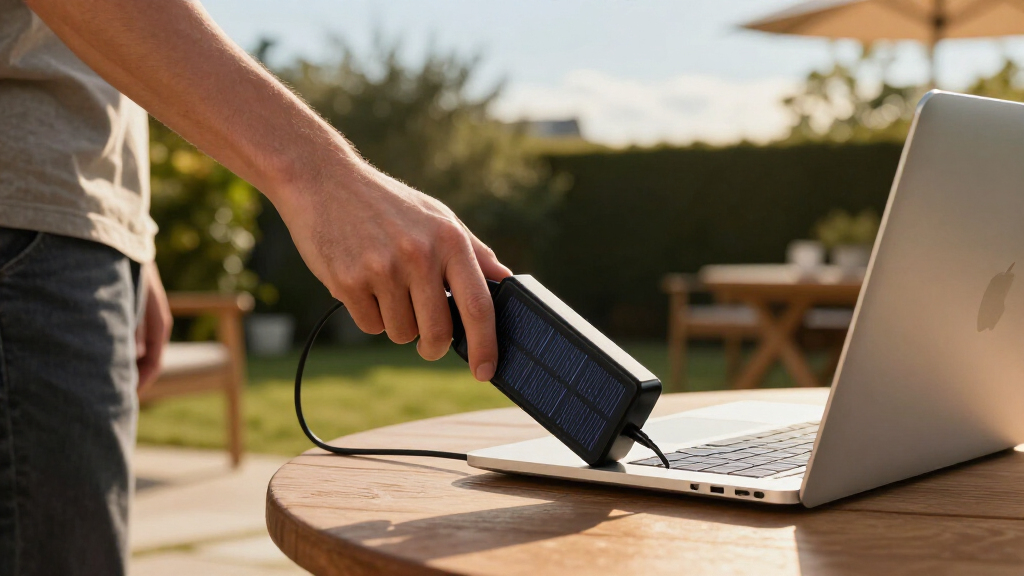
I ranked every product through one lens: can it actually keep a laptop working? That meant scoring each option on four buyer-relevant factors. Output came first — a laptop needs 45W or more via USB-C Power Delivery or an AC outlet, so phone-only banks ranked below any station with a real inverter. Usable capacity came next, measured in watt-hours rather than advertised milliamp-hours, because a 60Wh laptop battery exposes inflated ratings fast. Third was solar realism: panel wattage, input limits, and the recharge hours a buyer can expect in ordinary sun rather than lab conditions. Portability, battery chemistry, and price per watt-hour rounded out the score.
The order reflects those priorities. The Jackery Explorer 300 leads because it wins on capacity, output headroom, and cycle life at the same time. Mid-sized 146-220Wh stations follow, separated by whether a panel comes in the box and how believable the specs look. Compact sub-100Wh units rank where their single-laptop-charge reality places them, and the FlexSolar 60W panel sits apart as the only battery-free option that charges a laptop directly. Products whose output simply cannot run a laptop — no matter how many built-in cables or LEDs they pack in — landed at the bottom of the list.
Factors to Consider When Choosing Solar-powered Laptop Chargers
The reviews above cover what each charger does; this section covers the decisions underneath the specs. These are the calculations, the recurring mistakes, and the few places where paying more genuinely buys something. Work through all five before settling on a winner — the right answer changes fast depending on your laptop and your trip.
Start With Watt-Hours, Not Milliamp-Hours
Capacity is the first number to get right, and it is the one this category markets most dishonestly. A typical ultrabook battery holds 50-70Wh, so a 146Wh power station delivers roughly 1.5 to 2 full laptop refills once inverter losses take their 10-15% cut. The milliamp-hour figures on budget banks are quoted at 3.7V cell voltage, which inflates them: 24,000mAh sounds enormous but converts to about 89Wh, and 10,000mAh is a phone-class 37Wh. A common mistake is buying a big-mAh bank expecting a week of laptop runtime and getting a single afternoon. The math I use is simple: multiply your laptop battery’s watt-hours by the refills you want, then add 20% for conversion losses. Keep the 100Wh line in view as well — it is both the airline carry-on ceiling and, in this lineup, roughly the point where AC outlets start appearing.
Match the Output to Your Laptop’s Power Brick
Every laptop ships with a brick that states its appetite — 45W, 65W, sometimes 96W — and the charger you buy has to meet that number, not approximate it. USB-C Power Delivery is the efficient path, since DC-to-DC conversion wastes almost nothing, while an AC outlet routes power through an inverter and loses 10-15% before your laptop’s own brick converts it back. Watch the difference between peak and sustained output: a station rated ‘100W peak’ may only sustain 60W, which means throttling or shutdown the moment a hungry laptop spikes. Ultrabooks and MacBook Air-class machines sit comfortably inside this category’s limits. Gaming laptops and mobile workstations drawing 120W or more exceed almost everything here — no charger on this list will run one under load. If your machine falls in that camp, the honest answer is a bigger power station, not a cleverer panel.
Treat Solar Panels as Recovery Tools, Not Wall Outlets
Rated panel watts are a best-case lab number, and real sun delivers about 60-75% of it — less in winter, under haze, or when the angle is off. That math resets expectations: a bundled 40W panel feeding 25W in good conditions needs a full day of repositioning to refill a 146Wh station, and the 21W panels on entry kits are weekend projects, not lunch-break fixes. The practical routine is to wall-charge before you leave and use solar to stretch runtime, not to arrive empty and expect the sun to bail you out. Panel-only chargers like the FlexSolar flip this logic: with no battery to fill, every watt goes straight to the laptop, which works beautifully at a sunny campsite desk and stops the moment a cloud passes. Battery-buffered setups trade that directness for the freedom to work after dark. Buyers who understand this split rarely regret the purchase; buyers who expect wall-outlet speed from a folding panel almost always do.
Pick the Form Factor That Fits the Trip
This lineup splits into three shapes, and the right one depends on how far the gear travels from your car. Full power stations — the Jackery and the 146-220Wh generics — carry AC outlets and multi-day capacity at the cost of three kilograms or more, which suits car camping, tailgates, and home backup. Sub-100Wh AC banks like the Daran and the 24,000mAh unit fit in a carry-on and a backpack side pocket, buying you one solid laptop refill per outing. Panel-only rigs weigh the least per watt but store nothing, so they serve daytime workers in reliable sun. One honest question saves money here: how often will you actually be off-grid for more than a day? If the answer is rarely, a plain high-capacity USB-C bank without solar cells costs half as much and charges faster from the wall — solar hardware earns its price only when the outlet truly disappears.
Battery Chemistry and Brand Support Decide Long-Term Value
Two battery chemistries share this shelf, and they age very differently. LiFePO4 cells, found in the Jackery Explorer 300 and the Daran, shrug off 2,000-3,500 charge cycles before meaningful capacity loss; the standard lithium-ion packs in most budget stations start fading around 500. For a buyer who recharges weekly, that is the difference between a decade of service and two disappointing years. Brand support matters just as much at the budget end, where several 146Wh stations share cells, housings, and manuals — the real difference between them is who answers a warranty email in month fourteen. Storage habits extend any of these: keep the battery between roughly 50-80% when shelved, and top it up every three months. The false economy to avoid is the $90 no-name unit that dies young; measured in cost per delivered charge, a pricier LiFePO4 station is often the cheapest option on this page.
Frequently Asked Questions
Can a solar-powered charger really run a laptop, or just top up phones?
It depends entirely on output, and this lineup contains both kinds of hardware. Any unit with an AC outlet or a 45W-plus USB-C PD port — the Jackery Explorer 300, the 146-220Wh stations, the Daran — will genuinely run and recharge a laptop. Pocket banks like the YELOMIN and most phone-grade solar chargers cannot; at 10-15W they may slow a sleeping laptop’s drain but will never fill it. The FlexSolar 60W panel is the exception in the middle: it has no battery, yet in direct sun it pushes enough USB-C power to charge many ultrabooks while you work. Check the wattage printed on your laptop’s brick before buying anything. If the charger’s sustained output sits below that number, it is a phone accessory wearing laptop marketing.
How long will the included solar panel take to recharge the battery?
Longer than the box art implies, because panels deliver roughly 60-75% of their rated watts in real conditions. The Takki’s 21W panel works out to about 7-9 hours of good sun to refill its 88.8Wh battery — call it two days of casual topping-up. The 40W panels bundled with the 146Wh stations need around 5-6 solid sun-hours, and the Jackery’s 292Wh pack wants a 100W panel (sold separately) to recover in a single afternoon. Winter sun, shade, and flat panel placement can double every one of those figures. The workable habit is to leave home fully charged and treat solar as a way to stretch days, not as a same-day refill.
What capacity do I need to work a full day away from outlets?
Start from your laptop’s battery, which for most ultrabooks holds 50-70Wh — enough for three to five hours of real work for many users. A full remote-work day with a laptop, phone, and hotspot typically burns 100-150Wh. On that math, a 146Wh station covers one working day with nothing to spare, the 220-292Wh units cover a day and a half to a weekend, and anything under 100Wh is a half-day safety net rather than a workday supply. Add 20% to whatever figure you land on, because inversion and conversion losses are unavoidable. Buyers who also want a fan, camera batteries, or a drone in the mix should jump straight to the 220Wh class or above.
Can I bring a solar laptop charger on a plane?
The battery, not the panel, decides this. US and most international rules allow lithium batteries up to 100Wh in carry-on luggage, permit 100-160Wh only with airline approval, and ban anything larger outright — and power banks are never allowed in checked bags. In this lineup, the Takki (88.8Wh), the Daran (89.6Wh), the 24,000mAh AC bank (about 89Wh), and the YELOMIN all fly legally in the cabin. The Jackery Explorer 300 at 292Wh and the Soarise at roughly 178Wh cannot fly at all. Bare solar panels like the FlexSolar carry no battery and pass without issue, which makes a panel-plus-small-bank combo the traveler’s workaround. If flying is your main use case, staying under 100Wh is not a preference — it is the whole decision.
Is a bundle with a solar panel better value than buying a panel separately?
Usually, with one catch: bundled panels are sized for convenience, not speed. A station-plus-panel kit typically costs less than the same parts bought separately and guarantees the connectors and voltage play nicely together, which is why I steer first-time buyers toward kits like the Takki. The catch is that the included 21-40W panels recharge slowly enough to frustrate anyone planning daily off-grid use. Buying separately lets you oversize the panel — pairing a 100W folding panel with a 292Wh station cuts recovery time to a single sunny afternoon. If the bundle’s panel is under 30W and the battery is over 140Wh, treat the solar side as an emergency feature and budget for a bigger panel later.
Conclusion
Different buyers should walk away with different boxes, so here is the short version. For most people, the Jackery Explorer 300 is the best overall pick — the only option here that pairs multi-day capacity with honest output and long-lived LiFePO4 chemistry, and the one I would hand to a buyer who wants to stop thinking about power. Value hunters should grab the 300W/220Wh mid-size station for the most watt-hours per dollar in this lineup, or the Takki kit when the budget is strict. Beginners get the gentlest start from that same Takki: the panel comes in the box, the size is airline-safe, and there is nothing else to buy. Premium shoppers should know the Jackery is as high-end as this category gets — wanting more means leaving this roundup for a 500Wh-class station. Specific needs map cleanly: frequent flyers and minimalists to the sub-100Wh Daran or the 24,000mAh AC bank, fair-weather ultralights to the FlexSolar 60W panel, and phone-first users to the Soarise or YELOMIN banks, with eyes open that those last two help a laptop only in a pinch. Match the charger to the trip and any of these will do its job; buy on mAh numbers and panel photos, and no amount of sunshine will rescue the workday.