Many people realize too late that matching your solar generator’s battery capacity to your CPAP’s daily power needs is vital. You should estimate your overnight requirements, typically around 300-400Wh, and choose a system with a larger capacity for safety. Additionally, investing in high-efficiency solar panels and proper placement guarantees your batteries recharge fully during the day. Ignoring these details can leave you stranded; keep going to discover how to optimize your setup for reliable power.

Get backup power and energy gear delivered free with Prime
- Fast, free delivery on millions of items
- Prime Video, Amazon Music and more included
- Member-only deals all year
Key Takeaways
- Ensure the battery capacity exceeds 400Wh to reliably power a CPAP overnight with a safety margin.
- Choose high-efficiency solar panels (~20%) to optimize recharging during daylight hours.
- Properly position panels for maximum sun exposure, considering shading and weather conditions.
- Match battery capacity to CPAP power needs, accounting for usage duration and potential power surges.
- Regularly maintain and monitor the system to ensure consistent, dependable backup power during trips or emergencies.

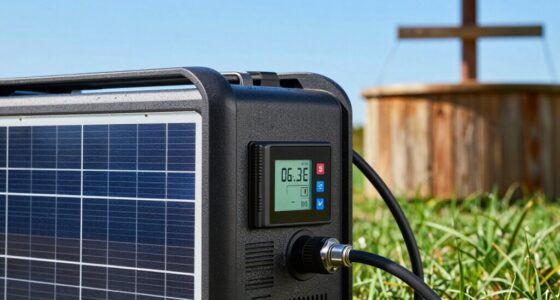
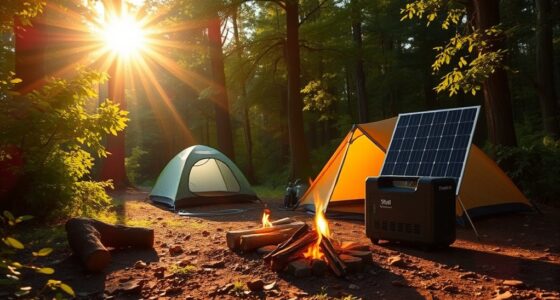
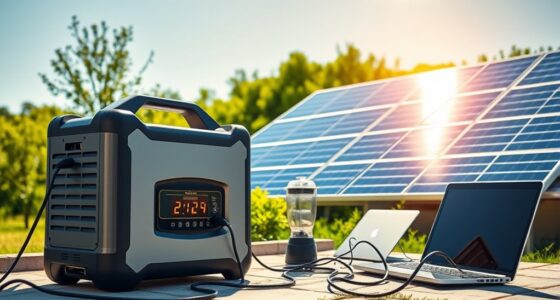
Are you wondering whether a solar generator can reliably power your CPAP machine? It’s a common question, especially if you’re planning for outdoor trips, emergencies, or just want a backup system that’s eco-friendly. The key to making sure a solar generator can handle your nightly sleep is understanding two main factors: battery capacity and solar panel efficiency. Your CPAP machine needs a consistent, stable power source, and that depends on whether the generator’s battery can hold enough charge to last all night and whether the solar panel can recharge it efficiently during the day.
Ensuring your solar generator can power your CPAP depends on battery capacity and solar panel efficiency.
First, consider battery capacity. You need to match the generator’s battery size to your CPAP machine’s power consumption. Most CPAP machines draw between 30 to 60 watts, but this varies by model. To estimate how long a single charge will last, you multiply the wattage by the hours you sleep. For example, if your CPAP uses 40 watts and you sleep for eight hours, that’s 320 watt-hours needed overnight. A generator with a battery capacity of at least 400 watt-hours gives you some buffer, ensuring you won’t run out of power mid-sleep. If you want to be extra cautious—say, for longer trips or unpredictable weather—opt for a larger capacity. Remember that some batteries have a higher depth of discharge, meaning you can use more of their stored energy safely, which is important when planning your power needs. Additionally, understanding the battery capacity and how it impacts your usage can help you choose the right size for your needs. It’s also beneficial to consider the lifespan of the battery, as it affects long-term reliability and replacement costs. Being aware of the battery’s charge cycles can also help you plan for the longevity of your power system. Moreover, selecting batteries with a higher energy density can allow for a more compact and lightweight setup, which is especially advantageous for portable systems.
Next, solar panel efficiency plays a vital role in maintaining your generator’s battery charge. The more efficient the solar panel, the faster it can convert sunlight into usable energy. This is crucial because if your panels are inefficient or if sunlight is limited due to weather or shading, recharging becomes sluggish. Ideally, you want panels with high efficiency ratings—around 20% or higher—and enough size to gather sufficient sunlight during the day. The goal is to recharge your battery fully during daytime hours, ensuring your generator is ready for the night. Keep in mind that even the best panels won’t perform well if they’re not positioned correctly or if the weather isn’t sunny. So, investing in high-efficiency solar panels and placing them where they get maximum sun exposure makes a big difference in reliability. Considering solar panel placement can significantly optimize your energy collection and overall system performance. Proper positioning and regular cleaning of the panels can further improve their efficiency and ensure consistent power output. A well-maintained setup can maximize your energy harvest and make your system more dependable.
In the end, whether a solar generator can power your CPAP depends on matching the right battery capacity with the right solar panel efficiency. It’s about calculating your power needs accurately, choosing a generator with enough capacity, and ensuring your solar setup is optimized for efficiency. If you do this, you’ll find that a well-chosen solar generator can be a dependable, eco-friendly backup for your CPAP machine—giving you peace of mind, no matter where you are or what’s happening around you.
400Wh portable solar generator for CPAP
As an affiliate, we earn on qualifying purchases.
As an affiliate, we earn on qualifying purchases.
Frequently Asked Questions
How Long Does a Solar Generator Last Before Needing Replacement?
A solar generator typically lasts between 5 to 15 years before needing replacement, depending on your battery lifespan and usage. The battery lifespan is key; high-quality batteries tend to last longer with proper care. Power capacity also matters—if you frequently use your generator at high loads, it may wear out faster. Regular maintenance and choosing a model with a robust battery can extend your generator’s life, ensuring reliable power when you need it.
Can a Solar Generator Power Multiple CPAP Machines Simultaneously?
Imagine a sturdy bridge, supporting multiple travelers at once—your solar generator can do the same for multiple CPAP machines if its solar panel efficiency and battery lifespan are high. Most generators are designed to handle one or two devices comfortably, but powering more depends on capacity. Check your generator’s wattage and battery capacity; if they’re sufficient, it will reliably support multiple devices simultaneously, like a well-built bridge handling many travelers.
What Maintenance Is Required for a Solar Generator?
You need to regularly check your solar generator’s battery capacity to guarantee it’s charging properly and functioning efficiently. Keep the ports and connectors clean to prevent corrosion, and follow the manufacturer’s guidelines for any updates or firmware. If you prioritize portability features, make sure to inspect handles and lightweight components for wear. Proper maintenance enhances performance, extends lifespan, and guarantees your generator’s reliability during power needs, especially when powering CPAP machines.
Are Solar Generators Safe to Use Indoors?
Yes, solar generators are generally safe to use indoors, but you should prioritize indoor safety by choosing proper generator placement. Keep the unit in a well-ventilated area, away from moisture and direct sunlight. Avoid blocking vents or exhausts, and make sure it’s on a stable surface. Proper placement minimizes risks like overheating or fire hazards, making indoor use safe and efficient when you follow these safety tips.
How Does Weather Affect Solar Generator Performance?
Weather considerably impacts your solar generator’s performance. Cloudy, rainy, or snowy conditions reduce sunlight, lowering energy production, while extreme heat can decrease solar panel durability over time. Cold temperatures may also affect the battery lifespan, causing it to drain faster or degrade sooner. To maximize efficiency and prolong lifespan, store your generator in a sheltered spot during bad weather and monitor its performance regularly, especially in harsh conditions.
high efficiency solar panels for portable use
As an affiliate, we earn on qualifying purchases.
As an affiliate, we earn on qualifying purchases.
Conclusion
As you stand at the crossroads of night’s darkness and dawn’s promise, choosing a solar generator for your CPAP is like planting a seed of hope. It’s the quiet guardian that whispers resilience, turning your struggle into strength. When you finally ask the right questions, you’re not just safeguarding your sleep—you’re nurturing a brighter tomorrow. Embrace the sun’s gift today, and let your peace of mind shine through every dawn.
As an affiliate, we earn on qualifying purchases.
solar generator with >400Wh capacity
As an affiliate, we earn on qualifying purchases.
As an affiliate, we earn on qualifying purchases.
Halloween Picks
halloween
As an affiliate, we earn on qualifying purchases.