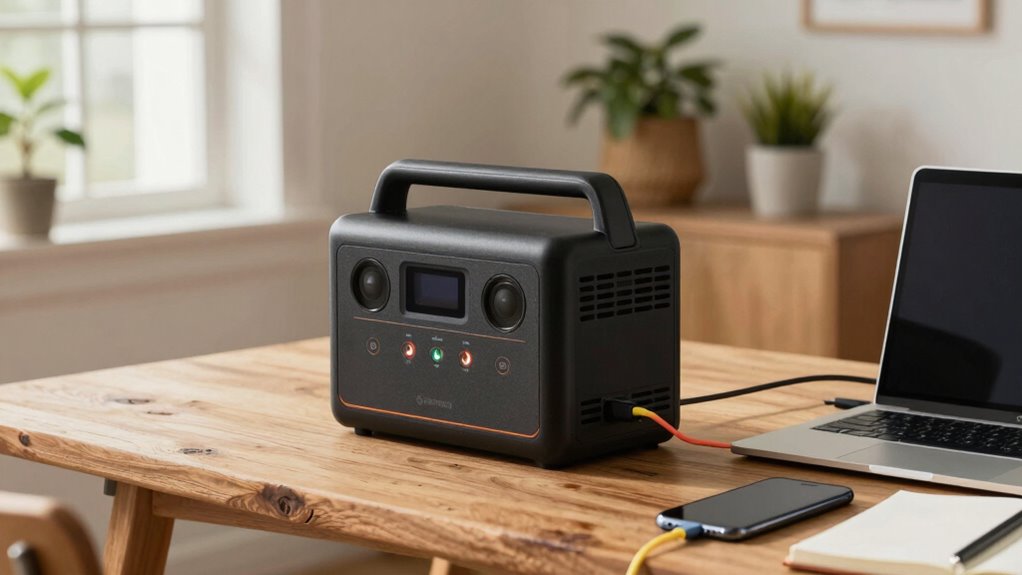

To choose a portable power station for remote work, prioritize models with solar compatibility to harness renewable energy and guarantee recharging in daylight. Look for devices with reliable communication protocols for seamless gadget integration, and focus on power management features to prolong battery health. Monitoring tools are essential for tracking performance and avoiding shutdowns. If you keep exploring, you’ll discover more tips to help you select the perfect setup for your needs.

Get backup power and energy gear delivered free with Prime
- Fast, free delivery on millions of items
- Prime Video, Amazon Music and more included
- Member-only deals all year
Key Takeaways
- Ensure compatibility with solar panels for renewable energy and off-grid use.
- Check device communication protocols for seamless interoperability with your gadgets.
- Prioritize power management features to protect battery health during extended use.
- Look for real-time monitoring tools to track capacity and optimize power consumption.
- Select a station with reliable performance and protection features suitable for unstable or no grid power.
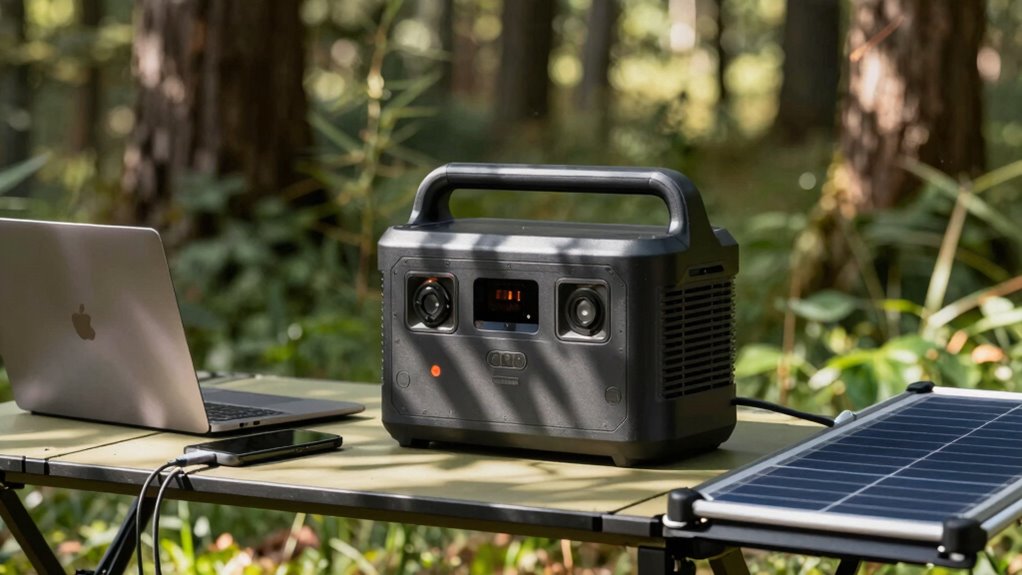
When working remotely in locations without reliable power, choosing the right portable power station becomes crucial. You need a device that can efficiently keep your devices charged and operational without constant access to electricity. One of the most important factors to bear in mind is solar compatibility. If you plan to extend your power source with renewable energy, look for a station that can connect to solar panels. This feature allows you to recharge your station during the day, reducing dependence on grid power and enhancing sustainability. Solar compatibility is especially essential if you’re in an area where power outages are frequent or if you’re aiming for an eco-friendly setup. Additionally, understanding the protocols used for device communication can help ensure compatibility and efficient operation between your power station and your devices. Recognizing the role of digital concepts in device interoperability can further optimize your setup. Incorporating power management techniques can also help extend battery life and improve overall efficiency during extended use. Being aware of battery management systems can help you select a station with features that protect your devices and prolong battery health. Furthermore, choosing a station with advanced monitoring features can give you real-time insights into performance and remaining capacity, which is vital for effective off-grid use.
Products Worth Considering

eufy Security SoloCam S340 3K Dual-Lens Solar Security Camera

eufy Baby Monitor E21 with 4K UHD Camera and 5-Inch 720p Screen

Roborock Q7 M5+ Robot Vacuum and Mop with Self-Emptying Dock
As an affiliate, we earn on qualifying purchases.
Frequently Asked Questions
Can a Portable Power Station Be Charged via Solar Panels?
Yes, a portable power station can be charged via solar panels. Make sure it’s compatible with solar panel compatibility standards, like MC4 connectors or specific voltages. Charging efficiency depends on the solar panel’s wattage and sunlight conditions. For maximum results, choose a power station designed for solar input and match it with efficient, high-wattage solar panels. This setup provides a sustainable, eco-friendly energy source for your remote work needs.
How Long Do Portable Power Stations Typically Last on a Single Charge?
You can expect a portable power station to last anywhere from a few hours to several days on a single charge, depending on its battery capacity and your device usage. Larger batteries with higher capacity naturally last longer, but they may have fewer charging cycles. Keep in mind, frequent charging and discharging can impact the overall lifespan, so choose one that balances capacity and durability for your remote work needs.
Are Portable Power Stations Safe to Use Indoors?
Indoor safety is a top concern when using portable power stations, but they’re generally safe if you follow proper guidelines. Think of them as a quiet partner working inside your home—compact and efficient. However, be mindful of fire risk; avoid overloading outlets and keep them away from flammable materials. Regularly check for damage and use them in well-ventilated areas to guarantee safe, reliable power during your remote work.
Do Portable Power Stations Operate Quietly?
Yes, portable power stations operate quietly, making them ideal for remote work environments. Their noise levels are generally minimal, often comparable to a fan or a soft hum, so they won’t disturb your focus or conversations. The operational quietness is a key advantage, ensuring you can work comfortably without loud noises. When choosing a station, look for models known for their low noise output to maximize your productivity and comfort.
What Is the Warranty Period for Most Portable Power Stations?
Most portable power stations come with a warranty period of about 1 to 3 years, depending on the brand. When choosing one, consider its battery capacity and power output—these influence how long and effectively it can support your remote work setup. A good warranty gives you peace of mind, ensuring your device stays reliable while you work remotely, even during unexpected issues or failures.
Conclusion
When choosing your perfect portable power station, prioritize power, portability, and practicality. Think through your needs, compare capacities, and consider convenience. With careful calculation and clever choices, you’ll conquer connectivity challenges and stay connected wherever work takes you. Remember, a well-wielded power station provides peace of mind and productivity, turning remote work from a rugged risk into a reliable, ready-to-run resource. Equip yourself wisely, and let your remote work ride smoothly on a surge of savvy support.