Lamination plays a crucial role in making your solar panels durable by protecting the photovoltaic cells from moisture, dirt, and physical impacts. It seals the panel, preventing damage from temperature changes and UV exposure, ensuring long-term performance. Proper lamination also minimizes issues like bubbles and micro-cracks, extending the lifespan of your panels. If you’re curious about how these layers improve durability further, there’s more to explore about the manufacturing process and quality control details.
Key Takeaways
- Proper lamination protects solar cells from moisture, dirt, and physical damage, enhancing overall panel durability.
- High-quality lamination prevents delamination and micro-cracks, extending the panel’s lifespan.
- Accurate lamination controls environmental stressors like temperature fluctuations and UV exposure.
- Consistent manufacturing processes ensure defect-free lamination, reducing early panel failures.
- Effective lamination maintains optical clarity, preserving energy efficiency over time.
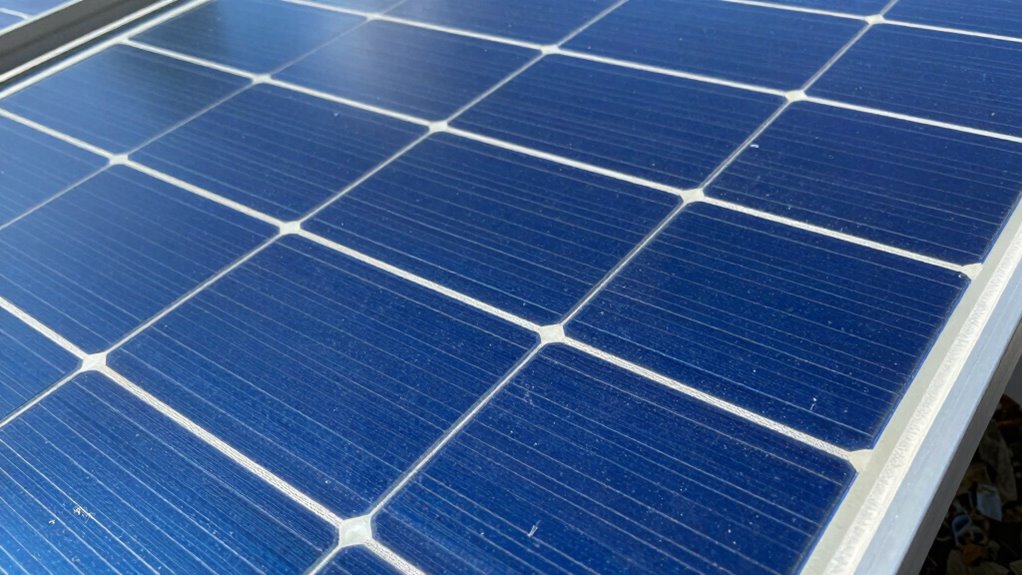
Lamination is a crucial step in manufacturing solar panels, as it protects the delicate photovoltaic cells from environmental damage and enhances their durability. When you understand how lamination influences the overall manufacturing process, you’ll see its essential role in extending the lifespan of your solar setup. During this process, layers of encapsulant material, typically EVA (ethylene-vinyl acetate), are applied to bond the solar cells to the glass cover and backsheet. This bonding not only safeguards the cells from moisture, dirt, and physical impacts but also contributes to maximizing energy efficiency by maintaining ideal conditions within the panel. The manufacturing process ensures that each layer is evenly distributed and properly cured, resulting in a sturdy, weather-resistant product. Manufacturing quality plays a vital role in the longevity and performance of the panels. Proper lamination also involves controlling the temperature and pressure precisely to prevent defects such as bubbles or voids, which can compromise the panel’s overall integrity.
Lamination protects solar cells from environmental damage and boosts durability and efficiency.
Your solar panel’s ability to perform consistently over years depends on the quality of lamination. A well-executed lamination process minimizes risks such as delamination or micro-cracks, which can compromise performance and reduce energy output. When the lamination is properly done, it creates a sealed environment that prevents moisture ingress and shields the photovoltaic cells from temperature fluctuations, UV exposure, and other environmental stressors. This durability directly translates into higher energy efficiency over the panel’s lifespan because fewer performance-degrading issues develop over time. Additionally, lamination quality plays a vital role in resisting environmental stressors such as UV exposure and temperature changes, further enhancing durability. Proper lamination also helps in maintaining the optical clarity of the panel, which is crucial for optimal sunlight absorption. This process is essential for ensuring that the panels can withstand long-term exposure to harsh weather conditions.
In terms of the manufacturing process, lamination involves precise control of temperature and pressure to ensure a perfect bond without damaging the sensitive cells. If the process isn’t carefully managed, bubbles or voids can form, which might lead to hotspots that decrease the panel’s efficiency and shorten its longevity. Proper lamination techniques, thus, are essential for producing a high-quality, long-lasting solar panel. By investing in advanced lamination equipment and strict quality control measures, manufacturers improve the durability of the panels, which ultimately benefits you by providing a reliable energy source. Moreover, the manufacturing process helps consumers make informed decisions about the quality and longevity of their solar investments. Ensuring consistent quality control throughout this process is essential for the panel’s overall performance and durability. When high standards are maintained, it minimizes the risk of early failures and maximizes the return on your solar investment.
Moreover, the lamination process influences not just durability but also the overall energy efficiency of the solar panel. A panel that’s properly laminated maintains its optical clarity, allowing maximum sunlight absorption. This means your system operates at peak efficiency, converting sunlight into electricity more effectively over its lifetime. When the manufacturing process emphasizes high-quality lamination, you gain a product that withstands the elements while delivering consistent performance, making your investment in solar energy more worthwhile and sustainable for years to come.

SLOYCA 1pc 680mm 810mm 1100mm Wide – Solar EVA Film for Solar Cell Encapsulation DIY Solar Cells Panel Lamination EVA Film CE TUV Approved (Color : 1m-680mm)
1)Excellent durability, such as weather resistance, high temperature and high humidity resistance, UV light resistance.
As an affiliate, we earn on qualifying purchases.
As an affiliate, we earn on qualifying purchases.
Frequently Asked Questions
How Does Lamination Impact Solar Panel Recycling Processes?
Lamination complicates solar panel recycling because it creates recycling challenges by tightly bonding layers, making material separation difficult. You’ll find it harder to peel apart the glass, silicon, and plastic components, which are essential for efficient recycling. This bonded structure means that recycling processes need specialized methods to effectively recover materials, often increasing costs and complexity. So, lamination directly impacts the ease and efficiency of recycling solar panels.
What Are the Environmental Benefits of Different Lamination Materials?
You’ll be surprised to learn that using eco-friendly materials for lamination can reduce environmental impact by up to 50%. Recyclable lamination options enable easier disposal and reuse, cutting waste considerably. By choosing environmentally conscious materials, you support sustainability and minimize pollution. These eco-friendly and recyclable laminates help protect ecosystems and reduce carbon footprints, making solar energy not just clean but also greener throughout its lifecycle, aligning with your goal for an eco-conscious lifestyle.
Can Lamination Techniques Be Customized for Specific Climate Conditions?
Yes, lamination techniques can be customized for specific climate conditions. You can adapt materials to improve climate resilience through material customization, ensuring your solar panels withstand extreme temperatures, humidity, or UV exposure. By selecting appropriate lamination methods, you enhance durability and performance, making your solar system more reliable in harsh environments. This targeted climate adaptation helps extend the lifespan of your panels and maintains peak energy output.
How Does Lamination Influence the Aesthetic Design of Solar Panels?
Lamination enhances the aesthetic integration of solar panels by providing a sleek, smooth surface that complements various architectural styles. It also improves visual clarity, making the solar cells more visible and appealing. When you choose quality lamination, you get a clean, uniform look that seamlessly blends with your surroundings while protecting the panels from dirt and damage, ensuring your system stays attractive and efficient over time.
Are There Innovative Lamination Technologies Improving Durability?
Think of innovative lamination technologies as armor for your solar panels. Advanced adhesives bond layers seamlessly, while nano coatings create an invisible shield, enhancing resilience against weather and UV rays. These cutting-edge solutions act like a second skin, substantially improving durability. By integrating such technologies, your solar panels become more robust, extending their lifespan and ensuring you get maximum energy output, rain or shine.

Renogy Flexible Solar Panel 100 Watt 12 Volt Monocrystalline Semi-Flexible Bendable Mono Off-Grid Charger for Marine RV Cabin Van Car Uneven Surfaces
[Extremely Flexible] This flexible solar panel is capable of meeting a wide range of applications where standard panels…
As an affiliate, we earn on qualifying purchases.
As an affiliate, we earn on qualifying purchases.
Conclusion
Lamination acts like a sturdy shield for your solar panels, wrapping them in a glass armor that wards off the harshest elements. It’s the secret sauce that keeps your panels resilient, ensuring they soak up sunlight and power your world for years to come. Think of lamination as the guardian that turns delicate glass into an unbreakable fortress, so your energy dreams stay bright, no matter how stormy the skies.

FlexSolar 100W Portable Solar Panels Chargers with PD3.0 USB-C,QC3.0 USB-A and DC Outputs Foldable IP67 Waterproof Power Emergency Camping for Small Power Station Generator,Phones, Power Banks
⚡ Ultra-Lightweight & Ultra-Portable: 100W Foldable Solar Panel Weighing only 4.1lbs (1.85kg) with a sleek 0.59-inch profile, this…
As an affiliate, we earn on qualifying purchases.
As an affiliate, we earn on qualifying purchases.

YESON Solar Panel Guard, 6in X 100ft PVC Coated Critter Guard Roll Kit for Solar Panel Wire Screen, Black Pigeon Barrier Netting with 120 Fastener Clips, Cutting Scissor, Gloves
【1/2 Inch Mesh】 The solar panel mesh is 1/2 inch Opens, which allows wind and water to flow…
As an affiliate, we earn on qualifying purchases.
As an affiliate, we earn on qualifying purchases.