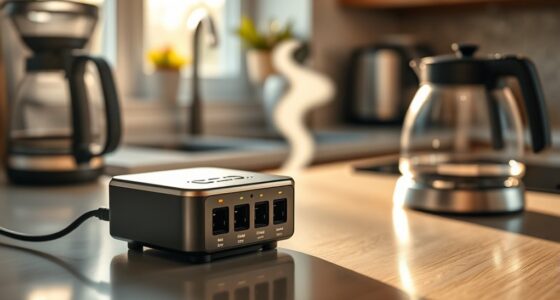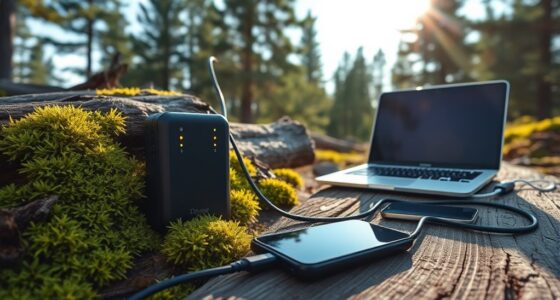
When choosing portable power stations, you’ll notice they use different inverter types like pure sine wave and modified sine wave inverters. Pure sine wave inverters provide clean, stable power compatible with sensitive devices like laptops and medical equipment, while modified sine wave inverters are more affordable and work well with simpler appliances. Understanding these inverter types helps you pick the right station for your needs. Keep exploring, and you’ll learn how these options enhance your portable power options even more.

Get backup power and energy gear delivered free with Prime
- Fast, free delivery on millions of items
- Prime Video, Amazon Music and more included
- Member-only deals all year
Key Takeaways
- Portable power stations often include built-in inverters to convert DC battery power to AC for household devices.
- Inverter types in power stations include pure sine wave, modified sine wave, and square wave inverters, each with different performance levels.
- Pure sine wave inverters provide clean, stable power suitable for sensitive electronics, while modified sine wave inverters are more affordable.
- Selecting the right inverter depends on device compatibility, power quality needs, and efficiency requirements.
- Many portable power stations support multiple inverter outputs, including AC, USB, and DC, for versatile device charging.
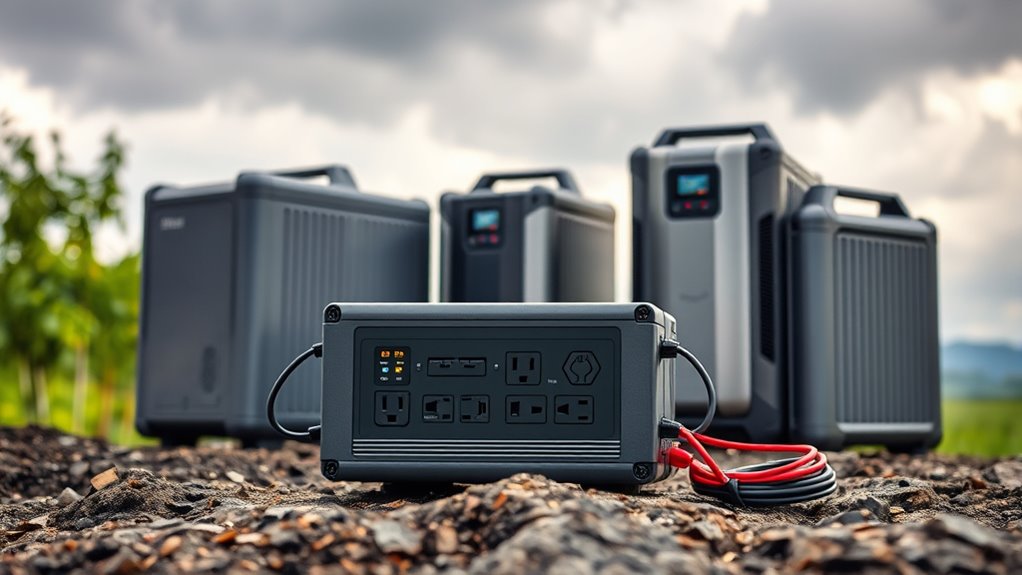
Portable power stations are versatile devices that provide reliable electricity anytime and anywhere, making them essential for outdoor adventures, emergencies, or off-grid living. When choosing a power station, understanding the importance of battery management is vital. Good battery management ensures that the device’s batteries are maintained properly, prolonging their lifespan and maximizing performance. Advanced power stations come equipped with smart battery management systems that monitor voltage, current, and temperature, preventing overcharging and overheating. This not only enhances safety but also guarantees your station remains dependable over time. With efficient battery management, you can confidently power your devices without worrying about sudden failures or reduced battery capacity.
Another key feature to contemplate is solar compatibility. Many portable power stations are designed to work seamlessly with solar panels, transforming sunlight into usable electricity. Solar compatibility is especially advantageous if you plan to use your station in remote locations or during extended outages where traditional power sources are unavailable. When your station supports solar input, you can harness renewable energy, reducing your reliance on grid power and lowering your carbon footprint. Most solar-compatible models come with adjustable input settings, allowing you to optimize the charging process based on the intensity of sunlight. This flexibility means you can charge your station efficiently even on cloudy days, ensuring you always have power when you need it most.
The integration of battery management and solar compatibility enhances the overall utility of portable power stations. For example, a station with good battery management can safely store energy generated from solar panels and distribute it efficiently to your devices. This synergy allows for a sustainable and reliable power source during camping trips, outdoor events, or emergency situations. Additionally, many models feature multiple output options, such as AC outlets, USB ports, and DC car sockets, giving you the versatility to charge various devices simultaneously. Some stations also include pass-through charging, enabling you to recharge the station itself while powering your devices.
Ultimately, your choice of a portable power station should balance battery management capabilities with solar compatibility, ensuring you have a dependable, eco-friendly power source wherever you go. Whether you’re powering a smartphone, laptop, or small appliance, these features work together to provide a seamless energy experience. By selecting a station that intelligently manages its batteries and supports solar input, you’re investing in a versatile device that keeps your devices charged, your adventures extended, and your emergencies manageable. Good battery management is especially crucial for maintaining long-term performance of your power station. With the right model, you gain not just power, but peace of mind, knowing you’re prepared for whatever situations lie ahead.
Products Worth Considering

eufy Security SoloCam S340 3K Dual-Lens Solar Security Camera

Blueair Blue Pure 511i Max Smart Air Purifier

Philips Hue Secure Wired Video Doorbell, 2K, Black
As an affiliate, we earn on qualifying purchases.
Frequently Asked Questions
How Long Do Portable Power Stations Typically Last on a Single Charge?
You can typically expect a portable power station to last anywhere from 4 to 12 hours on a single charge, depending on usage. The battery lifespan and number of charge cycles play a key role in its longevity. With proper care, most stations can handle 500 to 1,000 charge cycles before their capacity diminishes considerably. To maximize lifespan, avoid deep discharges and store it in a cool, dry place.
Are Inverter Types Compatible With All Portable Power Stations?
Think of inverter compatibility as the lock to your power station‘s key. Not all inverter types fit every power station, as each is designed with specific power station types in mind. You need to check the compatibility details carefully; otherwise, you risk mismatched connections that could hinder performance or cause damage. Always verify the inverter’s specifications against your power station to guarantee they work in harmony, like a well-tuned orchestra.
What Safety Features Should I Look for in Inverter-Based Stations?
You should look for inverter-based stations with essential safety features like overcurrent protection, which prevents damage from excessive current, and thermal shutdown, which automatically turns off the device if it overheats. These features help keep your devices safe and the inverter functioning properly. Make sure the station includes these safeguards to avoid potential hazards and ensure reliable performance during power outages or outdoor activities.
Can Portable Power Stations Be Recharged via Solar Panels?
Yes, you can recharge portable power stations using solar panels. Look for models with solar panel compatibility and multiple recharging methods to maximize flexibility. Solar panel recharging is eco-friendly and ideal for outdoor use or emergencies. Make sure the power station supports your solar panel’s voltage and wattage to guarantee efficient recharging. This way, you can stay powered up even when grid access isn’t available.
How Do I Determine the Right Inverter Size for My Needs?
In a nutshell, you determine the right inverter size by considering your power needs, much like a medieval blacksmith gauges the right hammer. Focus on inverter efficiency, which affects how well it converts power, and factor in potential power surges from appliances. Choose an inverter with a capacity that exceeds your total startup and running wattage, ensuring it handles your devices smoothly without strain.
Conclusion
When choosing a portable power station or inverter, remember that quality and suitability matter most. Consider your power needs and the type of device you’ll run. Don’t forget, a wise person once said, “It’s better to have it and not need it than need it and not have it.” So, invest in the right equipment now, and you’ll be prepared for any power outage or outdoor adventure. Stay powered and enjoy peace of mind wherever you go.