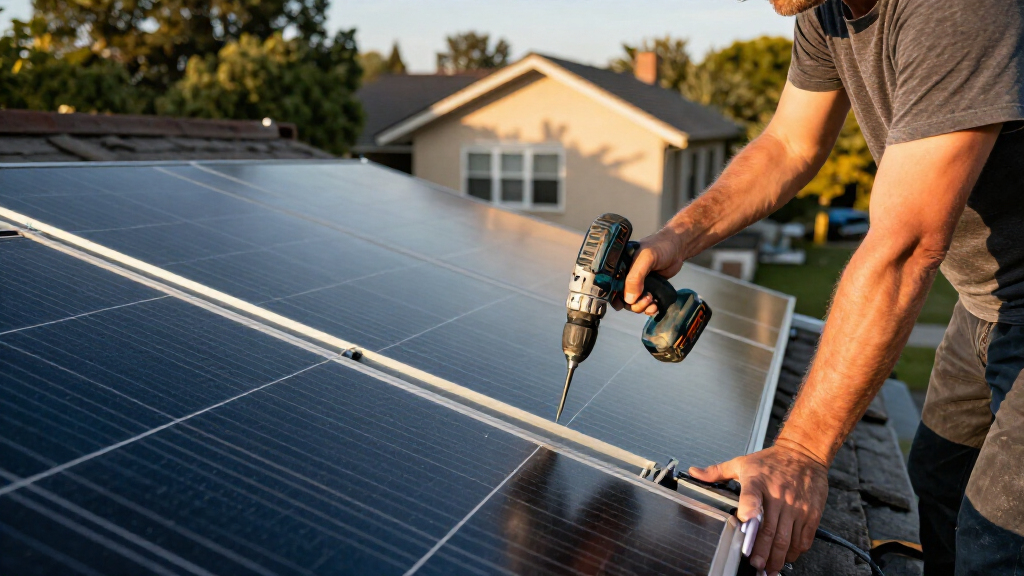

For most buyers seeking solar panel kits for home, I rank the ECO-WORTHY 10 kW kit with 10,620 W of panels and 32.2 kWh of storage as the best overall for its substantial generation and battery capacity. The ECO-WORTHY 5 kW system is a more measured choice for households that need off-grid capability without stepping up to the largest kits, while the Renogy 400 W kit suits smaller, simpler projects. The main tradeoff is scale: larger systems can support more loads but call for more roof or ground space, planning, and electrical work; compact kits are easier to approach but cover fewer household needs. Battery capacity, inverter output, and panel wattage also determine whether a kit can handle your loads through cloudy periods or power larger appliances. Read on for the full breakdown and help matching a system to your home.

Get backup power and energy gear delivered free with Prime
- Fast, free delivery on millions of items
- Prime Video, Amazon Music and more included
- Member-only deals all year
Key Takeaways
- The largest listed system leads on capacity: ECO-WORTHY’s 10,620 W panel kit pairs with 32.2 kWh of battery storage, making it the strongest fit here for buyers seeking substantial off-grid supply.
- Panel wattage and battery storage are separate strengths: the 10 kW kit with 5,310 W of panels and 20.48 kWh of storage offers a different balance from the higher-panel, higher-storage configuration.
- The 5 kW ECO-WORTHY kit marks a lower-scale off-grid option: it has 2,340 W of panels and LiFePO4 storage, so it sits below the 10 kW systems in inverter scale and likely household coverage.
- Small Renogy kits serve a different job: the 400 W MPPT kit and 100 W PWM starter kit are better suited to limited loads and learning the basics than supplying a whole home.
- Several mid-size kits include inverters and batteries: the ECO-WORTHY 1,170 W and 1,200 W kits include 48 V storage and 3,500 W inverters, but buyers still need to check usable battery energy and daily solar production.
| ECO-WORTHY 10kW Off-Grid Solar Power Kit with 2,950W Panels and 48V 314Ah LiFePO₄ Battery |  | Best for Long Backup from a Smaller Array | Solar array: 5 × 590W panels; 2,950W total | Panel type: N-type monocrystalline, bifacial, dual-glass | Panel efficiency: 23.23% | VIEW LATEST PRICE | See Our Full Breakdown |
| ECO-WORTHY 10 kW Off-Grid Solar System Kit with Split-Phase Inverter, 20.48 kWh Battery Storage and 5,310 W Solar Panels |  | Best Balanced Large Off-Grid Kit | Solar array: 9 × 590W panels; 5,310W total | Panel type and efficiency: Bifacial N-type monocrystalline; 23.23% | Inverter output: 10,000W continuous; 20,000W peak | VIEW LATEST PRICE | See Our Full Breakdown |
| Renogy 400W 12V Premium Monocrystalline Solar Kit with 40A MPPT Charge Controller |  | Best Small-Scale Starter Kit | System voltage: 12V | Charge controller: 40A MPPT Rover | Panel material: Monocrystalline silicon | VIEW LATEST PRICE | See Our Full Breakdown |
| ECO-WORTHY 10kW Off-Grid Solar Power Kit with 10,620W Solar Panels and 32.2kWh Battery Storage |  | Best for High Household Energy Demand | Solar array: 18 × 590W panels; 10,620W total | Panel efficiency: 25% | Daily generation: Up to 39.36kWh under optimal conditions | VIEW LATEST PRICE | See Our Full Breakdown |
| ECO-WORTHY 10 kW Off-Grid Solar System Kit with 2,340 W Panels, 10.24 kWh Batteries, and 120/240 V Inverter |  | Best for Light Loads with Split-Phase Output | Solar array: 12 × 195W panels; 2,340W total | Panel type and efficiency: N-type bifacial monocrystalline; 25% | Panel dimensions and weight: 58.86 × 26.18 × 1.18 in; 21.9lb each | VIEW LATEST PRICE | See Our Full Breakdown |
| ECO-WORTHY 400W 12V Solar Panel Kit with MPPT Controller and Bluetooth |  | Best 12V Kit for Monitored Small Off-Grid Setups | Total panel power: 400 W | Panel configuration: 4 × 100 W monocrystalline panels | System voltage: 12 V DC | VIEW LATEST PRICE | See Our Full Breakdown |
| ECO-WORTHY 1170W Solar Panel Kit with 48V 50Ah Battery and 3500W Inverter |  | Best Integrated Starter System for Household AC Loads | Solar panel output: 1,170 W total; 6 × 195 W | Panel type: N-type bifacial | Battery: 48 V 50 Ah LiFePO4 | VIEW LATEST PRICE | See Our Full Breakdown |
| Renogy 100W 12V Solar Panel Starter Kit with 30A PWM Charge Controller |  | Best for Beginners | Panel power: 100 W | Panel type: Monocrystalline | Output voltage: 12 V | VIEW LATEST PRICE | See Our Full Breakdown |
| ECO-WORTHY 5 kW Off-Grid Solar System Kit with 2,340 W Panels and LiFePO4 Battery |  | Best for Larger Off-Grid Loads | Panel count: 12 | Panel power: 195 W each; 2,340 W total | Panel type: N-type monocrystalline | VIEW LATEST PRICE | See Our Full Breakdown |
| ECO-WORTHY 1200W 48V Solar Panel Kit with 100Ah LiFePO4 Battery and 3500W Inverter |  | Best for More Battery Storage in a Compact System | System power: 1,200 W | Solar panels: 6 × 195 W N-type bifacial | Daily energy output: About 4.68 kWh under four hours of full sunlight | VIEW LATEST PRICE | See Our Full Breakdown |
| solar panel kits for home | Inverter output | Output voltage |
|---|---|---|
| ECO-WORTHY 10kW Off-Grid Solar | 10,000W continuous; 20,000W peak | 120V or 120/240V split phase |
| ECO-WORTHY 10 kW Off-Grid Sola | 10,000W continuous; 20,000W peak | 120V or 120/240V split phase |
| Renogy 400W 12V Premium Monocr | — | — |
| ECO-WORTHY 10kW Off-Grid Solar | 10,000W continuous; 20,000W peak | 120V/240V split phase |
| ECO-WORTHY 10 kW Off-Grid Sola | 10,000W maximum continuous | 120V/240V AC |
| ECO-WORTHY 400W 12V Solar Pane | — | — |
| ECO-WORTHY 1170W Solar Panel K | 3,500 W; 110/120 V AC | — |
| Renogy 100W 12V Solar Panel St | — | 12 V |
| ECO-WORTHY 5 kW Off-Grid Solar | — | 120 V |
| ECO-WORTHY 1200W 48V Solar Pan | 3,500 W; 110/120 V AC | — |
More Details on Our Top Picks
ECO-WORTHY 10kW Off-Grid Solar Power Kit with 2,950W Panels and 48V 314Ah LiFePO₄ Battery
This kit pairs a 10kW split-phase inverter with a relatively modest 2,950W panel array and a substantial 16.076kWh battery. That balance suits a home where stored energy and backup capability matter more than rapid battery replenishment. The 120V/240V output supports a broader range of household circuits than the Renogy 400W 12V kit, which is a smaller-scale setup built around a charge controller rather than a whole-home inverter. Its five bifacial panels may gain output from reflected light when installed in favorable conditions, but the array still may not keep pace with the inverter’s full output or quickly refill the battery after heavy use. I’d shortlist it for off-grid backup with careful load planning, not for buyers seeking a panel-heavy system. Pallet freight and recommended professional installation add planning overhead.
Pros:- Includes panels, inverter, battery, and cables as a bundled system.
- 16.076kWh LiFePO₄ battery supports extended storage and can be expanded in parallel.
- Split-phase inverter provides 120V or 120/240V output with 10,000W continuous capacity.
- Dual-glass bifacial panels can benefit from reflected light in suitable installations.
Cons:- The 2,950W array is small relative to the inverter and battery capacity, limiting recharge speed.
- Each panel weighs 72.8lb, making roof handling and mounting more demanding.
- Pallet freight and recommended professional installation complicate delivery and setup.
Best for: Homeowners planning an off-grid or backup system who value substantial battery storage and 120/240V output more than fast solar recharge.
Not ideal for: Households with consistently high daytime loads or frequent deep battery use; the 2,950W array may recharge the large battery slowly.
- Solar array:5 × 590W panels; 2,950W total
- Panel type:N-type monocrystalline, bifacial, dual-glass
- Panel efficiency:23.23%
- Inverter output:10,000W continuous; 20,000W peak
- Output voltage:120V or 120/240V split phase
- Battery:48V 314Ah LiFePO₄; 16.076kWh
- Monitoring:7-inch display, Bluetooth, Wi-Fi, and PC connectivity
- Installation:Pallet freight shipping; professional installation recommended
Our verdict“Choose this kit if you want substantial stored energy and split-phase output, but do not need a large array to recharge it quickly.”
ECO-WORTHY 10 kW Off-Grid Solar System Kit with Split-Phase Inverter, 20.48 kWh Battery Storage and 5,310 W Solar Panels
Among these large ECO-WORTHY systems, this kit offers a more even pairing of 5,310W of panels, a 10kW inverter, and 20.48kWh of battery storage. That makes it a stronger fit for households that need meaningful storage but also want more solar input than the 2,950W-array ECO-WORTHY kit provides. The nine bifacial panels are rated at 23.23% efficiency, and the stated daily generation figure reaches 21.24kWh under optimal conditions; actual production depends on sun, placement, and site conditions. Four separate batteries provide the storage, with monitoring and battery protections listed, though that is a more involved installation than the compact Renogy 400W 12V kit. I’d rank this as the more balanced large-system pick, but not the most panel-rich option here: the 10,620W ECO-WORTHY kit offers much more solar capacity and storage.
Pros:- Combines a 5,310W array with 20.48kWh of battery storage.
- 10,000W split-phase inverter supports 120V and 120/240V household loads.
- Bifacial N-type panels and dual MPPT controllers support flexible solar input.
- Battery monitoring, BMS protection, and listed battery and panel certifications add useful system detail.
Cons:- Professional installation is strongly recommended, making setup more involved than a small 12V kit.
- Nine large glass panels require significant roof or ground-mount space and careful handling.
- The stated daily generation figure applies under optimal conditions, not as a guaranteed household output.
Best for: Homeowners building a substantial off-grid system who want a practical middle ground between a smaller solar array and a high-capacity panel-and-battery setup.
Not ideal for: Buyers seeking maximum solar production or a simple DIY starter kit; this system is large, freight-shipped, and calls for experienced installation.
- Solar array:9 × 590W panels; 5,310W total
- Panel type and efficiency:Bifacial N-type monocrystalline; 23.23%
- Inverter output:10,000W continuous; 20,000W peak
- Output voltage:120V or 120/240V split phase
- Battery storage:4 × 48V 100Ah LiFePO₄ batteries; 20.48kWh total
- Maximum daily generation:21.24kWh under optimal conditions
- Battery monitoring:Bluetooth and Wi-Fi; CAN/RS485 communications
- Installation:Professional installation recommended; ships by pallet freight
Our verdict“Pick this system for a substantial off-grid home setup with a more balanced panel-to-storage mix than the smaller-array ECO-WORTHY kit.”
Renogy 400W 12V Premium Monocrystalline Solar Kit with 40A MPPT Charge Controller
The Renogy 400W kit is the most approachable scale in this group: four panels, a 12V system, and a 40A MPPT controller, plus mounting and monitoring accessories. It is suited to modest off-grid uses such as a small cabin, shed, or auxiliary battery bank—not to running a typical home through a 10kW inverter. Compared with the complete ECO-WORTHY 10kW kit with 5,310W of panels, this Renogy set has far less generation capacity and does not include a battery or household inverter. That smaller scope can be an advantage for buyers who already have compatible 12V batteries and want to build gradually. The included Bluetooth module makes system monitoring more accessible, while the listed panel warranty is five years. Buyers should confirm controller coverage separately, since its warranty details are not provided.
Pros:- Four panels provide 400W of rated solar capacity in a manageable small-system package.
- 40A MPPT controller is included for charge management.
- Bluetooth module supports phone-based monitoring and adjustment.
- Z-brackets, tray cable, and adapter kit reduce the need to source basic setup accessories separately.
Cons:- No battery or household inverter is included, so it cannot operate as a complete home kit on its own.
- A 400W array is limited for powering larger household loads.
- Controller warranty details are not specified, and the listed five-year warranty applies to the panels.
Best for: Cabin, shed, RV, or backup-system owners who already have a compatible 12V battery and want a modest solar charging package with monitoring.
Not ideal for: Homeowners seeking a complete household solar system, 120/240V output, or included battery storage; this is a 400W panel-and-controller kit.
- System voltage:12V
- Charge controller:40A MPPT Rover
- Panel material:Monocrystalline silicon
- Panel dimensions:41.8 × 20.9 × 1.38 in
- Item weight:56.4lb
- Connectors:MC4
- Included accessories:Bluetooth module, Z-brackets, adapter kit, and tray cable
- Panel warranty:5-year material and workmanship warranty
Our verdict“Choose Renogy for a small 12V charging project or a gradual build, not as a complete solar system for a home.”
ECO-WORTHY 10kW Off-Grid Solar Power Kit with 10,620W Solar Panels and 32.2kWh Battery Storage
This is the most panel-heavy and storage-rich option in this batch, pairing 10,620W of solar capacity with 32.2kWh of LiFePO₄ storage and a 10kW split-phase inverter. For a household with high daily consumption or a serious off-grid plan, that larger array can replenish the batteries more readily than the 2,950W and 5,310W ECO-WORTHY kits, provided site conditions support the listed production potential. The two 48V 314Ah batteries also offer substantially more storage than the 20.48kWh system, while the inverter retains 120/240V output and 20kW peak capacity. The tradeoff is scale: eighteen glass panels, each close to 70lb, demand ample mounting area and careful installation. This is not the sensible choice for a small cabin or a starter project; the Renogy 400W kit is far simpler for those needs.
Pros:- 10,620W of panels and 32.2kWh of storage provide the largest solar-and-battery package in this batch.
- 10,000W continuous split-phase inverter supports 120V/240V loads.
- Dual MPPT controllers and multiple battery communication options support system monitoring and management.
- The larger array can better support battery replenishment than the smaller-array ECO-WORTHY kits when conditions are favorable.
Cons:- Eighteen large panels require substantial installation area and extensive mounting work.
- Each panel weighs 69.9lb, making handling and roof installation demanding.
- Professional installation is recommended, and the system is oversized for modest household needs.
Best for: Owners of larger off-grid homes or high-consumption properties with ample roof or ground-mount space and a qualified installer.
Not ideal for: Small homes, cabins, and first-time DIY buyers who lack space, installation support, or a need for a large array and battery bank.
- Solar array:18 × 590W panels; 10,620W total
- Panel efficiency:25%
- Daily generation:Up to 39.36kWh under optimal conditions
- Inverter output:10,000W continuous; 20,000W peak
- Output voltage:120V/240V split phase
- Battery storage:2 × 48V 314Ah LiFePO₄ batteries; 32.2kWh total
- Battery monitoring and communications:Bluetooth, Wi-Fi, PC, RS485, and CAN
- Panel dimensions and weight:89.68 × 44.65 × 1.18 in; 69.9lb each
Our verdict“Choose this kit for a high-demand off-grid property with space and installation support; smaller homes are better served by a less expansive system.”
ECO-WORTHY 10 kW Off-Grid Solar System Kit with 2,340 W Panels, 10.24 kWh Batteries, and 120/240 V Inverter
This kit puts a 10,000W inverter and 120/240V output alongside just 2,340W of panels and 10.24kWh of battery storage. That makes it a better match for buyers who need split-phase compatibility and flexible inverter features but have relatively modest solar-recharge needs—not a home expecting the panel array to sustain heavy loads day after day. Its twelve 195W bifacial panels are much lighter than the 590W glass modules in the larger ECO-WORTHY systems, which can simplify handling, though the twelve-panel layout still takes space. The stated 9.36kWh daily output assumes four hours of full sunshine, so site conditions matter. Compared with the 5,310W ECO-WORTHY kit, this one has less than half the panel capacity and half the battery storage, while retaining the same inverter class. I’d treat the inverter capacity as headroom, not a promise of solar production.
Pros:- Includes panels, two batteries, inverter, and mounting accessories as a complete kit.
- 120/240V output supports split-phase household loads.
- The 195W panels weigh 21.9lb each, lighter than the larger modules in the other ECO-WORTHY kits.
- Battery monitoring is available through Bluetooth or Wi-Fi, with CAN/RS485 communication.
Cons:- The 2,340W array is small relative to the 10,000W inverter and may limit daily energy recovery.
- The 9.36kWh daily estimate depends on four hours of full sunshine.
- Twelve panels still require meaningful mounting space, and professional installation is recommended.
Best for: Homeowners who need 120/240V inverter output for select loads and want a lighter-panel kit with moderate battery storage.
Not ideal for: Households expecting sustained high energy use or fast battery recovery; the 2,340W array is modest beside the 10kW inverter.
- Solar array:12 × 195W panels; 2,340W total
- Panel type and efficiency:N-type bifacial monocrystalline; 25%
- Panel dimensions and weight:58.86 × 26.18 × 1.18 in; 21.9lb each
- Battery storage:2 × 48V (51.2V) 100Ah batteries; 10.24kWh total
- Inverter output:10,000W maximum continuous
- Output voltage:120V/240V AC
- Estimated daily energy output:9.36kWh under four hours of full sunshine
- Panel protection and connector:IP68; MC4
- Expandable inverter operation:Up to 6 inverters; up to 60kW output
Our verdict“Choose this kit when split-phase inverter output and manageable panel handling matter more than a large solar array or rapid battery recharging.”
ECO-WORTHY 400W 12V Solar Panel Kit with MPPT Controller and Bluetooth
This kit pairs four 100W panels with a 40A MPPT controller, giving 12V battery-system owners more panel capacity and monitoring than the Renogy 100W 12V Solar Panel Starter Kit. Bluetooth access to panel, battery, and load data can help owners track system behavior without adding a separate monitor. Its stated average generation of 1.6 kWh per day depends on sunlight, so it is better viewed as support for a modest off-grid setup than as a whole-home supply. The tradeoff is its fixed 12V DC design, which limits compatibility compared with the 48V ECO-WORTHY systems in this roundup. Four panels also require more mounting area than a single-panel starter kit, and the stated daily output is not guaranteed in every location.
Pros:- Includes four 100W monocrystalline panels and a 40A MPPT controller.
- Bluetooth module provides mobile monitoring of panel, battery, and load data.
- Pre-installed bypass diodes can reduce shading-related power loss.
- Specified average daily generation is 1.6 kWh, subject to sunlight.
Cons:- 12V DC output limits compatibility with systems designed for higher-voltage batteries.
- Does not include a battery or inverter for storing energy or powering AC appliances.
- Four panels need more mounting space than a compact starter kit.
Best for: Owners of 12V cabins, sheds, or small off-grid systems who want a four-panel kit with phone-based monitoring.
Not ideal for: Buyers building a 48V home system or seeking a complete household backup package with an included battery and inverter.
- Total panel power:400 W
- Panel configuration:4 × 100 W monocrystalline panels
- System voltage:12 V DC
- Charge controller:40 A MPPT
- Cell efficiency:25%
- Average daily generation:1.6 kWh, depending on sunlight
- Bluetooth:Version 5.0; range up to 82 ft
- Included components:Four panels, MPPT controller, Bluetooth module, and mounting Z brackets
Our verdict“Choose this kit for a monitored 12V off-grid setup, but look to the larger ECO-WORTHY kits for integrated storage and household AC power.”
ECO-WORTHY 1170W Solar Panel Kit with 48V 50Ah Battery and 3500W Inverter
Unlike the separate-panel ECO-WORTHY 400W 12V kit, this package combines panels, battery, inverter, and mounting accessories, so buyers start with a more complete off-grid power system. Its six bifacial panels provide 1,170W of stated solar output, while the 48V 50Ah LiFePO4 battery stores 2,560Wh of usable energy. The 3,500W inverter can run compatible 110/120V appliances, and Wi-Fi monitoring plus 20ms UPS switching add useful system oversight and backup behavior. The main compromise is storage: 2,560Wh may not carry high-demand appliances for long, even with a substantial inverter rating. Compared with the ECO-WORTHY 1200W kit, this model has half the listed battery capacity, making it a better fit for lighter loads or buyers who plan to expand storage.
Pros:- Bundles six panels, a LiFePO4 battery, inverter, cables, mounts, and accessories.
- 3,500W inverter provides 110/120V AC output with 7,000W surge power.
- 80A MPPT controller, Wi-Fi monitoring, and 20ms UPS switching are integrated.
- Battery is rated for more than 4,000 cycles.
Cons:- The 2,560Wh usable battery capacity can limit runtime for high-demand appliances.
- The stated daily energy estimate requires four hours of full sunlight.
- The all-in-one kit is larger and more involved to install than a small 12V starter kit.
Best for: Cabin and small-home owners who want panels, storage, and 110/120V inverter output in one off-grid package for moderate household loads.
Not ideal for: Households expecting long runtime from energy-hungry appliances or needing more than 2,560Wh of usable battery storage.
- Solar panel output:1,170 W total; 6 × 195 W
- Panel type:N-type bifacial
- Battery:48 V 50 Ah LiFePO4
- Usable battery energy:2,560 Wh
- Inverter output:3,500 W; 110/120 V AC
- Inverter surge power:7,000 W
- MPPT controller:80 A
- UPS switching time:20 ms
Our verdict“Pick this package for a ready-to-build off-grid system with moderate storage, not for long-duration backup of demanding household loads.”
Renogy 100W 12V Solar Panel Starter Kit with 30A PWM Charge Controller
Renogy’s starter kit keeps the setup straightforward: one 100W monocrystalline panel, a 30A PWM controller, cables, and Z-brackets. That smaller scale makes it easier to start with an RV, boat, or modest 12V off-grid system than the four-panel ECO-WORTHY 400W kit, though it also means less generation from the outset. Renogy lists average daily output at 500Wh, with actual yield varying by sunlight. The controller supports AGM, Gel, Flooded, and Lithium batteries, and the system can expand up to 400W, giving beginners room to add capacity later. This is not a fully monitored kit: Bluetooth requires a separate BT-1 module. Its PWM controller is also a simpler choice than the MPPT controllers in the ECO-WORTHY 400W and larger systems, so buyers prioritizing that controller type should compare those options.
Pros:- Includes a panel, 30A controller, cables, and Z-brackets for a basic installation.
- Compatible with AGM, Gel, Flooded, and Lithium batteries.
- Can be expanded up to 400W as system needs grow.
- Panel has specified wind and snow load resistance.
Cons:- The included PWM controller is less feature-rich than the MPPT controllers in several competing kits.
- Bluetooth monitoring requires a separately purchased BT-1 module.
- A single 100W panel offers limited generation for household-scale loads.
Best for: First-time 12V solar buyers with an RV, camper, boat, or small off-grid setup who want a basic kit they can expand.
Not ideal for: Homeowners who need substantial daily energy, built-in Bluetooth monitoring, or an MPPT controller in the initial kit.
- Panel power:100 W
- Panel type:Monocrystalline
- Output voltage:12 V
- Charge controller:30A Wanderer PWM
- Cell efficiency:22.5%
- Average daily generation:500 Wh, varying with sunlight
- Maximum system expansion:400 W
- Compatible batteries:AGM, Gel, Flooded, and Lithium
Our verdict“Choose Renogy as a simple, expandable entry point for small 12V systems, but not as a standalone home-power solution.”
ECO-WORTHY 5 kW Off-Grid Solar System Kit with 2,340 W Panels and LiFePO4 Battery
Among the five products here, this kit makes the clearest move toward a substantial off-grid installation: it combines twelve 195W panels, a 5,000W inverter, and a 51.2V 100Ah LiFePO4 battery. That is a much larger panel array than the 1,170W ECO-WORTHY system, while the listed battery capacity also exceeds that model’s 2,560Wh storage. The package includes cables and mounting brackets, but buyers still need to plan and carry out DIY installation, so it is not the easiest route for someone seeking a simple starter setup. One mismatch deserves attention: the inverter is rated at 5,000W, while the panels total 2,340W. That does not make the inverter unusable, but it means the array’s stated peak output is lower than the inverter’s rating, and solar production remains dependent on conditions.
Pros:- Includes twelve panels, a 5,000W inverter, a 51.2V 100Ah LiFePO4 battery, cables, and brackets.
- 2,340W total panel capacity is higher than the 1,170W array in the smaller ECO-WORTHY system.
- LiFePO4 battery provides deep-cycle storage for off-grid use.
- Panels are described as suitable for roof, ground, or shed mounting.
Cons:- DIY installation requires planning, electrical work, and suitable mounting space.
- The 2,340W panel array is below the inverter’s 5,000W rating.
- The provided specifications do not state the battery’s usable energy in watt-hours.
Best for: Off-grid homeowners or cabin owners who can manage a larger DIY installation and want a substantial panel array paired with battery storage.
Not ideal for: Beginners seeking a compact, simple kit or buyers who expect the 2,340W panel array to supply the inverter’s full 5,000W rating from solar alone.
- Panel count:12
- Panel power:195 W each; 2,340 W total
- Panel type:N-type monocrystalline
- Inverter:5,000 W, 48 V
- Battery:51.2 V 100 Ah LiFePO4
- Output voltage:120 V
- Maximum amperage:100 A
- Included components:Inverter, battery, 12 panels, cables, and Z brackets
Our verdict“This kit suits capable DIY buyers who want a larger off-grid array and storage, provided they account for the gap between panel and inverter ratings.”
ECO-WORTHY 1200W 48V Solar Panel Kit with 100Ah LiFePO4 Battery and 3500W Inverter
This kit keeps a similar six-panel, 48V architecture to the ECO-WORTHY 1170W system but pairs it with a 100Ah LiFePO4 battery rather than that model’s 50Ah battery. For buyers whose priority is holding more stored energy for use after sunlight fades, that larger battery is the clearest distinction. The system also includes a 3,500W inverter with built-in 80A MPPT, Wi-Fi monitoring, and 20ms switching for 110/120V appliances. Its stated daily output of about 4.68kWh assumes four hours of full sunlight, so real production will vary. The inverter’s 7,000W peak rating does not change the need to size loads against available battery capacity and solar generation. Like the 1170W model, it is an off-grid package, not a grid-connected home system, and the listed warranty is one year.
Pros:- Includes six bifacial panels, a 100Ah LiFePO4 battery, inverter, and accessories.
- Larger listed battery capacity than the 50Ah battery in the ECO-WORTHY 1170W kit.
- Built-in 80A MPPT controller and Wi-Fi monitoring reduce the need for separate system components.
- Inverter supports 110/120V AC output and 20ms switching.
Cons:- The stated 4.68kWh daily output assumes four hours of full sunlight and varies with conditions.
- Designed as an off-grid system rather than a grid-connected home kit.
- The listed warranty is one year.
Best for: Off-grid homeowners who want a six-panel system with more battery capacity than the ECO-WORTHY 1170W kit for storing energy between production periods.
Not ideal for: Buyers seeking grid-tied operation, dependable output regardless of weather, or a longer stated warranty.
- System power:1,200 W
- Solar panels:6 × 195 W N-type bifacial
- Daily energy output:About 4.68 kWh under four hours of full sunlight
- Battery:48 V (51.2 V) 100 Ah LiFePO4
- Inverter output:3,500 W; 110/120 V AC
- Inverter peak power:7,000 W
- Solar charge controller:Built-in 80A MPPT
- Battery communication:CAN/RS485
Our verdict“Choose this kit over the ECO-WORTHY 1170W model if the 100Ah battery is the priority, while accepting its off-grid design and sunlight-dependent generation.”
How We Picked
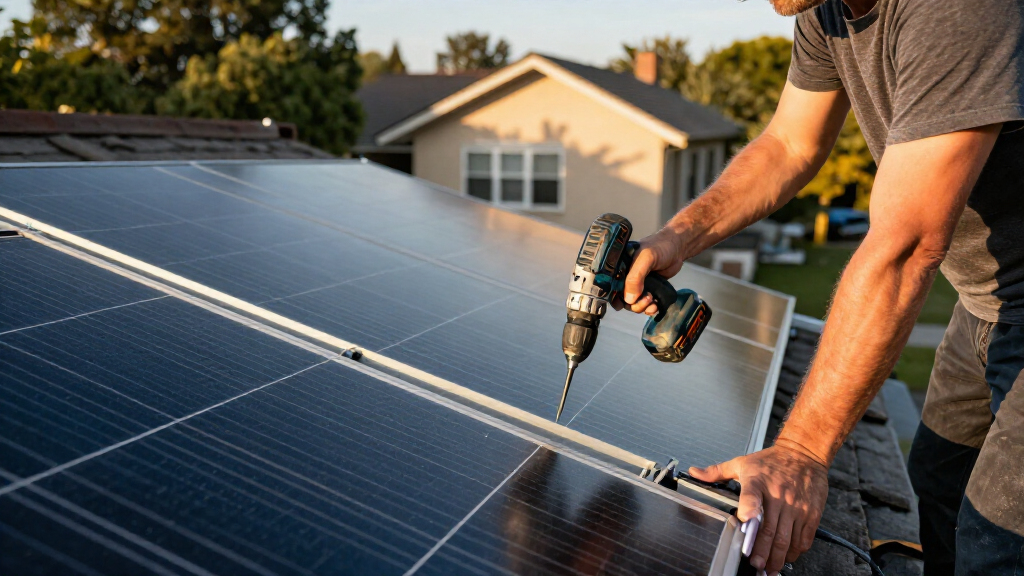
I compared these kits by the details that shape a home system’s real usefulness: panel wattage, battery capacity and voltage, inverter output, and included charge-control equipment. Those specifications help indicate how much energy a system may collect, how much it can store, and which loads it may support. I also separated whole-home-oriented off-grid packages from smaller 12 V kits, since they address different needs and should not be ranked as direct substitutes.
The ranking favors systems with a more capable match of panels, storage, and inverter equipment for substantial home use, while giving smaller kits credit for fitting limited loads and simpler projects. A large advertised inverter rating alone does not establish how long a system can run appliances, and panel wattage alone does not establish overnight supply. Because the listed information does not specify installation scope, usable battery capacity, or expected production by location, I treat those as items buyers must verify rather than assume.
Factors to Consider When Choosing Solar Panel Kits For Home
Before choosing a kit, I would start with the home’s actual energy needs rather than its headline system size. The factors below help separate a useful match from a package that is either undersized or more involved than your project calls for.
1. Match the System to Your Loads
List the appliances and circuits you want to run, then note each device’s wattage, daily use, and startup demand. A refrigerator or well pump may draw a brief surge above its normal operating power, so inverter capacity must account for more than the steady load. Add the energy use across a typical day to estimate how much battery capacity and solar production you need. Avoid sizing a kit from monthly electric use alone if you want backup for specific essential circuits. A kit marketed as 10 kW may refer to inverter capability, not the amount of energy it produces each day. I would confirm what each wattage figure describes before comparing packages.
2. Balance Panel Output Against Battery Storage
Panels generate energy when sunlight is available; batteries shift some of that energy to evening use or outages. More storage cannot compensate for too little solar input if the batteries are not recharged reliably, while extra panel capacity may have limited value if storage fills early and household demand is low. Check battery capacity in kilowatt-hours, usable capacity, recommended depth of discharge, and whether the kit supports adding batteries later. Also account for seasonal sun and shading, since a system sized around clear summer days may fall short in winter. The 10,620 W panel and 32.2 kWh storage combination in this lineup illustrates a high-capacity pairing, but your roof, location, and load profile determine whether that scale makes sense.
3. Check Inverter Type and Household Compatibility
Homes with standard 120 V circuits have different requirements from homes that need 240 V for equipment such as certain pumps or ranges. A split-phase inverter can serve both voltage levels when it is designed and wired for that purpose, but buyers should confirm the exact output configuration rather than rely on a broad power rating. Check continuous output, surge capacity, frequency, and whether the inverter can operate with your chosen battery voltage. A kit that includes an inverter may reduce component-matching work, but it does not automatically include every breaker, disconnect, wire, or installation part. I would have a qualified electrician review the design before connecting a system to household circuits.
4. Plan for Installation, Permits, and Grid Rules
Solar kits vary widely in how much planning and installation they demand. Roof mounting requires suitable structure, weatherproof penetrations, safe wiring paths, and access for maintenance; ground mounts need land, foundations, and protection from damage. Local building and electrical permits may apply even to an off-grid system, and grid-connected equipment can face additional utility interconnection rules. Do not assume that a kit’s included panels and electronics make it a complete, ready-to-connect home installation. Before ordering, map the equipment location, cable distances, mounting hardware, and required protection devices. Professional installation can add cost and effort, but it may also reduce safety and compliance risks.
5. Choose Charge Control and Battery Chemistry for the Job
Charge controllers regulate power moving from panels to batteries, and their voltage and current limits must match the array and battery bank. MPPT controllers generally make better use of panel output across changing conditions than basic PWM units, though the right choice depends on system design and compatibility. LiFePO4 batteries are included in many of the larger ECO-WORTHY kits here, but buyers should still check the battery-management system, temperature limits, warranty terms, and expansion rules. A battery’s nominal capacity does not always equal the energy available to household loads. Confirm that the controller, inverter, and batteries are designed to work together, especially when mixing components from different brands.
6. Compare Expansion Options and Long-Term Service
A kit that fits today may not cover future loads, so ask whether you can add panels, batteries, or a second inverter without replacing the core system. Expansion can be limited by inverter design, controller capacity, battery communication requirements, or manufacturer rules about mixing battery ages. Check the warranty coverage for each major component separately and learn where replacement parts and technical support are available. Keep space for safe equipment access and ventilation rather than planning around the tightest possible layout. A smaller starter kit can be a sensible first step when it supports a clear limited use, but it may become an expensive route to a whole-home system if its components cannot scale.
Frequently Asked Questions
Can one of these kits power an entire home?
It depends on the home’s daily energy use, peak loads, local sunlight, and how much storage is included. The larger ECO-WORTHY systems have more substantial panel and battery figures than the 100 W and 400 W Renogy kits, but the product names alone do not prove that they can run every circuit in a particular house. Compare the system’s continuous and surge inverter output with appliance demands, then compare usable battery energy with overnight needs. Heating, cooling, cooking, and water heating can raise demand sharply. Have an installer size the system against your actual loads and confirm whether it is designed for whole-home service or selected circuits.
What should I check before buying a kit advertised as 10 kW?
Confirm whether 10 kW describes inverter output, panel capacity, or a package name, then check the actual panel wattage and battery capacity listed for that configuration. In this roundup, the 10 kW ECO-WORTHY kits differ substantially: one lists 2,340 W of panels and 10.24 kWh of batteries, while another lists 10,620 W of panels and 32.2 kWh of storage. Those differences affect both charging potential and how much energy can be held for later. Check the inverter’s voltage output and surge rating as well. Ask the seller or installer for a system diagram and component specifications before treating similarly named kits as equivalent.
Is a 100 W or 400 W kit enough for a house?
These smaller kits are generally better viewed as limited-load systems than as whole-house packages. A 100 W starter kit may suit small devices or a modest battery-charging project, while a 400 W kit can support a broader small-scale setup depending on sun and battery configuration. Neither panel rating alone tells you how many appliances you can run or for how long. Add the daily energy use of your intended devices and check the controller and battery limits before buying. If your goal is household circuits, compare those needs with the larger systems rather than stretching a small kit beyond its design.
Should I choose more panels or more battery storage?
Choose based on the gap you need to solve: panels address how quickly and reliably the system collects energy, while batteries address how much collected energy is available later. If you use most power after sunset, storage matters, but it must be recharged by a suitably sized array. If your batteries routinely remain low after cloudy days, additional panel capacity or lower consumption may matter more than adding storage alone. Seasonal sunlight and shading can change this balance, so use local production estimates rather than a simple panel-to-battery ratio. The best system is one where daily generation and usable storage fit your real load pattern.
Can I connect a solar kit to my home’s existing electrical panel?
Some systems can be configured to serve home circuits, but compatibility depends on inverter design, wiring, transfer equipment, grounding, and local electrical rules. An off-grid kit is not automatically approved for grid interconnection, and connecting it incorrectly can create shock, fire, or utility hazards. Check whether the inverter provides the voltage configuration your panel requires and whether the package includes the necessary protection and transfer components. Permits and inspections may be required even when the system is not tied to the utility. I recommend having a licensed electrician review the plan before purchasing or connecting equipment.
Conclusion
For buyers seeking the broadest capability in this lineup, I recommend the ECO-WORTHY 10 kW kit with 10,620 W of panels and 32.2 kWh of storage as best overall, subject to confirming the home can use and install a system of that scale. The ECO-WORTHY 5 kW off-grid kit is my value-oriented pick for buyers who want a smaller step into a complete off-grid setup, while the 10 kW configuration with 5,310 W of panels and 20.48 kWh of storage is a strong premium alternative for those prioritizing substantial storage with a less powerful array than the largest package. For beginners or limited loads, I would start with the Renogy 400 W MPPT kit; the 100 W Renogy kit is more appropriate for very small projects. Choose the ECO-WORTHY 1,170 W or 1,200 W systems when you want a mid-size package with a 3,500 W inverter and 48 V battery, but compare their battery capacities and expected output against your loads before deciding.