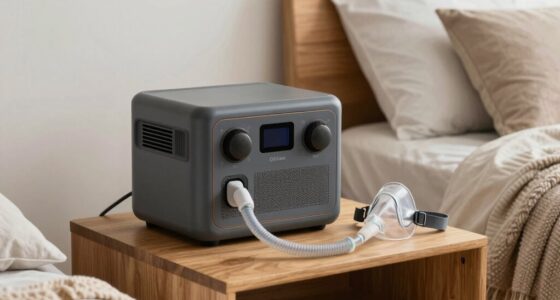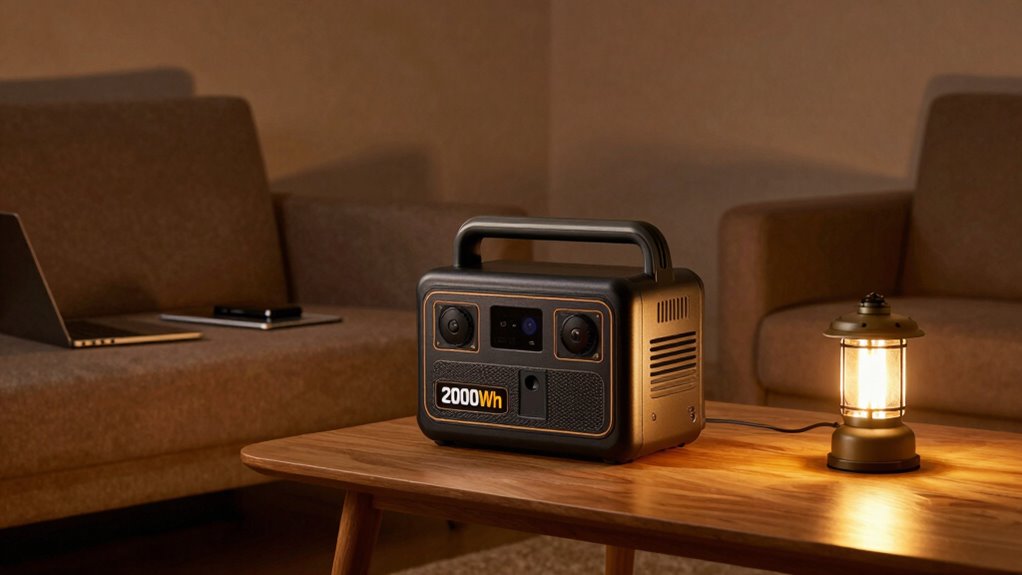
With 2000Wh, you can power essential devices like your refrigerator for over 13 hours, your laptop for around 40 hours, and keep LED lights and chargers running for days. It helps maintain normalcy and support critical appliances during outages. The efficiency of your solar panels and battery health affects how well this capacity performs over time. Want to see how to maximize your system’s potential and stay prepared? Keep exploring for more insights.

Get backup power and energy gear delivered free with Prime
- Fast, free delivery on millions of items
- Prime Video, Amazon Music and more included
- Member-only deals all year
Key Takeaways
- Powers essential devices like refrigerators, laptops, and LED lights for extended periods during outages.
- Supports critical appliances such as small heaters and chargers, maintaining basic comfort and functionality.
- Rechargeable with high-efficiency solar panels, ensuring readiness even during prolonged outages with limited sunlight.
- Long-lasting batteries provide dependable backup power over multiple cycles, reducing replacement costs.
- Proper system maintenance and energy management maximize run-time and reliability in emergency situations.

When a power outage hits, having access to 2000Wh of stored energy can make all the difference. This amount of energy can power essential devices, keep your lights on, and maintain a sense of normalcy during an uncertain situation. But to truly understand what 2000Wh provides, you need to think about how efficiently that energy is stored and used. Solar efficiency plays a vital role here. If your energy source relies on solar panels, the efficiency of those panels determines how quickly you can recharge your battery, especially when the sun’s rays are weak or inconsistent. High-efficiency solar panels mean you can generate more power with less sunlight, guaranteeing your 2000Wh capacity stays topped up when you need it most. This becomes especially important during extended outages, where relying solely on sunlight might be your only option for recharging. Additionally, the solar panel efficiency directly impacts how effectively your backup system can support your needs over time. Ensuring your solar system is properly maintained and optimized can significantly enhance overall energy production and reliability. Proper system maintenance and battery health are crucial for sustaining your energy supply during prolonged outages. Your battery’s lifespan also matters considerably. A high-quality battery paired with your 2000Wh capacity will last through many cycles, providing reliable power over time without degrading quickly. If your battery has a short lifespan, you’ll find yourself replacing it sooner, which can be costly and inconvenient. Investing in batteries with a long cycle life means you’ll get more use out of your stored energy, guaranteeing you can depend on your backup power system when it counts. This longevity also helps maintain consistent performance, avoiding sudden drops in power that can occur with aging or poorly maintained batteries. Proper maintenance and understanding of your battery’s cycle life are essential to maximize its longevity and reliability. Additionally, choosing batteries with advanced technology can improve efficiency and overall system performance, ensuring your backup remains dependable when needed most. Another important factor is the energy management strategy you employ, which can help optimize your system’s performance and extend the lifespan of your components. With 2000Wh, you can run critical appliances such as a refrigerator, laptop, or small heater for several hours. For example, a typical refrigerator uses around 150Wh per hour, so you could keep it running for over 13 hours. A laptop, consuming roughly 50Wh, could operate for about 40 hours straight. Small LED lights and chargers for phones or tablets can run for days on this capacity, providing comfort and security during outages. However, it’s vital to manage your energy consumption carefully. Knowing the efficiency of your solar setup and the lifespan of your batteries helps you plan your usage wisely, maximizing the value of your stored energy. Having a clear understanding of your overall energy needs and system capabilities can help you prepare better for unforeseen outages, ensuring you stay powered when it matters most. Ultimately, 2000Wh offers a practical, versatile backup, but its true potential depends on your system’s solar efficiency and battery health. By choosing high-quality components and understanding your energy needs, you guarantee that this capacity keeps you powered through outages, giving you peace of mind and a reliable way to sustain your daily essentials.
Products Worth Considering

eufy Security eufyCam C37 4-Camera Kit with 360° Pan and Tilt, Auto Tracking, 2K Color Night Vision, and Solar Panels

Arlo Pro Wireless Security Camera, 2K HDR, 6th Gen, 4-Camera System

Dyson V8 Cordless Vacuum
As an affiliate, we earn on qualifying purchases.
Frequently Asked Questions
How Long Can 2000WH Power Essential Devices During an Outage?
With 2000Wh, you can power essential devices for several hours during an outage, depending on their energy consumption. For example, a refrigerator might run for 8-12 hours, while a laptop lasts about 4-6 hours. Solar integration can help recharge your battery for ongoing use, and understanding your battery lifespan guarantees you maximize its efficiency over time. This setup provides reliable backup power, keeping your essentials running longer.
Can 2000WH Fully Power a Home Refrigerator?
A 2000Wh battery can partially power a home refrigerator, but it likely won’t keep it running continuously. Many refrigerators require 100-800Wh daily, depending on size and efficiency. Battery maintenance and power efficiency are key—regularly maintaining your battery guarantees peak performance, and choosing energy-efficient appliances reduces load. To fully support your fridge during an outage, consider supplementing with a larger capacity or multiple batteries for reliable backup.
What Appliances Consume the Most Power With 2000WH?
With 2000Wh, your most power-hungry appliances include refrigerators, space heaters, and electric stoves. These consume significant energy, especially over extended use. To maximize your backup, consider alternative energy sources like solar panels, which can supplement your supply. Also, keep in mind that battery lifespan can decrease with frequent deep discharges, so managing usage wisely helps prolong your system’s efficiency during outages.
How Does Ambient Temperature Affect 2000WH Battery Performance?
Imagine your 2000Wh battery on the edge—ambient temperature is the key. Extreme heat or cold can drastically cut its performance. Battery chemistry reacts differently depending on the temperature, and without proper temperature regulation, efficiency drops. In scorching heat, it may overheat; in freezing cold, it struggles to deliver power. Keep your battery within recommended temperatures to guarantee consistent, reliable output when you need it most.
Is 2000WH Enough for Overnight Emergency Power Needs?
A 2000Wh battery can cover basic overnight emergency needs, like powering lights, a small fridge, and charging devices. However, solar efficiency affects how quickly it recharges during the day, so consider your sunlight exposure. Keep in mind, frequent deep discharges may shorten your battery’s lifespan. To guarantee reliable backup power, it’s wise to supplement with solar panels and monitor your battery’s health regularly.
Conclusion
With 2000Wh, you’re armed like a trusty sword in the dark forest of a power outage. It’s enough to keep your essentials bright and your life moving smoothly, like a steady heartbeat in a silent night. While it might not light up the entire sky, it’s your reliable lantern, guiding you through the shadows. In those moments of darkness, 2000Wh becomes your quiet hero, turning uncertainty into comfort and peace.