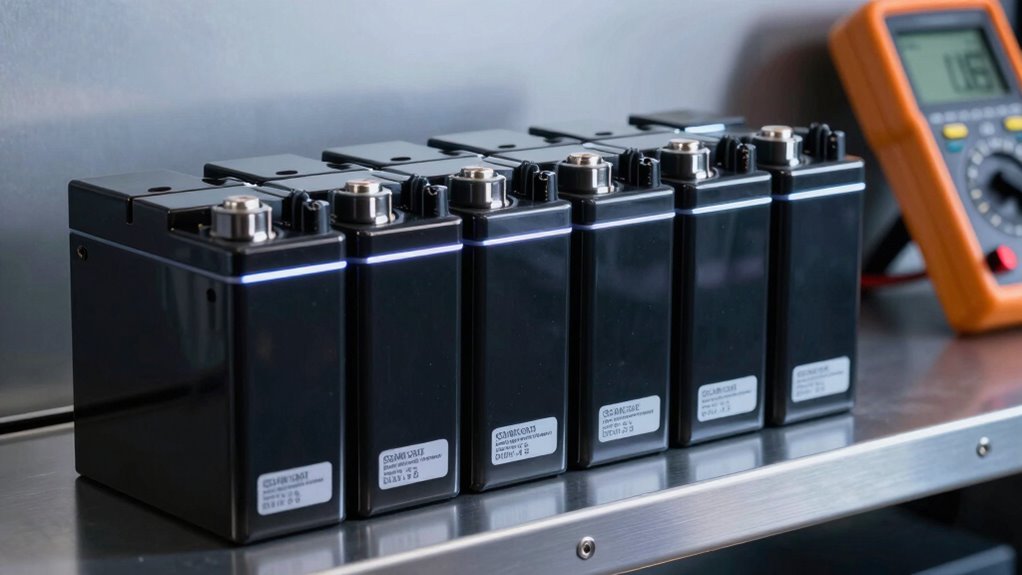

To compare backup power batteries easily, focus on key factors like compatibility with your renewable energy sources, battery lifespan, and maintenance needs. Look at the chemistry type—Lithium-ion batteries tend to last longer and are more efficient, while lead-acid models are cheaper upfront. Consider how many charge cycles the battery can handle, as this affects durability and performance during outages. If you keep these in mind, you’ll find it much simpler to choose the right backup power solution; discover more tips ahead.

Get backup power and energy gear delivered free with Prime
- Fast, free delivery on millions of items
- Prime Video, Amazon Music and more included
- Member-only deals all year
Key Takeaways
- Understand the battery chemistry to assess efficiency, lifespan, and maintenance requirements for your specific backup needs.
- Compare cycle life and capacity retention to gauge long-term reliability during repeated discharges.
- Evaluate compatibility with your renewable energy sources to ensure seamless integration and optimal performance.
- Consider initial costs versus long-term savings based on durability, maintenance, and replacement frequency.
- Assess ease of maintenance and operational conditions to simplify ongoing management and maximize battery lifespan.

When the power goes out unexpectedly, backup power batteries become essential for keeping your devices running and maintaining safety. Whether you’re preparing for storms or just want peace of mind during outages, understanding how to compare these batteries makes choosing the right one much easier. One key factor to consider is how well the battery integrates with renewable energy sources. If you have solar panels or wind turbines, you’ll want a backup power battery that can efficiently store excess energy generated from renewable energy systems. This not only reduces reliance on the grid but also promotes sustainable living. By comparing batteries that are compatible with renewable energy setups, you ensure a seamless transition during outages and maximize your renewable energy investments. Additionally, considering how well batteries handle energy storage efficiency can help you select a more reliable option.
Another critical aspect is battery lifespan. Not all backup power batteries last the same amount of time, and this can significantly impact your decision. A longer battery lifespan means fewer replacements and lower long-term costs. When comparing options, look at the number of charge cycles a battery can handle before its capacity diminishes significantly. This gives you an idea of how many years you’ll get out of the battery under typical usage. Keep in mind that factors like proper maintenance and operating conditions can influence battery lifespan, so choose models designed for durability and longevity. Investing in a battery with a longer lifespan might cost more upfront, but it pays off by reducing replacement expenses over time. Additionally, battery maintenance can extend the overall lifespan, so selecting a model that is easy to care for is beneficial. Furthermore, understanding different battery chemistries helps you make a more informed choice based on your specific needs and sustainability goals.
Furthermore, understanding the differences in battery chemistry can help you make smarter comparisons. Lithium-ion batteries, for example, tend to have a longer lifespan and better efficiency than lead-acid options. They also tend to be lighter and more compact, which can be helpful if space is limited. On the other hand, lead-acid batteries are often less expensive initially but may need replacing sooner. When comparing backup power batteries, consider how each chemistry aligns with your needs, especially in terms of renewable energy integration and overall battery lifespan.
Lastly, look at how the batteries handle repeated charges and discharges. A high-quality backup power battery should maintain its capacity over many cycles, ensuring you get reliable power whenever you need it. By focusing on these key factors—compatibility with renewable energy, battery lifespan, chemistry, and cycle durability—you can compare options more effectively. This approach helps you select a backup power battery that offers the best value, longer-lasting performance, and peace of mind during unforeseen outages.
Products Worth Considering

Bose SoundLink Max Portable Bluetooth Speaker, IP67 Waterproof and Dustproof, Up to 20 Hours of Battery Life, Black
Ring Battery Doorbell Pro, 1536p HD+ Head-to-Toe Video

Dyson Cyclone V10 Origin Cordless Vacuum
As an affiliate, we earn on qualifying purchases.
Frequently Asked Questions
How Long Do Backup Power Batteries Typically Last?
Backup power batteries typically last between 3 to 10 years, depending on their quality and usage. Their battery lifespan is influenced by factors like cycle count and maintenance, which affects power retention over time. You should check the manufacturer’s specifications for precise longevity. Proper care, such as regular charging and avoiding extreme temperatures, can prolong their lifespan and guarantee reliable backup during outages.
Are Lithium-Ion Batteries Better Than Lead-Acid for Backups?
Think of lithium-ion batteries as the sleek sports cars of backup power—faster, lighter, and more efficient—compared to the rugged, reliable lead-acid options. Lithium-ion’s advanced battery chemistry offers longer lifespan and quicker recharge times, making them a smarter choice if cost considerations aren’t your only concern. While they might cost more upfront, their performance and durability can save you money and hassle in the long run.
What Safety Precautions Are Necessary for Backup Batteries?
For battery safety, you should handle backup batteries with care, always wearing protective gear like gloves and goggles. Follow handling precautions by avoiding punctures, sparks, or exposure to extreme temperatures. Keep batteries in well-ventilated areas, and never short-circuit or overcharge them. Regularly check for leaks or corrosion, and store them upright. Proper maintenance and cautious handling guarantee safe operation and extend your backup battery’s lifespan.
Can Backup Batteries Be Recycled or Reused?
Yes, backup batteries can be recycled or reused, but it’s not always straightforward. Recycling procedures involve specialized facilities that safely handle hazardous materials, preventing environmental harm. Reuse potential depends on the battery’s condition; some can be refurbished for other uses, extending their life. But beware—ignoring proper recycling or reuse steps risks safety and environmental issues. So, always follow proper procedures to release the full potential of your backup batteries.
How Do Temperature Changes Affect Battery Performance?
Temperature changes markedly impact your battery’s performance due to thermal stability and temperature sensitivity. When it’s too hot, batteries can overheat, reducing lifespan and increasing risk of failure. Cold temperatures slow chemical reactions, decreasing capacity and efficiency. To guarantee ideal performance, keep your backup power batteries within a recommended temperature range, and avoid exposing them to extreme heat or cold. Proper thermal management helps maintain their capacity and prolongs their lifespan.
Conclusion
Now that you understand what sets backup power batteries apart, you’re better equipped to make a smart choice. Remember, choosing the right battery isn’t just about technology—it’s about peace of mind when the lights go out. Think of it as a silent guardian, standing ready to protect what matters most. Don’t wait until darkness falls; your安心感 depends on making an informed decision today.